Gold prospecting
Fisher Gold Bug Pro Review: A Gold Machine That Also Works a Relic Site
Quick answer
Buy the Gold Bug Pro if you want one machine for small gold and mineralised relic ground at $339.00. Skip it if the smallest possible gold is your only goal, because Fisher publishes 71 kHz for the Fisher Gold Bug 2 against 19 kHz here, a real gap in raw sensitivity to the finest flakes.
Reviewed here
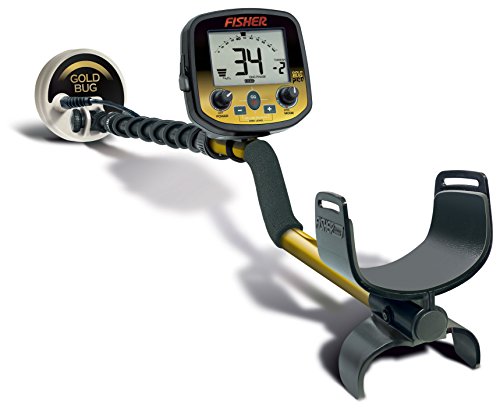
Fisher Gold Bug Pro
Fisher publishes 19 kHz, real-time computerized ground balance with a continuous mineralization readout, V-Break tone discrimination and 2.5 lb, which makes it usable on relic ground as well as gold ground.
Price was accurate when this page was compiled and changes often.
The Fisher Gold Bug Pro is Fisher's answer to a buyer who wants a gold machine that does not stop being useful the day the goldfield trip ends. Fisher publishes a 19 kHz operating frequency, real-time computerized ground grab with a continuous ground condition readout, Fisher's own V-Break variable breakpoint tone discrimination system, independently adjustable threshold and gain, and a weight of 2.5 lb, which the listing describes as one of the lightest detectors on the market.
That combination puts it in an unusual spot: lower frequency than the true gold specialists in this catalog, which costs it some sensitivity to the smallest flakes, in exchange for tone discrimination that a pure high-frequency prospecting machine does not need and mostly does not offer. The best metal detector for gold roundup places it against the rest of the field.
On this page
- What does V-Break actually add to a gold machine?
- How does it compare on published specifications?
- What does each machine publish about weight and threshold control?
- The honest weakness: it is not the machine for the smallest gold
- What do owners consistently report?
- Who should buy it, and who should skip it
- What should you buy instead?
What does V-Break actually add to a gold machine?
Control over where the tone breaks between low and high conductors, which is a feature borrowed from Fisher's relic and coin machines rather than something most gold-specific detectors bother with. Fisher describes it as the industry's first variable breakpoint tone discrimination system, and the practical effect is that you are not stuck with a single fixed line between what sounds like trash and what sounds like a target. On a site with a mix of iron, small non-ferrous scrap and gold, that adjustability is worth more than raw frequency, because it lets you shape the machine to the trash you are actually standing in rather than the trash the factory guessed you would meet.
Paired with that is real-time computerized ground balancing with a continuous mineralization readout, so the operator is watching a live number rather than guessing whether the ground has drifted. Gold-bearing soil is very often mineralised soil, and a machine that shows you the mineralization level as it changes is genuinely useful information, not a marketing line. The ground balance guide explains why that number matters more here than on a coin machine.
How does it compare on published specifications?
Only what each maker actually states appears below.
Fisher publishes 19 kHz for the Gold Bug Pro, well below the 71 kHz it publishes for the Gold Bug 2, which is the specification that decides how small a target either machine can usefully hear.
| Model | Price | Operating frequency | Frequency type | Stock coil | Made in |
|---|---|---|---|---|---|
| Fisher Gold Bug Pro | $339.00 | - | - | - | - |
| Fisher Gold Bug 2 | $739.00 | - | Single ultra-high frequency | 6 and 10 | - |
| Garrett Goldmaster 24k | $679.99 | 48 kHz | Single high frequency | - | - |
| Garrett AT Gold | $640.99 | - | - | - | USA |
Figures are taken from each manufacturer's own published listing and specification sheet. A dash means the maker does not publish that figure for that model, not that the feature is absent.
What does each machine publish about weight and threshold control?
Weight and manual control matter on a long prospecting day as much as frequency does, and this is where the Gold Bug Pro publishes more than its price suggests.
Fisher publishes 2.5 lb and independently adjustable threshold and gain for the Gold Bug Pro, both of which the Goldmaster 24k listing does not state at all.
| Machine | Published weight | Threshold and gain control | Tone discrimination |
|---|---|---|---|
| Fisher Gold Bug Pro | 2.5 lb | Independently adjustable threshold and gain | V-Break variable breakpoint |
| Fisher Gold Bug 2 | 2.9 lb | Manual 16-turn ground balance, mineralization switch | Iron discrimination mode |
| Garrett Goldmaster 24k | Not published in this listing | Not published in this listing | Not published in this listing |
| Garrett AT Gold | Not stated in this listing | Ground Balance Window, manual and automatic | Iron audio |
| Minelab Gold Monster 1000 | Not stated in this listing | Fully automatic, no manual threshold stated | Iron reject mode |
Quoted from each maker own listing. A machine with no figure in a row publishes nothing on that point in the source this site drew from, and is left blank rather than estimated.
The honest weakness: it is not the machine for the smallest gold
Start with the number that matters most. Fisher publishes 19 kHz for the Gold Bug Pro and 71 kHz for its own Fisher Gold Bug 2. That is not a small gap, and frequency is the main lever a VLF machine has for hearing the smallest, lowest-conductivity gold. If your goal is specifically the finest flake gold in a well-worked field, the Gold Bug Pro is giving up real sensitivity that its sibling does not, and buying the wrong one in this family is an easy mistake because the names are so close.
Second, what the listing leaves unstated. Fisher's published information for this model does not include a waterproof rating or a coil size, which matters if you plan to work creek beds or wet ground where gold often collects. Confirm coil size and any water rating against the printed manual before you buy if that is part of your plan, rather than assuming parity with the Gold Bug 2's stated 6 and 10 inch coils.
Third, the honest trade this machine represents. Everything that makes the Gold Bug Pro more useful on a relic site, the V-Break discrimination and the lighter 2.5 lb build, is a genuine advantage over a pure prospecting machine, and it is also the reason a dedicated prospector chasing maximum depth on the smallest nuggets should look past it to the Gold Bug 2 or the Garrett Goldmaster 24k instead. This is a generalist's gold machine, not a specialist's.
What do owners consistently report?
Published owner reviews describe the Gold Bug Pro as an unusually flexible machine for its price bracket, credited less for extreme sensitivity than for being genuinely usable on relic and coin sites in mineralised soil where a pure gold machine would be overwhelmed by discrimination noise. The lighter weight comes up repeatedly as a reason owners keep it in rotation for long days, and the ground condition readout is consistently described as easier to trust than guessing from audio alone.
The recurring complaint, consistent with the specification gap above, is disappointment from buyers who expected Gold Bug 2 levels of sensitivity to the finest gold and did not get it. That expectation mismatch is avoidable by reading the frequency figures before you buy rather than after. As with every machine on this site, bury known test targets in your own ground and write down the readings your own unit gives you, because published frequency tells you what a machine is built for, not what your specific soil will do to the signal.
Who should buy it, and who should skip it
Buy it if:
- You want one machine for both moderate gold prospecting and mineralised relic ground.
- You value adjustable tone discrimination over the highest possible frequency.
- You want a light detector for a long day, published at 2.5 lb.
- Your budget sits below the flagship gold machines in this catalog.
Skip it if:
- The finest flake gold is your specific target. Look at the Fisher Gold Bug 2 instead.
- You want a published waterproof rating before you buy, which this listing does not state.
- You want fully automatic ground balance rather than a computerized manual system.
- You already own a capable relic machine and only need raw gold sensitivity.
What should you buy instead?
Three alternatives, each better than the Gold Bug Pro at one specific thing.
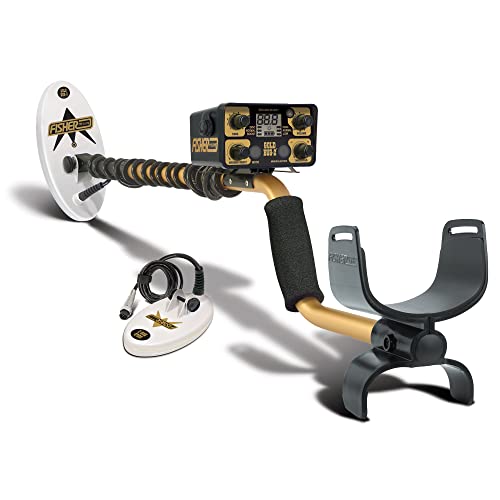
Fisher Gold Bug 2
$739.00Fisher publishes 71 kHz with 6 and 10 inch elliptical coils and a manual 16-turn ground balance, at $739.00, for a buyer whose only goal is the smallest gold.
Best for: maximum sensitivity to fine and flake gold
Check price on Amazon
Minelab Gold Monster 1000
$899.00Minelab publishes fully automatic noise cancelling, ground balance and sensitivity at 45 kHz, at $899.00, for a buyer who wants to swing rather than tune.
Best for: beginners who want automatic operation
Check price on Amazon
Garrett AT Gold
$640.99Garrett publishes full submersion to 10 ft alongside 18 kHz and a Ground Balance Window, at $640.99, which the Gold Bug Pro listing does not state at all.
Best for: creek beds and wet ground prospecting
Check price on AmazonHow we chose
We did not test these machines in person and we publish no find claims. Picks are researched from manufacturer specifications and owner manuals, published listing features, waterproof ratings and warranty terms, and the recurring themes in verified owner reviews. We favour the established detector brands because coils, shafts and control boxes have to stay available years after a model is discontinued, and we place every pick in the tier where its price and capability honestly belong.
Sources
- Fisher Gold Bug Pro product listing and manual
- Fisher Gold Bug 2 product listing and manual
- Garrett Goldmaster 24k and AT Gold product listings
- Minelab Gold Monster 1000 product listing
Frequently asked questions
Fisher Gold Bug Pro vs Gold Bug 2: what is actually different?
Frequency and control style. Fisher publishes 19 kHz with real-time computerized ground balance and V-Break tone discrimination for the Gold Bug Pro, versus 71 kHz with manual 16-turn ground balance and a mineralization switch for the Gold Bug 2. The Gold Bug 2 is the more sensitive pure prospecting tool; the Gold Bug Pro is the more versatile machine for mixed gold and relic ground, and it is lighter at 2.5 lb against 2.9 lb.
Fisher Gold Bug Pro vs Garrett AT Gold: which should I buy?
It depends on water. Garrett publishes full submersion to 10 feet for the AT Gold along with 18 kHz and a Ground Balance Window with manual and automatic modes. Fisher does not publish a water rating for the Gold Bug Pro. If creek beds or wet ground are part of your plan, the AT Gold has the published rating for it; on dry ground, the two compete closely on frequency and features.
Is the Fisher Gold Bug Pro good for relic hunting?
It is one of the more relic-capable gold machines in this catalog. Fisher publishes V-Break variable breakpoint tone discrimination, which lets you shape the line between trash tones and target tones, and a continuous mineralization readout, which is genuinely useful on the mineralised soil where old sites and gold ground often overlap. A dedicated relic machine at a lower frequency will still out-discriminate it in dense iron.
What frequency does the Fisher Gold Bug Pro operate at?
Fisher publishes a single 19 kHz operating frequency. That sits well below the 71 kHz Fisher publishes for the Gold Bug 2 and the 48 kHz Garrett publishes for the Goldmaster 24k, which means the Gold Bug Pro trades some sensitivity to the very smallest gold for broader usefulness on mixed ground.
Does the Gold Bug Pro have automatic ground balance?
Fisher describes it as computerized ground grab technology with a real-time, continuous ground condition readout, which is a form of automatic balancing rather than the fully hands-off system Minelab publishes for the Gold Monster 1000. You get an active display of mineralization rather than a single button press with no feedback, which suits an operator who wants to understand the ground rather than ignore it.
Researched, not professional advice. This page is compiled from published specifications, manuals and owner-review consensus, not hands-on testing. Target ID numbers, depth figures and settings vary with soil chemistry, moisture, target size, depth, orientation and firmware version, so treat every figure here as a starting point and verify it against your own machine's manual and your own ground. As an Amazon Associate we earn from qualifying purchases.