Cross-machine master charts
Metal Detector Depth Chart: Realistic Depth Ranges by Target and Soil
Quick answer
A coin-sized target is realistically detectable from about 4 to 12 inches depending on soil, coil and machine. Small gold runs 1 to 6 inches, a large ring 5 to 12, a relic-sized iron object 10 to 20, and a buried cache further still. Mineralised or dry soil cuts every one of those ranges.
Every depth figure in this hobby is conditional, and anyone who gives you a single number is guessing. Depth depends on target size, target shape, target orientation, conductivity, corrosion, coil diameter, coil type, ground mineralisation, soil moisture, electrical interference and how slowly you swing. The ranges below are wide on purpose, because narrow ranges would be a lie.
What a chart can honestly tell you is the shape of the problem: that target size matters more than machine price, that soil can halve your depth, and that the difference between a good operator and a poor one on the same machine is larger than the difference between two machines. For a range worked out from your own coil and ground, the expected detection depth calculator takes the inputs directly.
Top pick
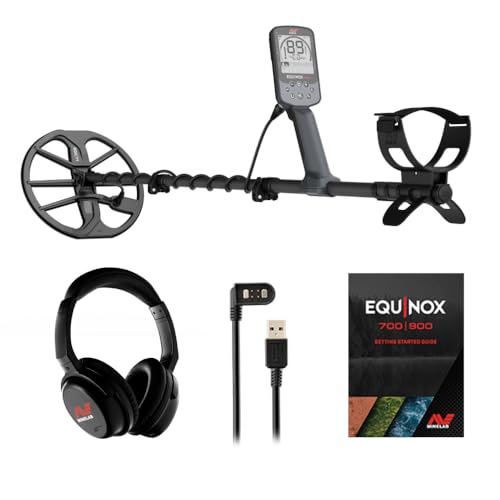
Minelab Equinox 900
Multi-IQ plus a choice of coils gives the widest range of depth behaviour from one machine, which is what a depth chart is really describing.
Price was accurate when this page was compiled and changes often.
How deep can you realistically detect each type of target?
These ranges assume a mid-size coil in the 9 to 11 inch class, a competent operator, and the target lying flat rather than on edge. Read the low end of each range as what you should expect on bad ground and the high end as a good day on easy ground.
A US coin-sized target is realistically detectable from roughly 4 to 12 inches, and heavily mineralised soil can cut that range close to half.
| Target | Mild, damp soil | Average soil | Mineralised or very dry soil |
|---|---|---|---|
| Small gold, under 1 gram | 2 to 6 in | 1 to 4 in | Under 3 in, often nothing |
| Thin gold chain or earring | 1 to 4 in | 1 to 3 in | Surface only |
| US nickel | 5 to 9 in | 4 to 7 in | 2 to 5 in |
| Clad or silver dime | 5 to 10 in | 4 to 8 in | 3 to 6 in |
| Silver quarter or half | 7 to 12 in | 5 to 10 in | 4 to 7 in |
| Gold ring, mid to large | 6 to 12 in | 5 to 9 in | 3 to 7 in |
| Musket-ball sized lead | 5 to 10 in | 4 to 8 in | 3 to 6 in |
| Buckle, button or small relic | 6 to 12 in | 5 to 10 in | 3 to 7 in |
| Horseshoe or large iron relic | 12 to 20 in | 10 to 16 in | 7 to 12 in |
| Buried cache, tin or jar size | 18 to 30 in | 15 to 24 in | 10 to 18 in |
These are wide ranges collected from what owners consistently report, not measurements. Nothing on this site has been depth-tested. Your own buried test targets are the only figures that describe your ground.
What do the manufacturers themselves claim?
Worth reading beside the table above, because the gap between the two is instructive. Manufacturer depth claims are made on favourable ground with a favourable target, and they are claims rather than guarantees.
Published claims in this catalog range from 4 inches on a starter kit up to 12 inches on a mid-range machine, all measured on the maker own terms.
| Machine | Published depth claim | For which target |
|---|---|---|
| Fisher F22 | Up to nine inches | Metal targets buried on land and in shallow water |
| Bounty Hunter Land Ranger Pro | Up to 10 inches | Coin-sized targets |
| National Geographic PRO Series | As deep as 12 inches | Treasure, unspecified target size |
| Bounty Hunter Junior | Coins to 5 inches, larger objects to 3 feet | Coins and large metal objects |
| National Geographic Starter Kit | Objects up to 4 inches | Unspecified |
Every claim here is quoted from the maker own listing. No machine in this catalog publishes a depth claim for a specific coin at a specific mineralisation, which is why comparing claims between brands is close to meaningless.
What actually costs you depth?
In rough order of impact: target size, ground mineralisation, coil size, target orientation and sweep speed. A coin standing on edge presents almost no surface to the coil and can disappear entirely at half the depth it would read lying flat. Iron mineralisation in red clay or old brick ground absorbs signal and forces you to run lower sensitivity, which costs depth twice over.
Sweep speed is the one within your control and the one most often ignored. A slow, low, overlapping sweep gives the machine several looks at a deep target; a fast sweep gives it one. The coil coverage and sweep time calculator will show you what that costs in hours per acre, which is usually the reason people speed up in the first place. A bigger coil such as the Minelab EQX 15 Coil (15 inch) buys depth on large targets while costing separation, a trade the coil size chart sets out in full.
Does a more expensive machine go deeper?
Sometimes, and by less than the price difference suggests. Minelab Manticore is published by Minelab as carrying 50 percent more power than traditional models, and extra transmit power does buy depth in mineralised ground. But on mild ground with an average coin, the practical difference between a good mid-range machine and a flagship is often an inch or two, while the difference between a careful operator and a careless one is more than that.
Where flagships genuinely pull ahead is in separating a deep good target from nearby iron, which is not the same thing as raw depth but is what actually produces finds on old sites. That is a recovery speed and processing question, and it is covered in the settings by site type page.
Sources
- Manufacturer product listings quoted in the claims table
- Minelab Equinox 700 and 900 instruction manual
- Minelab Manticore product specifications
Frequently asked questions
How deep will a metal detector find a coin?
Realistically 4 to 12 inches for a US coin-sized target with a mid-size coil, and the range is that wide because soil does most of the deciding. Damp mild soil sits at the top of the range, heavily mineralised or bone-dry soil at the bottom. A coin on edge can vanish at half the depth it would read lying flat, so the same coin in the same hole is not one number.
Can any detector reach three feet?
Not for a coin. Claims of that kind refer to very large objects: a buried tin, a car body, a length of pipe. The Bounty Hunter Junior listing, for example, claims 5 inches for coins and 3 feet for larger metal objects, which is a fair way of putting it. For coin-sized targets, anything past about 14 inches is exceptional ground and an exceptional machine.
Does a bigger coil always go deeper?
On large targets, generally yes. On small targets, often no. A 15 inch coil concentrates less energy on a small object than a 6 inch coil does, so tiny gold and small jewellery can read better on the small coil despite its lower total depth. Bigger coils also blur adjacent targets together, which on trashy ground costs you more finds than the extra inch gains.
Why does my machine seem shallower than it used to be?
Check the obvious things first. Low batteries change how a detector behaves before they stop it working. A cracked or waterlogged coil loses sensitivity. Drier soil reduces depth noticeably between seasons. Rising electrical interference from a new installation nearby can force you to run lower sensitivity. Re-run your test garden before you conclude the machine is failing.
How do I measure my own depth honestly?
Bury known targets at marked depths in ground you have permission to dig, let the soil settle through a few rains, and then sweep them in the modes you actually use. Freshly disturbed soil reads differently from undisturbed soil, so testing on the day you bury will flatter the machine. Write the results down and repeat after firmware updates and in different seasons.
Researched, not professional advice. This page is compiled from published specifications, manuals and owner-review consensus, not hands-on testing. Target ID numbers, depth figures and settings vary with soil chemistry, moisture, target size, depth, orientation and firmware version, so treat every figure here as a starting point and verify it against your own machine's manual and your own ground. As an Amazon Associate we earn from qualifying purchases.