Gold machines
Minelab Gold Monster 1000 Review: A 45 kHz Specialist That Cannot Hunt Coins
Quick answer
Buy the Gold Monster 1000 if you prospect known goldfields and want 45 kHz sensitivity without tuning anything. Skip it if you also want to hunt coins, because there is no numeric target ID and at $899.00 it does one job only.
Reviewed here

Minelab Gold Monster 1000
Minelab publishes 45 kHz VLF with a 24-bit signal processor and fully automatic noise cancel, ground balance and sensitivity, with a 5 inch waterproof coil.
Price was accurate when this page was compiled and changes often.
The Minelab Gold Monster 1000 is a specialist, and whether it is a good purchase depends entirely on whether you have gold-bearing ground to work. On a goldfield it turns a beginner into a productive prospector faster than any machine in this catalog. In a municipal park it is an expensive way to dig foil.
Minelab publishes a 45 kHz VLF operating frequency with a 24-bit signal processor, fully automatic operation covering noise cancel, ground balance and sensitivity, a gold chance indicator, gold with iron reject and deep all-metal modes, a 5 inch waterproof coil rated to 3 feet, and a telescoping shaft. Headphones are not included.
On this page
- Why does 45 kHz matter for gold?
- How does it compare with the other gold machines?
- What each gold machine is actually built for
- The honest weakness: it does one job and costs more than machines that do several
- What do owners consistently report?
- Who should buy it, and who should skip it
- What should you buy instead?
Why does 45 kHz matter for gold?
Because gold is a poor conductor and nuggets are small, which is the worst combination for a detector. Low frequencies favour large high-conductive targets such as silver and copper coins. High frequencies excite small low-conductive targets far more strongly, and small gold only gives a usable signal up at the top of the range. A general coin machine running 10 to 15 kHz walks straight past pieces this one hears, which the frequency chart sets out across the whole range.
The 5 inch coil is part of the same argument. A small coil concentrates its field, so it is more sensitive to tiny targets than a large one even though it reaches less depth overall. For nugget hunting that trade is the right way round, and it is the opposite of what a coin hunter wants. Minelab pairs both choices with a 24-bit signal processor and publishes the result as boosting sensitivity to gold across a wide range of nugget sizes without excess noise.
How does it compare with the other gold machines?
Published figures only. The spread of operating frequencies in this category is enormous, and it maps directly onto the size of gold each machine is built for.
Published prospecting frequencies run from 19 kHz on the Fisher Gold Bug Pro to 71 kHz on the Gold Bug 2, with the Gold Monster at 45 kHz and a fully automatic ground balance.
| Model | Price | Operating frequency | Frequency type | Stock coil | Ground balance |
|---|---|---|---|---|---|
| Minelab Gold Monster 1000 | $899.00 | - | - | 5 in | Fully automatic |
| Garrett Goldmaster 24k | $679.99 | 48 kHz | Single high frequency | - | - |
| Fisher Gold Bug 2 | $739.00 | - | Single ultra-high frequency | 6 and 10 | - |
| Fisher Gold Bug Pro | $339.00 | - | - | - | - |
Figures are taken from each manufacturer's own published listing and specification sheet. A dash means the maker does not publish that figure for that model, not that the feature is absent.
What each gold machine is actually built for
Frequency is the specification that decides what size of gold a machine can hear, so this is the table that should drive the purchase.
Minelab publishes 45 kHz for the Gold Monster 1000, against 48 kHz for the Garrett Goldmaster 24k and 71 kHz for the Fisher Gold Bug 2, which is built for the smallest gold of all.
| Machine | Published frequency | Ground balance | Built for |
|---|---|---|---|
| Fisher Gold Bug Pro | 19 kHz | Computerised ground grab, real time | Small gold and mineralised relic ground |
| Minelab Gold Monster 1000 | 45 kHz VLF | Fully automatic | A wide range of nugget sizes with no tuning |
| Garrett Goldmaster 24k | 48 kHz | Not published in this listing | Fine gold in known goldfields |
| Fisher Gold Bug 2 | 71 kHz | Manual 16-turn, 3-position mineralisation switch | The smallest gold, and little else |
| Garrett AT Gold | 18 kHz | Manual and automatic with Ground Balance Window | Small gold plus mineralised relic hunting |
| Minelab Equinox 900 | 6 single frequencies plus Multi-IQ | Automatic and manual | Everything, including a Gold mode |
Quoted from each maker published listing. Where a listing does not publish a ground balance description this table says so rather than assuming the machine lacks the feature.
The honest weakness: it does one job and costs more than machines that do several
There is no numeric target ID. Minelab publishes a gold chance indicator and a gold mode with iron reject, which tells you roughly how likely a signal is to be gold and whether it is ferrous, and that is all the target information you get. For prospecting that is close to sufficient, because in a goldfield you dig nearly everything anyway. For any other hunting it is disabling: without a conductivity number you cannot work the bands the target ID chart describes, and at 45 kHz the machine is poor on exactly the high-conductive silver and copper coins a park hunter is looking for.
Then the price. At $899.00 this costs more than an Minelab Equinox 700 at $749.00, which hunts parks, fields and beaches and has higher single frequencies available, and nearly as much as an Minelab Equinox 900, which adds a dedicated Gold mode to all of that. A dedicated 45 kHz machine will out-hear either on the smallest gold, but you are paying a premium for a machine that cannot do anything else.
Third, automatic is a ceiling as well as a convenience. Minelab publishes automatic noise cancel, ground balance and sensitivity, which is genuinely why a beginner can be productive on day one. It also means that when the machine gets it wrong in difficult ground, you have less to reach for than on a machine with a manual 16-turn ground balance. And note the waterproofing carefully: Minelab publishes the coil as waterproof up to 3 feet, which is a wet-conditions rating for the coil, not a submersible machine. Headphones are not included either.
What do owners consistently report?
The dominant theme is that the automation works. Published owner reviews from people new to prospecting consistently report finding gold without understanding ground balance, which is exactly what Minelab designed the machine to do and is not a small achievement in mineralised goldfield soil. The second theme is sensitivity to very small pieces, with owners reporting signals on gold they could barely see once recovered.
The recurring criticisms are consistent with the specification. Owners report a lot of digging, because at 45 kHz with minimal discrimination almost everything metallic gives a signal, and they report hot rocks and mineralisation being the limiting factor rather than the machine. Several note that the small coil means covering ground slowly, which the coil coverage calculator will put real hours against. A SE Stackable Classifier, 1/8 inch mesh and a pan such as the ASR Outdoor Gold Pan Beginners Kit, 5 piece are the usual companions, because a detector finds the nugget and panning works the fines.
Who should buy it, and who should skip it
Buy it if:
- You have legal access to ground that actually produces gold.
- You want to prospect without learning manual ground balance first.
- You are chasing small nuggets, where 45 kHz and a 5 inch coil are the right tools.
- You already own a coin machine and this is a second, specialised detector.
Skip it if:
- This would be your only machine. Buy an Equinox 900 and use its Gold mode.
- You want numeric target ID for coin and relic hunting.
- You have no realistic access to gold-bearing ground, which is the honest question.
- You want manual control when the automation gets it wrong in bad soil.
What should you buy instead?
Three alternatives, each better than the Gold Monster at one specific thing.
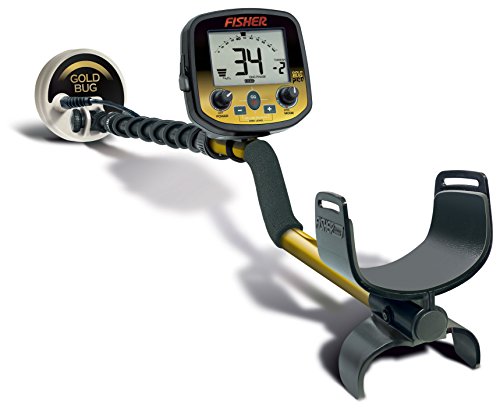
Fisher Gold Bug Pro
$339.00Fisher publishes 19 kHz with computerised real-time ground balancing, a mineralisation readout and 2.5 lb at $339.00, and it doubles as a capable relic machine in mineralised soil.
Best for: small gold and mineralised relic ground on a lower budget
Check price on Amazon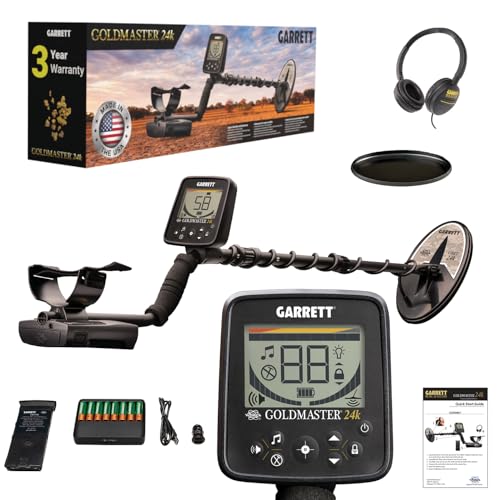
Garrett Goldmaster 24k
$679.99Garrett publishes a single 48 kHz frequency, which sits above the Gold Monster in the band where fine gold responds, at $679.99.
Best for: fine gold in known goldfields
Check price on Amazon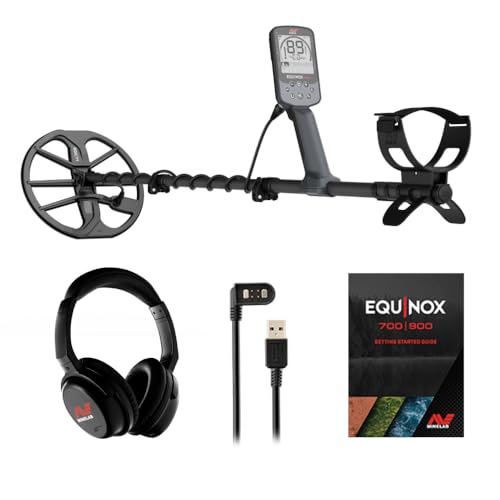
Minelab Equinox 900
$999.00Minelab publishes six single frequencies plus Multi-IQ with a dedicated Gold mode, 119 target IDs, 16 feet of waterproofing and both coils in the box.
Best for: anyone who wants gold plus coins, beaches and relics
Check price on AmazonHow we chose
We did not test these machines in person and we publish no find claims. Picks are researched from manufacturer specifications and owner manuals, published listing features, waterproof ratings and warranty terms, and the recurring themes in verified owner reviews. We favour the established detector brands because coils, shafts and control boxes have to stay available years after a model is discontinued, and we place every pick in the tier where its price and capability honestly belong.
Sources
- Minelab Gold Monster 1000 instruction manual and product listing
- Fisher Gold Bug 2 owner manual
- Fisher Gold Bug Pro product specifications
- Garrett Goldmaster 24k product listing
- Published owner reviews of the Minelab Gold Monster 1000
Frequently asked questions
Can the Gold Monster 1000 be used for coin hunting?
Poorly. It publishes no numeric target ID, its discrimination amounts to a gold mode with iron reject, and at 45 kHz it is tuned for small low-conductive targets rather than the silver and copper coins a park hunter wants. It will make noise over coins, but you will dig everything to find them. If you want one machine for gold and coins, buy an Equinox with a Gold mode instead.
Gold Monster 1000 vs Gold Bug 2: which finds smaller gold?
The Gold Bug 2 on published frequency, since Fisher runs it at 71 kHz against 45 kHz for the Gold Monster, and higher frequencies respond to smaller low-conductive targets. The trade is control: the Gold Bug 2 uses a manual 16-turn ground balance and a three-position mineralisation switch, while the Gold Monster is fully automatic. One rewards a skilled operator, the other gets a beginner finding gold immediately.
Is the Gold Monster 1000 waterproof?
The coil is, and the machine is not. Minelab publishes the waterproof coil as rated up to 3 feet, which covers wet ground, creek edges and rain. That is a different specification from the fully submersible machines in the Equinox and X-Terra ranges, which Minelab publishes as IP68 to 16 feet. Do not take the control box into water on the strength of the coil rating.
Is the Gold Monster 1000 good for a beginner?
For a beginner to prospecting specifically, yes, and that is its main argument. Minelab publishes fully automatic noise cancel, ground balance and sensitivity, so a new prospector can work mineralised goldfield soil without first learning to tune a machine. For a beginner to detecting in general it is a poor first purchase, because it cannot hunt coins and most people have far more access to parks than to goldfields.
Do I need headphones with the Gold Monster 1000?
You will want them, and they are not included. Nugget signals are often faint, and a speaker in open wind loses exactly the weak responses you are hunting for. A wired set is fine here since the machine is not submersible, and wired headphones cannot run out of battery halfway through a session, which matters when you have walked a long way in to work a patch.
Researched, not professional advice. This page is compiled from published specifications, manuals and owner-review consensus, not hands-on testing. Target ID numbers, depth figures and settings vary with soil chemistry, moisture, target size, depth, orientation and firmware version, so treat every figure here as a starting point and verify it against your own machine's manual and your own ground. As an Amazon Associate we earn from qualifying purchases.