Entry-level machines
Garrett ACE 300 Review: The Waterproof Coil That Sets a Trap
Quick answer
Buy the ACE 300 if you want a 0 to 99 digital target ID and iron resolution for $269.99 and will keep it strictly on dry to damp ground. Skip it if you plan to wade, because Garrett publishes a waterproof searchcoil on this platform but states the control box is not waterproof, and this model discovers that fact the expensive way if you submerge it.
Reviewed here

Garrett ACE 300
Garrett publishes a 0 to 99 digital target ID, iron resolution, electronic pinpointing and an adjustable frequency, with a waterproof searchcoil on a control box that is not waterproof.
Price was accurate when this page was compiled and changes often.
The Garrett ACE 300 is the machine that taught a large share of American detectorists what a target ID number is. Garrett publishes a 0 to 99 digital target ID scale, iron resolution to separate valuable targets from trash, electronic pinpointing through a non-motion all-metal mode, and an adjustable frequency to cut interference from power lines or another nearby detector.
The specification that decides whether this is the right machine for you sits in Garrett's own ACE line documentation rather than in the ACE 300's own headline features: the searchcoil is waterproof and the control box is not. That single line is the reason the waterproof roundup does not include this machine, and it is worth understanding before you order rather than after a wave catches you standing in the surf.
On this page
- What does a 0 to 99 target ID actually change for a beginner?
- How does it compare with the machines around it?
- What each listing publishes about water, frequency and price
- The honest weakness: the coil goes in the water, the electronics never should
- What do owners consistently report?
- Who should buy it, and who should skip it
- What should you buy instead?
What does a 0 to 99 target ID actually change for a beginner?
It turns a guess into a number you can learn to trust. Garrett publishes iron reading at the bottom of the scale, small and low conductors reading low to mid, and copper and silver reading toward the top, which is a physical ordering rather than a marketing claim. Iron resolution builds on that by giving finer separation near the iron end of the scale specifically, which is where a beginner otherwise digs the most trash on an old lot or a well-used park.
Electronic pinpointing through a non-motion all-metal mode is the second quiet win here. Instead of sweeping back and forth to triangulate a target by ear, you hold the coil still over the spot and the mode tells you directly, which shortens recovery time and reduces the size of the hole you dig. The pinpointer guide covers the handheld tool that speeds this up further once you own one.
How does it compare with the machines around it?
Published figures only. Garrett states less numerically about the ACE line than Minelab and Nokta state about theirs, which shows as gaps below.
Garrett publishes a 0 to 99 target ID for the ACE 300 and reserves iron audio, rather than iron resolution, for the ACE 400 a step above it.
| Model | Price | Stock coil | Made in |
|---|---|---|---|
| Garrett ACE 300 | $269.99 | - | USA |
| Garrett ACE 400 | $357.99 | - | USA |
| Fisher F22 | $229.00 | 9 in | - |
| Minelab X-Terra Pro | $282.14 | - | - |
Figures are taken from each manufacturer's own published listing and specification sheet. A dash means the maker does not publish that figure for that model, not that the feature is absent.
What each listing publishes about water, frequency and price
This is the table that matters most, because water capability is where the ACE line and its waterproof rivals genuinely part ways.
Garrett publishes a waterproof searchcoil with the control box not waterproof across the ACE line, while Minelab and Nokta publish full 16 foot machine ratings on rival machines at a similar price.
| Machine | Published water capability | Frequency behaviour | Price |
|---|---|---|---|
| Garrett ACE 300 | Waterproof searchcoil, control box is not | Single frequency, adjustable | $269.99 |
| Garrett ACE 400 | Waterproof searchcoil, control box is not | Single frequency, adjustable | $357.99 |
| Fisher F22 | Weatherproof only, not submersible | Single frequency | $229.00 |
| Minelab X-Terra Pro | IP68 machine rating to 16 ft | PRO-SWITCH frequency switching | $282.14 |
Quoted from each maker own listing. Garrett states plainly in the ACE 200 listing that the searchcoil is submersible and the control box is not, and the same platform design carries across the ACE line.
The honest weakness: the coil goes in the water, the electronics never should
This is the single fact that most new ACE 300 owners learn the expensive way. Garrett's ACE line documentation states clearly that the searchcoil is waterproof and can be submerged in shallow water, streams or damp shoreline sand, and states just as clearly that the control box is not waterproof. That is a coherent design for a park and field machine and it is a trap for anyone who assumes a metal detector marketed for beach use means the whole unit can go under. A slip while wading, a wave over the shaft, or leaving the machine face down in wet grass overnight are the three ways this actually happens, and all three are avoidable once you know the rule.
Second, single frequency. Garrett publishes an adjustable frequency to cut interference from power lines and nearby detectors, which is genuinely useful, and that is a different capability from simultaneous multi-frequency. On a salt beach a single-frequency machine reads the conductive ground as a target it cannot cancel, and no amount of adjustment closes that gap. If salt water hunting is on your plan, this is not the machine for it, and the frequency chart explains why in full.
Third, the ceiling relative to Garrett's own range. The Garrett ACE 400 sits a short step above at $357.99 and adds iron audio, letting you hear discriminated iron rather than only see it silenced, which is a real upgrade on old sites. If your budget can flex that far, the arithmetic favours the 400. The ACE 300 against ACE 400 comparison runs the numbers side by side.
What do owners consistently report?
Durability and a short learning curve dominate the published owner reviews. This platform has been sold for a long time, coils and parts are easy to source, and new owners consistently report being able to hunt with confidence within a session rather than a season. The 0 to 99 target ID display is described as easy to read outdoors, and iron resolution is credited with cutting the number of nail and bottle cap holes dug on old ground.
The recurring complaints track the specification gaps directly: chatter near power lines until the frequency is shifted, no real waterproofing for anyone who hunts near water, and a sense of hitting a ceiling in trashy or mineralised soil after a season or two. Owners on iron-heavy sites consistently recommend a smaller aftermarket coil, and the ACE coil compatibility chart lists what actually fits. As with every machine here, bury your own test targets and check the numbers your unit reports, since the ACE 300 target ID chart gives ranges rather than a lookup table.
Who should buy it, and who should skip it
Buy it if:
- You hunt dry parks, yards, school grounds and fields and will not wade.
- You want a genuine numeric target ID at an entry price, with iron resolution built in.
- You value a long-running platform with easy parts and coil availability.
- You want a short menu you can learn in a single afternoon.
Skip it if:
- Any part of your hunting plan includes wading, surf or submersion.
- Salt beaches are on your list. Single frequency struggles there regardless of coil.
- You can stretch to the ACE 400, which adds iron audio for a modest step up.
- You want a fully waterproof machine at this price, where the X-Terra Pro publishes 16 feet.
What should you buy instead?
Three alternatives, each better than the ACE 300 at one specific thing.

Garrett ACE 400
$357.99Garrett publishes iron audio in place of iron resolution, plus a coil cover included, at $357.99, for a manageable premium over the ACE 300.
Best for: iron-heavy sites and old house lots
Check price on Amazon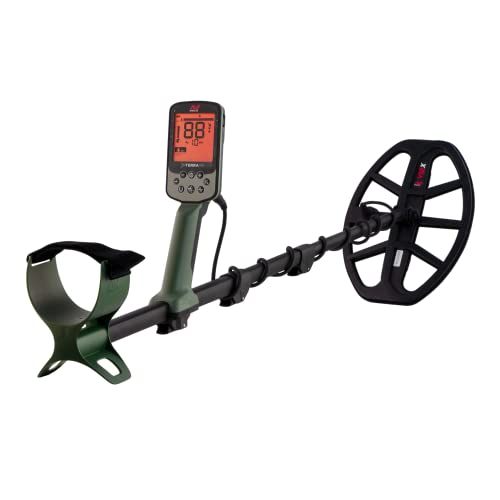
Minelab X-Terra Pro
$282.14Minelab publishes IP68 waterproofing to 16 feet and PRO-SWITCH frequency switching at $282.14, a genuinely submersible machine near the same money.
Best for: wet ground, rain and rivers
Check price on Amazon
Garrett ACE Apex
$384.99Garrett own multi-frequency machine, publishing 5, 10, 15, 20 kHz plus Multi-Frequency and Multi-Salt modes, Z-Lynk wireless and a built-in battery at $384.99.
Best for: salt beaches and buyers who want to stay with Garrett
Check price on AmazonHow we chose
We did not test these machines in person and we publish no find claims. Picks are researched from manufacturer specifications and owner manuals, published listing features, waterproof ratings and warranty terms, and the recurring themes in verified owner reviews. We favour the established detector brands because coils, shafts and control boxes have to stay available years after a model is discontinued, and we place every pick in the tier where its price and capability honestly belong.
Sources
- Garrett ACE 300 product listing and specifications
- Garrett ACE 200 product listing (waterproof searchcoil, control box not waterproof, same platform)
- Garrett ACE 400 product listing
- Published owner reviews of the Garrett ACE 300
Frequently asked questions
Is the Garrett ACE 300 waterproof?
The searchcoil is, the control box is not. Garrett publishes a waterproof PROformance searchcoil across the ACE line for use in wet sand, shallow streams and rain, and states plainly that the control housing is not waterproof. You can work damp ground safely. You cannot wade or submerge the machine without risking the electronics.
Garrett ACE 300 vs ACE 400: which should I buy?
The ACE 400 if the price gap is small in your market. Garrett publishes iron audio for the 400, which lets you hear discriminated iron rather than only see it rejected, plus a coil cover included in the box. The ACE 300 publishes iron resolution instead, which is finer separation near the iron end of the scale but without the audible cue. Both share the same waterproof-coil, dry-box design.
What is iron resolution on the Garrett ACE 300?
It is improved discrimination that separates valuable targets from iron trash more finely near the bottom of the 0 to 99 scale, where nails, bottle caps and foil cluster. It is a different feature from iron audio, which the ACE 400 adds and which lets you hear a discriminated iron target rather than only having it silenced.
Is the ACE 300 good for beach detecting?
On dry sand, yes, within the limits of a single-frequency machine. In wet salt sand or the surf line, be cautious on two counts: the control box is not rated for submersion, and Garrett publishes no simultaneous multi-frequency claim for this model, so salt conductivity will limit depth and stability. A dedicated waterproof, multi-frequency machine suits a serious beach hunter better.
Researched, not professional advice. This page is compiled from published specifications, manuals and owner-review consensus, not hands-on testing. Target ID numbers, depth figures and settings vary with soil chemistry, moisture, target size, depth, orientation and firmware version, so treat every figure here as a starting point and verify it against your own machine's manual and your own ground. As an Amazon Associate we earn from qualifying purchases.