Water machines
Minelab Manticore vs XP Deus II: Power or Weight and Wireless?
Quick answer
There is no overall winner. The Manticore at $1,499.00 publishes Multi-IQ+ with 50 percent more power, a 2D target display and 10 modes, rated to 16 feet. The Deus II at $1,299.00 is fully wireless coil to headphones, with 12 multi-frequency programs and a 66 foot rating.
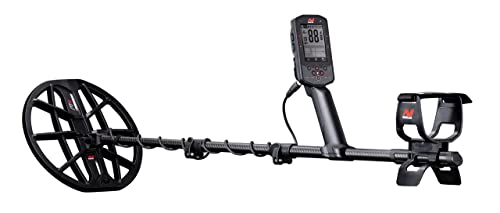
Minelab Manticore
$1,499.00Multi-IQ+ published as 50 percent more powerful, a two dimensional target ID map, 10 search modes including Goldfield, IP68 to 16 feet, folds to 24.8 inches.
Best for: an experienced detectorist chasing depth in mineralised ground
Check price on Amazon
XP Deus II
$1,299.00Fully wireless from coil to headphones, 12 simultaneous multi-frequency programs, 49 single frequencies from 4 to 45 kHz, IP68 to 66 feet, five year warranty.
Best for: long sessions, and anyone who wants the lightest possible flagship
Check price on AmazonThere is no honest overall winner between these two, and the choice is about design philosophy rather than capability. Minelab publishes for Minelab Manticore its Multi-IQ+ platform described as 50 percent more powerful than traditional models and the highest-powered simultaneous multi-frequency machine on the market, an advanced two dimensional target ID map, 10 search modes including All-Terrain, Beach and Goldfield, IP68 waterproofing to 16 feet, and a body that folds from 56.7 to 24.8 inches.
XP publishes for XP Deus II the first fully wireless fast multi-frequency machine, with no cable between coil, control box and headphones, 12 simultaneous multi-frequency factory programs, 49 single frequencies from 4 to 45 kHz, an IP68 rating to 66 feet, headphones using a radio protocol XP describes as ten times faster than Bluetooth low latency, and a five year warranty. Those are two different answers to the same question, and each has a feature the other cannot match. The Deus II against the Equinox 900 and the Equinox 900 against the Manticore cover the tier below.
Top pick
Minelab Manticore
Multi-IQ+ published as 50 percent more powerful, a 2D target ID map, 10 search modes and IP68 to 16 feet.
Price was accurate when this page was compiled and changes often.
On this page
What does fully wireless actually change?
More than it sounds. On the Deus II there is no coil cable, which removes the part of a detector that fails most often and the part that snags on brush. It also means the control box can come off the shaft entirely and go in a pocket, so the machine you are swinging is a shaft, a coil and an armrest. XP publishes this as the first fully wireless fast multi-frequency machine, and no other detector in this catalog matches it.
The cost of that architecture is that everything runs on its own battery, so coil, remote and headphones all need charging, and a flat coil is a finished hunt. It is a trade, not a free win. The other consequence is weight distribution rather than raw weight: neither maker publishes a weight in these listings, so anybody ranking these two by pounds is guessing. The weight comparison is the honest place to see what is actually published across the catalog.
How do the published specifications compare?
Two flagships, two makers who publish very differently, and several rows where only one of them prints a figure.
Minelab publishes Multi-IQ+ and a 16 foot rating for the Manticore, and XP publishes a fully wireless build, 49 single frequencies and a 66 foot rating for the Deus II.
| Model | Price | Frequency type |
|---|---|---|
| Minelab Manticore | $1,499.00 | Simultaneous multi-frequency (Multi-IQ+) |
| XP Deus II | $1,299.00 | - |
Figures are taken from each manufacturer's own published listing and specification sheet. A dash means the maker does not publish that figure for that model, not that the feature is absent.
Where does each one win outright?
Nine rows and a genuine split. Each machine has at least three things the other cannot do at all.
The Deus II publishes 66 feet of submersion, 49 single frequencies and a fully wireless build, while the Manticore publishes a 2D target ID map, 10 search modes and Multi-IQ+ described as 50 percent more powerful.
| Specification | Minelab Manticore | XP Deus II |
|---|---|---|
| Price | $1,499.00 | $1,299.00 |
| Frequency technology | Multi-IQ+, 50 percent more power published | Fast Multi-Frequency, 12 factory programs |
| Single frequencies | Not published as a count in this listing | 49, from 4 to 45 kHz |
| Target display | 2D target ID map | Not published as a 2D display |
| Search modes | 10, including All-Terrain, Beach and Goldfield | 12 multi-frequency factory programs |
| Water rating | IP68 to 16 ft | IP68 to 66 ft |
| Cabling | Conventional coil cable | Fully wireless, coil to control to headphones |
| Headphones | Not published in this listing | Included, XP radio protocol, 10 times faster than Bluetooth low latency |
| Warranty | Not published in this listing | 5 years |
| Folded length | Folds from 56.7 in to 24.8 in | Not published in this listing |
From the Minelab and XP listings. Neither listing publishes a weight, so no weight comparison is possible from the published record. Power claims are each maker describing its own machine and are not comparable measurements.
Choose the Manticore if
You hunt difficult ground and want the most information about a target before you cut turf. The two dimensional target ID map is the genuine innovation here: instead of one number it plots targets on two axes, which gives you a shape rather than a value and helps separate a coin on edge from a bottle cap. Ten search modes including Goldfield make it a genuinely all-ground machine.
Choose it too if you already own Minelab coils, headphones or control box covers, or if you want the larger dealer network. Manticore Control Box Cover and Minelab ML105 Wireless Headphones are the matched accessories, and the Manticore review, target ID chart and settings by site type cover it in use. The Manticore against The Legend is the value question underneath it.
Choose the XP Deus II if
You detect for long hours, or you go deep in water. The fully wireless build is the reason people choose this machine and keep choosing it: no coil cable to fail, a control box that can leave the shaft, and headphones on a fast proprietary radio protocol rather than Bluetooth. A 66 foot IP68 rating is four times the Manticore rating and covers diving outright.
Choose it too if you want frequency control. Forty nine single frequencies from 4 to 45 kHz is more granular tuning than anything else here, which matters if you fight electrical interference or work ground where a small frequency shift changes everything. The Deus II review covers the machine, settings by site type covers programs, and battery life and specs matters more here than on any other machine, because three things charge rather than one.
Is either worth it over a machine half the price?
For most people, no, and that is worth saying on a page about two flagships. Minelab Equinox 900 at $999.00 and Nokta The Legend Pro Pack at $659.00 both run simultaneous multi-frequency, both ship with two coils, and on ordinary ground neither of the machines on this page will find coins that those miss. The flagship premium buys performance in difficult conditions and information density, not a different class of find.
Where the premium is justified is specific: heavily mineralised ground, deep water, or sites already hammered by other detectorists where the marginal signal is the only signal left. If that is honestly your situation, buy one of these. If it is not, buy the tier below and spend the difference on permissions, a better scoop and the rest of the expert setup. The dig time budget calculator will show you that the binding constraint is usually hours, not hardware.
Sources
- Minelab Manticore product listing and specifications
- Minelab Manticore instruction manual
- XP Deus II product listing and specifications
- XP Deus II user manual
Frequently asked questions
Which of these goes deeper?
Neither maker publishes a depth figure for a defined target in defined soil, so there is no honest way to answer with a number. Minelab describes Multi-IQ+ as 50 percent more powerful than traditional models, which is a claim about its own platform rather than a comparison with XP. Depth comes from coil size, ground conditions and patience far more than from either badge.
Is the Deus II really waterproof to 66 feet?
XP publishes an IP68 rating to 66 feet for the shockproof underwater remote control design, and notes bone conduction headphones as an optional accessory for underwater use. That is four times the 16 foot rating Minelab publishes for the Manticore. Confirm the detail for your exact configuration in the current XP manual before diving with it.
What is the 2D target display actually for?
It plots a target on two axes rather than reducing it to one number, so you see a shape and a position instead of a value. In practice that helps separate targets that share a conductivity number, such as a coin lying on edge and a bottle cap. It is information density rather than depth, and it takes time to learn to read.
Which is lighter?
Neither listing publishes a weight, so we will not rank them. What can be said is that the Deus II moves the control box off the shaft entirely if you want, which changes how a machine feels over hours regardless of total mass. If long sessions are your concern, swing both before buying rather than trusting any published figure.
Researched, not professional advice. This page is compiled from published specifications, manuals and owner-review consensus, not hands-on testing. Target ID numbers, depth figures and settings vary with soil chemistry, moisture, target size, depth, orientation and firmware version, so treat every figure here as a starting point and verify it against your own machine's manual and your own ground. As an Amazon Associate we earn from qualifying purchases.