Minelab Manticore
Minelab Manticore Target ID Chart: What The Numbers And The 2D Trace Mean
Quick answer
Manticore target ID is a conductivity position on a 0 to 99 scale, shown as a number and as a point on a two dimensional trace that also carries how ferrous the target is. Iron sits at the bottom, foil and thin gold low, nickels and small rings in the middle, copper and silver high. Bands overlap and move with soil.
The Minelab Manticore gives you more target information on screen than any other machine Minelab sells, and that is exactly why people misread it. The two digit number is only half the answer. The other half is where the target lands on the two dimensional trace, because a target can carry a respectable conductive number and still be a rusted washer once you see how far it sits toward the ferrous side of the display.
Everything below is an ordering plus a set of typical bands. The ordering is physics and it does not change. The bands are what owners consistently report on the 0 to 99 scale, and they are wide on purpose, because your soil, your coil, your sensitivity setting and the depth and angle of the target all move them. Treat the table as a starting map, then correct it with buried targets in your own ground.
Top pick
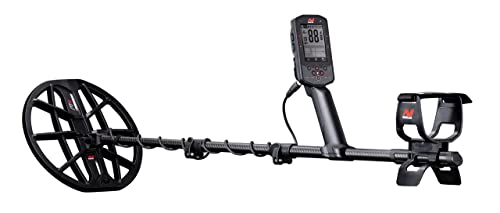
Minelab Manticore
The only machine that shows target ID and ferrous content as one picture instead of two separate readouts.
Price was accurate when this page was compiled and changes often.
On this page
What does a target ID number actually measure?
A target ID is a conductivity ordering, not an identification. The machine measures how a buried object responds to the transmitted field and places that response on a scale, so objects of similar conductivity and similar size land on similar numbers. Iron reads at the bottom of the scale, foil and small thin gold low, nickel alloy and small gold rings in the middle, and copper and silver at the top. A large silver coin reads near the top because it is both highly conductive and physically large.
That is why no chart can tell you what is in the hole. A thin gold band and a pull tab can occupy the same band, and they will keep occupying the same band no matter how much money you spend. What a good chart does is tell you which signals deserve a dig on the site you are standing on, which is a different and more useful question. The same logic applies across the range, and the Minelab target ID comparison shows why the number you learned on one machine will not carry across to another.
Manticore target ID bands: what usually sits where
Read this as bands, not as values. Every entry is a range because the true reading depends on the object, its depth, its corrosion and the ground it is sitting in.
On the Manticore 0 to 99 scale, iron and ferrous trash sit at the bottom, nickels and small gold rings usually fall in the low middle, and copper and silver coins usually read in the upper third, with wide overlap between gold and aluminium.
| Target | Usual band | What it shares the band with | Dig it? |
|---|---|---|---|
| Small iron, nails, wire | Bottom of the scale and below zero | Nothing you want, until it is a rusted iron object next to a coin | Only on old sites where you are chasing the iron itself |
| Large flat iron, plate, can lids | Wraps high, often into the coin bands | Silver coins, which is the single most expensive confusion on any machine | Check the trace and the sweep from two directions first |
| Foil, thin gold chain, tiny gold | Roughly 1 to 20 | Foil wrappers, fine wire, small lead shot | On jewellery sites yes, on trashy parks rarely |
| US nickel, small gold rings | Roughly 20 to 35 | Aluminium screw caps, some small tabs | Yes if you are hunting jewellery |
| Pull tabs, aluminium scrap | Roughly 25 to 45 | Mid weight gold rings, brass fittings | Site dependent and the main cost of jewellery hunting |
| Zinc cent, small brass | Roughly 45 to 60 | Screw caps, some small relics | Yes on coin sites |
| Copper cent, clad dime | Roughly 55 to 75 | Larger brass, heavy aluminium | Yes |
| Clad quarter, heavy gold ring | Roughly 65 to 80 | Large aluminium, some flat iron wrap | Yes |
| Silver dime and silver quarter | Roughly 65 to 85 | Clad coins, which is a good problem to have | Yes |
| Half dollar, silver dollar, large copper | Roughly 80 to 95 | Large flat iron and can lids | Yes, and check the ferrous axis before you commit |
These are reported working bands on the 0 to 99 scale rather than figures published in a specification sheet. Minelab does not publish a coin by coin ID table, because the true number depends on your ground. Corroded, bent, edge on or deep targets all read lower and less stably than the same object clean and flat at four inches.
How do you read the two dimensional trace?
The trace is what makes the Minelab Manticore different from every earlier Minelab. Instead of one number on a line, each response is plotted in two dimensions, so the conductive ordering runs one way and the amount of ferrous response runs the other. A clean non ferrous coin sits in a tight cluster. A rusted iron object smears and sits far over on the ferrous side even when its number looks respectable. Iron next to a coin produces two clusters, and that is the signal you learn to love on old sites.
The practical habit is simple. Sweep the target from at least two directions ninety degrees apart and watch whether the cluster stays in the same place. Good non ferrous targets are boringly consistent. Iron, and coins masked by iron, are not. Once the cluster wanders, stop reading the number and start reading the picture. If you want depth context for what you are seeing, the Manticore depth chart covers what actually limits depth and how to find your own limit, and the site by site settings guide covers the mode and sensitivity choices that change how stable these numbers look in the first place.
What moves a target ID, and by how much?
Before you decide a chart is wrong, check whether one of these is moving your numbers.
Depth, mineralisation, corrosion, target orientation and neighbouring iron each shift a target ID, and together they easily move a reading by more than the width of any published band.
| Condition | Direction of the shift | What to do about it |
|---|---|---|
| Increasing depth | Numbers drift lower and become unstable before the signal disappears | Trust the average of several sweeps, not the best single number |
| Mineralised or wet salty ground | Readings scatter, low conductors suffer most | Ground balance, reduce sensitivity, use the mode built for the ground |
| Corrosion on the target | Usually reads lower and broader than the clean object | Expect old coins to read below the clean reference coin |
| Target on edge rather than flat | Reads lower and smaller than it is | Sweep from a second direction before you write it off |
| Iron beside the target | Pulls the reading down and smears the trace | A smaller coil separates the two responses |
| Coil size | A large coil averages more ground and blurs small targets | Match the coil to the trash, not to the field size |
| Firmware version | Minelab has changed target processing across updates on its current machines | Recheck your reference coins after any update |
Nothing in this table is unique to the Manticore. It applies to every VLF and multi frequency machine, which is why a target ID chart copied from one forum post and applied to different soil disappoints people.
How do you calibrate the scale to your own ground?
- Collect reference targets. One of each coin you expect to find, a pull tab, a piece of foil, a small nail, a large flat piece of iron and, if you can spare it, a cheap gold band. Label them.
- Air test first, and understand its limits. Wave each target under the coil and write down the number. This gives you the machine clean, with no ground in the way. It is a reference point, not a depth test.
- Bury them in your own soil. Plant each target at two, four, six and eight inches in ground like the sites you hunt, and mark the spots. Leave them to settle so the ground is not freshly disturbed.
- Record what your machine reads. Sweep each one at each depth in each mode you use, and write the numbers on a card you keep in your bag. This card beats any chart on the internet, including this one.
- Repeat after conditions change. Rain, drought, a new coil or a firmware update all change the readings. Recheck the garden rather than assuming your old numbers still hold.
Gear that changes what you can hear in these bands
Target ID is only useful if the audio that goes with it survives the walk to your ears. These are the Minelab accessories that fit the Manticore specifically.

Minelab ML105 Wireless Headphones
$180.00Minelab lists these as compatible with the Manticore, Equinox 700 and 900 and the X-Terra Pro, and they convert to wired with the supplied aux cable.
Best for: owning more than one current Minelab
Check price on Amazon
Minelab ML85 Wireless Headphones
$125.00The low latency wireless set Minelab matches to the Manticore, which matters because ordinary Bluetooth delay makes pinpointing by ear impossible.
Best for: a single Manticore owner
Check price on Amazon
Manticore Control Box Cover
$25.00It protects the largest screen Minelab sells, and the listing describes a custom fit TPU film cover that stays flexible in cold weather.
Best for: anyone who lays the machine down on gravel
Check price on AmazonHow we chose
We did not test these machines in person and we publish no find claims. Picks are researched from manufacturer specifications and owner manuals, published listing features, waterproof ratings and warranty terms, and the recurring themes in verified owner reviews. We favour the established detector brands because coils, shafts and control boxes have to stay available years after a model is discontinued, and we place every pick in the tier where its price and capability honestly belong.
Sources
- Minelab Manticore instruction manual, target identification and display chapters
- Minelab Manticore published product specification sheet
- Manufacturer listing specifications for the Manticore, ML105 and ML85
Frequently asked questions
Why does my Manticore read a different number than my old Equinox on the same coin?
Because the scales are not the same scale. Minelab has used different target ID resolutions across its range and across generations, so a number learned on one machine is not portable to another. The ordering of targets stays the same, which is what you actually rely on. Recalibrate with reference coins on the new machine rather than converting numbers in your head.
Can the Manticore tell gold from a pull tab?
No machine can, and anything that claims otherwise is selling something. Gold alloys occupy the same conductive band as aluminium tabs and foil, because conductivity and size are what the detector measures. The Manticore helps by giving a steadier, better resolved reading and by showing ferrous content on the trace, so you waste fewer digs on iron. Gold against aluminium is still a dig.
Should I trust a reading that jumps around?
Treat it as information rather than noise. Clean non ferrous targets at sensible depth give consistent numbers from several directions. Readings that swing widely usually mean a deep target, a corroded target, a target on edge, ferrous metal nearby, or ground that needs a fresh balance. Sweep from a second angle, and if it is still jumping, decide based on the site rather than the number.
Does a bigger coil improve the target ID?
It changes it rather than improving it. A larger coil sees more ground at once, which helps on open sites and can steady a deep signal, but it averages several nearby objects into one blurred response in trash. A smaller coil separates targets and gives cleaner IDs where iron is dense. Choose the coil for the site, then recheck your reference numbers with it fitted.
Do I need to redo my test garden after a firmware update?
Yes, and it takes twenty minutes. Manufacturers adjust target processing between firmware versions, so the numbers you memorised can shift slightly. Re sweep your buried reference targets after any update and write the new readings on the card in your bag. The same applies after you fit a different coil or start hunting noticeably different soil.
Researched, not professional advice. This page is compiled from published specifications, manuals and owner-review consensus, not hands-on testing. Target ID numbers, depth figures and settings vary with soil chemistry, moisture, target size, depth, orientation and firmware version, so treat every figure here as a starting point and verify it against your own machine's manual and your own ground. As an Amazon Associate we earn from qualifying purchases.