Flagship machines
Minelab Manticore Review: Who Actually Needs Multi-IQ+
Quick answer
Buy the Manticore if you hunt mineralised ground, deep targets masked by iron, or surf, and you already know what your current machine keeps missing. Skip it if you hunt clean municipal parks, where the Minelab Equinox 900 at $999.00 finds the same coins for a third less money.
Reviewed here
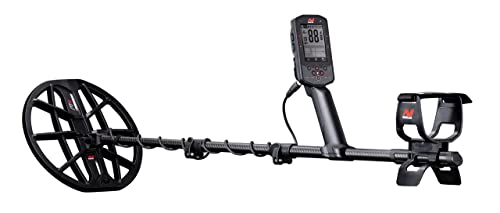
Minelab Manticore
Minelab publishes Multi-IQ+ at 50 percent more power than traditional models, plus a 2D target ID map and 10 search modes including Goldfield, in a body that folds to 24.8 inches.
Price was accurate when this page was compiled and changes often.
The Minelab Manticore is the right machine for an experienced detectorist working difficult ground, and the wrong machine for almost everybody else. It is the most expensive general-purpose detector Minelab sells at $1,499.00, and what that money buys is transmit power and a target display, not a wider range of sites you can hunt.
Minelab publishes Multi-IQ+ as having 50 percent more power than traditional models and describes it as the highest-powered simultaneous multi-frequency machine on the market. That is a manufacturer claim rather than a measurement, and it is worth reading precisely: extra transmit power pays in ground that absorbs signal, which means mineralised red clay, iron-rich old sites and wet salt sand. On mild, damp park soil the honest gap between this and a mid-priced multi-frequency machine is an inch or two, which the depth chart sets out in full.
On this page
- What does the money actually buy?
- How does it compare on paper to the machines you are cross-shopping?
- What do the flagship listings actually publish?
- The honest weakness: it is heavy, expensive and mostly wasted on park ground
- What do owners consistently report?
- Who should buy it, and who should skip it
- What should you buy instead?
What does the money actually buy?
Four published things. First, Multi-IQ+, which Minelab states carries 50 percent more power than traditional models. Second, the advanced 2D target ID map, which plots a target in two dimensions instead of printing one number, so two targets that share an ID can still occupy different positions on the display. Third, ten search modes, including All-Terrain for inland ground, Beach for sand, surf and seawater, and Goldfield for nuggets. Fourth, an IP68 rating to 16 feet and a body that folds from 56.7 inches down to 24.8 inches.
The 2D map is the genuinely novel item and the reason experienced hunters buy this machine. A single conductivity number collapses a lot of information, which is why the master target ID chart has to describe bands rather than addresses. Plotting the target on two axes separates a bottle cap from a silver coin that reads at the same number, which on a picnic ground hunted for forty years is the difference between digging trash and digging coins. It is also a new language to learn, and nothing on the machine teaches it to you.
How does it compare on paper to the machines you are cross-shopping?
The specification table below is built from the catalog, which is built from each maker published listing. A dash means the maker does not publish that figure for that model, which on a machine at this price is itself worth noticing.
Minelab publishes 2.8 lb and 119 target IDs for the Equinox 900 but does not publish a weight for the Manticore, which is the single most requested figure on this machine.
| Model | Price | Frequency type | Target ID range | Stock coil | Coil type | Waterproof depth | Weight | Collapsed length | Headphones included | Search modes |
|---|---|---|---|---|---|---|---|---|---|---|
| Minelab Manticore | $1,499.00 | Simultaneous multi-frequency (Multi-IQ+) | - | - | - | - | - | - | - | - |
| Minelab Equinox 900 | $999.00 | Simultaneous multi-frequency plus 6 single frequencies | 0 to 99 | 11 and 6 | Double-D | 16 ft | 2.8 lb | 24 in | Yes | 4 |
| XP Deus II | $1,299.00 | - | - | - | - | - | - | - | - | - |
| Nokta The Legend 2 | $999.00 | Simultaneous multi-frequency | - | - | - | - | - | - | - | - |
Figures are taken from each manufacturer's own published listing and specification sheet. A dash means the maker does not publish that figure for that model, not that the feature is absent.
What do the flagship listings actually publish?
Read this beside the table above. The gaps are as informative as the figures, because a maker that does not print a number usually has a reason.
Minelab publishes a 16 foot IP68 rating and a 24.8 inch folded length for the Manticore but no weight, while XP publishes 66 feet for the Deus II remote control.
| Machine | Published frequency behaviour | Waterproof rating | Published weight |
|---|---|---|---|
| Minelab Manticore | Multi-IQ+, stated as 50 percent more power | 16 ft, IP68 | Not published in the listing |
| Minelab Equinox 900 | 6 single frequencies plus Multi-IQ, 5 at once | 16 ft, 5 m | 2.8 lb |
| XP Deus II | 49 single frequencies from 4 to 45 kHz, 12 multi programs | 66 ft, IP68 | Not published in the listing |
| Nokta The Legend 2 | Simultaneous multi-frequency, 99 target IDs | Not published in this listing | 2.6 lb |
| Minelab Excalibur II | BBS, 1.5 to 25.5 kHz | Not published in this listing | Not published in the listing |
Every figure is quoted from the manufacturer own product listing or specification sheet for that model. Rows marked not published are left as gaps rather than filled with an estimate.
The honest weakness: it is heavy, expensive and mostly wasted on park ground
Start with the weight, because Minelab does not publish one for this machine. The listing gives a folded length and calls the design ultra-lightweight, and it prints no figure in pounds, while the same maker prints 2.8 lb for the 900 and 2.9 lb for the Minelab X-Terra Pro. Owners consistently report the Manticore as noticeably more front-heavy than an Equinox, and a control box with a larger screen has to put that mass somewhere. If you have shoulder or elbow trouble, treat a harness such as Detecting Harness and Swing Support as part of the purchase price rather than an accessory, and read the weight comparison before you commit.
Then the price. At $1,499.00 this machine costs $999.00 plus a Minelab EQX 15 Coil (15 inch) and change. On mineralised ground, in iron, and in surf, the extra power is real and you will hear it. On a mown municipal park with mild soil and a coin at six inches, two competent operators with a Manticore and a 900 will dig the same targets. The people who genuinely benefit are those who have already worked a site hard with a good mid-range machine and know exactly which signals they are leaving behind.
Third, the learning cost. Ten search modes and a two-dimensional display are a lot of machine to absorb, and a flagship used on factory defaults is an expensive mid-range machine. Expect to spend a season building a test garden and learning where targets land on the map before this outperforms what you already own.
What do owners consistently report?
Three themes recur across published owner reviews. The first is depth in bad ground: people moving from a single-frequency machine or an older Minelab to this one report signals in mineralised soil that their previous machine did not give them at all. The second is the audio, which Minelab describes as customisable and which owners describe as the part that does the sorting once the display has told you where to look. The third is the weight complaint, which is consistent enough that it is the first thing most owner reviews mention after depth.
The fourth recurring theme is less about the machine than about the buyer: a substantial number of published reviews come from people who upgraded from a capable mid-range machine and are honest that the gain was smaller than the price difference. That is the review worth reading twice before you order. Pair the machine with a low-latency set such as Minelab ML105 Wireless Headphones, which Minelab lists as covering the Manticore, Equinox 700 and 900 and the X-Terra Pro from one pair, and protect the screen with a Manticore Control Box Cover.
Who should buy it, and who should skip it
Buy it if:
- Your ground is mineralised, iron-heavy or salt, and you already know your current machine is being beaten by it.
- You hunt sites that have been worked for decades, where separation rather than raw depth is what is left.
- You will actually learn the 2D display rather than running factory presets.
- You are a Minelab owner with coils, covers and headphones already in the ecosystem.
Skip it if:
- This is your first or second machine. Start with the intermediate kit and learn on something forgiving.
- You hunt clean park and school ground, where the Equinox 900 is the better purchase.
- Weight is a limiting factor for you and a harness is not an option.
- You want the lightest possible flagship, in which case read the Deus II review instead.
What should you buy instead?
Three machines take real money off this decision, and each of them is better than the Manticore at something specific.
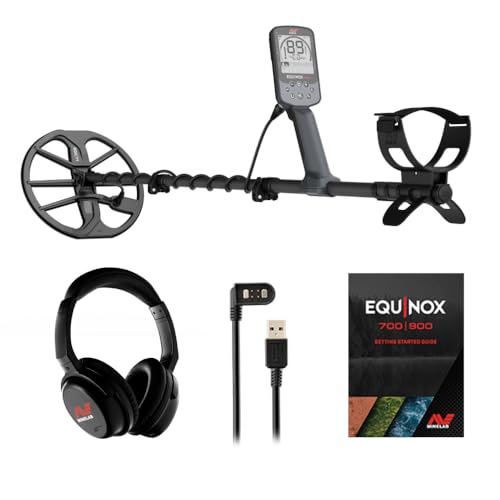
Minelab Equinox 900
$999.00Six single frequencies plus Multi-IQ, 119 target IDs, 16 feet of waterproofing and both the 11 and 6 inch coils in the box, at $999.00. For park, field and beach it is the machine most people should buy.
Best for: everyone who is not fighting mineralised ground
Check price on Amazon
XP Deus II
$1,299.00XP publishes a fully wireless machine with no cable from coil to headphones, 66 feet of waterproofing and a 5 year warranty. The obvious choice if session length rather than raw power is your constraint.
Best for: long sessions and anyone who dives
Check price on Amazon
Nokta The Legend 2
$999.00Nokta publishes 2.6 lb, 99 target IDs, 15 customisable profiles and wireless firmware updates at $999.00, which is the current flagship value argument.
Best for: the most current-generation machine per dollar
Check price on AmazonHow we chose
We did not test these machines in person and we publish no find claims. Picks are researched from manufacturer specifications and owner manuals, published listing features, waterproof ratings and warranty terms, and the recurring themes in verified owner reviews. We favour the established detector brands because coils, shafts and control boxes have to stay available years after a model is discontinued, and we place every pick in the tier where its price and capability honestly belong.
Sources
- Minelab Manticore instruction manual and product specifications
- Minelab Equinox 700 and 900 instruction manual
- XP Deus II product specifications
- Nokta The Legend 2 product listing
- Published owner reviews of the Minelab Manticore
Frequently asked questions
Minelab Manticore vs Equinox 900: which should I buy?
Buy the 900 unless you have a specific problem the Manticore solves. The 900 publishes six single frequencies plus Multi-IQ, 119 target IDs, 16 feet of waterproofing and two coils in the box for a third less money. The Manticore adds Multi-IQ+, which Minelab publishes as 50 percent more power, plus the 2D target ID map and ten search modes. That combination earns its price in mineralised soil, dense iron and surf, and very little of it shows on clean park ground.
How much does the Minelab Manticore weigh?
Minelab does not publish a weight in the product listing. It publishes a folded length of 24.8 inches from 56.7 inches and describes the design as ultra-lightweight and compact, but no figure in pounds appears, which is unusual for the brand. For comparison, Minelab publishes 2.8 lb for the Equinox 700 and 900 and 2.9 lb for the X-Terra Pro. Owners consistently report the Manticore feels more front-heavy than an Equinox.
Is the Manticore waterproof enough for beach and surf hunting?
Yes for the machine itself. Minelab publishes an IP68 rating to 16 feet and a dedicated Beach mode for sand, surf and seawater zones, which is a genuine simultaneous multi-frequency strength because salt water is conductive and single-frequency machines cannot separate the salt response from the target. Wireless headphones do not work underwater, so budget for a wired submersible set if you intend to go under rather than wade.
Is the Manticore a good first metal detector?
No, and that is not a comment on the machine. A beginner cannot yet tell the difference between a machine limitation and their own inexperience, so the extra capability goes unused while the price and the weight are felt immediately. Start with a mid-priced multi-frequency machine, learn a site properly, and upgrade when you can name the signals you are missing.
Does the Manticore find gold nuggets?
It has a Goldfield mode and Minelab lists gold nuggets among its targets, so yes within limits. A dedicated prospecting machine still beats it on the smallest gold, because those machines run much higher single frequencies: Minelab publishes 45 kHz for the Gold Monster 1000 and Fisher publishes 71 kHz for the Gold Bug 2. Read the frequency chart before you buy a general machine for prospecting.
Researched, not professional advice. This page is compiled from published specifications, manuals and owner-review consensus, not hands-on testing. Target ID numbers, depth figures and settings vary with soil chemistry, moisture, target size, depth, orientation and firmware version, so treat every figure here as a starting point and verify it against your own machine's manual and your own ground. As an Amazon Associate we earn from qualifying purchases.