Water machines
Minelab Excalibur II vs Equinox 900: Diving Machine or All-Rounder?
Quick answer
The Equinox 900 at $999.00 is the better buy for almost everyone: 119 target IDs, four modes and two coils. The Excalibur II at $1,699.00 is an analog salt water diving machine with no numeric target ID, and that is a real learning cost.
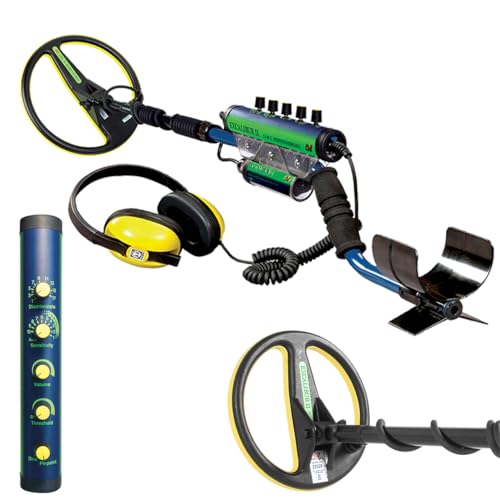
Minelab Excalibur II 1000
$1,699.00BBS multiple frequency from 1.5 to 25.5 kHz, receive coil boost for weak deep signals, NiMH pack up to 12 hours, hi-vis body and skid plate, optional side-mount shaft.
Best for: diving and surf hunting in salt water
Check price on Amazon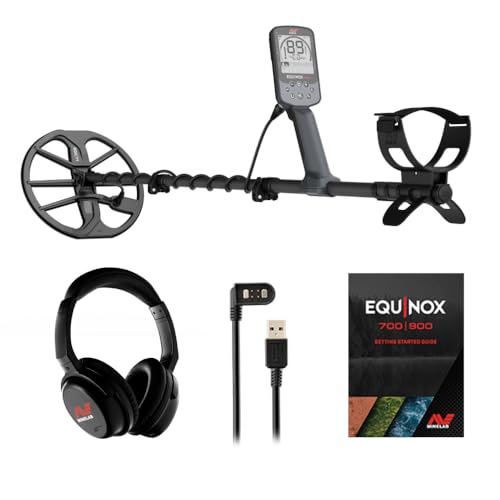
Minelab Equinox 900
$999.00Multi-IQ plus six single frequencies, 119 high-resolution target IDs, Park, Field, Beach and Gold modes, EQX 11 and EQX 6 coils, 16 feet, 2.8 lb.
Best for: the one machine that covers park, field, beach and gold
Check price on AmazonThe Equinox 900 is the better buy for almost everyone, and it costs less. The Excalibur II is a specialist salt water and diving machine, and buying one as a general detector is a mistake that people make roughly once. Minelab publishes for Minelab Excalibur II 1000 BBS multiple frequency technology spanning 1.5 kHz to 25.5 kHz, a receive coil booster that amplifies weak signals inside the coil, a NiMH rechargeable pack good for up to 12 hours, high visibility bodywork, a skid plate and an optional side-mount shaft for surf wading.
What that list does not include is a screen. The Excalibur II is an analog machine: you hunt by tone, there is no numeric target ID, and there is no display telling you 78 before you dig. For an experienced water hunter that is fine and some prefer it, because tone carries more information than a number once you can read it. For anybody still learning, it removes the fastest feedback loop available, and that is a real cost worth stating plainly rather than dressing up as purity. Minelab Equinox 900 publishes 119 high-resolution target IDs, four modes including Beach and Gold, Multi-IQ, submersion to 16 feet and two coils in the box.
Top pick
Minelab Equinox 900
119 high-resolution target IDs, Multi-IQ, four modes, two coils, submersible to 16 feet, and less money than the Excalibur.
Price was accurate when this page was compiled and changes often.
On this page
What does no numeric target ID actually mean?
It means every decision is made by ear. On the Equinox you hear a signal, look down, read a number in the 0 to 99 non-ferrous range, and decide. On the Excalibur you hear a signal and decide from tone and response alone. In salt water, where most of what you dig is a ring, a coin or a lump of lead, experienced hunters manage this perfectly well and some argue it is faster than looking at a screen.
The cost lands on beginners. A number gives you something to write down, dig, and check against what came out of the hole, and doing that a few hundred times is how people build a working sense of their own ground. Without it you are learning from tone alone, which is slower and more frustrating. Be honest about which of those two positions you are in before spending. The target ID chart explains the scale the Excalibur does not give you, and how to read a signal covers the audio skills it demands instead.
How do the published specifications compare?
Same maker, two very different generations of design, and the older machine is the more expensive one.
The Excalibur publishes BBS multiple frequency from 1.5 to 25.5 kHz and up to 12 hours of NiMH runtime, and the Equinox publishes Multi-IQ, 119 target IDs, four modes and 16 feet of submersion.
| Model | Price | Frequency type | Target ID range | Stock coil | Coil type | Waterproof depth | Weight | Collapsed length | Headphones included | Search modes |
|---|---|---|---|---|---|---|---|---|---|---|
| Minelab Excalibur II 1000 | $1,699.00 | - | - | - | - | - | - | - | - | - |
| Minelab Equinox 900 | $999.00 | Simultaneous multi-frequency plus 6 single frequencies | 0 to 99 | 11 and 6 | Double-D | 16 ft | 2.8 lb | 24 in | Yes | 4 |
Figures are taken from each manufacturer's own published listing and specification sheet. A dash means the maker does not publish that figure for that model, not that the feature is absent.
What separates them where it counts?
Nine rows. The Equinox takes most of them on paper, and the Excalibur takes the one that keeps it in production.
The Equinox 900 publishes 119 target IDs, four modes, two coils, 2.8 lb and 16 feet of submersion, while the Excalibur II publishes BBS from 1.5 to 25.5 kHz, receive coil boost and a 12 hour NiMH pack.
| Specification | Minelab Excalibur II 1000 | Minelab Equinox 900 |
|---|---|---|
| Price | $1,699.00 | $999.00 |
| Frequency technology | BBS multiple frequency, 1.5 to 25.5 kHz | Multi-IQ, 5 at once, plus 6 single frequencies |
| Target ID | None, analog tone only | 119 high-resolution IDs, 0 to 99 non-ferrous |
| Display | None published | LCD with backlight and flashlight |
| Search modes | Not published as numbered modes | Park, Field, Beach and Gold |
| Signal boost | Receive coil boost inside the coil | Not published as a named feature |
| Battery | NiMH rechargeable, up to 12 hours | Rechargeable, runtime not published in this listing |
| Water rating | Not published in this listing | 16 ft (5 m) |
| Coils supplied | One, size not published in this listing | EQX 11 and EQX 6 Double-D |
| Body | Hi-Vis fluorescent, skid plate, optional side-mount shaft | Carbon fibre, 2.8 lb, packs to 24 in |
From the Minelab listings for both machines. The Excalibur II is a long-running design and its listing publishes less than the current Equinox listing does, which is a difference in documentation as much as in capability.
Choose the Excalibur II if
You dive, or you hunt heavy surf, and you are already an experienced detectorist. BBS spanning 1.5 to 25.5 kHz is built for the specific problem of conductive salt water, and the receive coil boost is aimed at pulling weak deep signals out of exactly that environment. The hi-vis body, the skid plate and the optional side-mount shaft are all diving and surf features rather than land features, and they tell you plainly who this machine was designed for.
Choose it too if you want a machine with almost nothing to go wrong. No screen, no menu, no firmware, a sealed body and a rechargeable pack rated to 12 hours is a genuinely different reliability proposition in salt. The Excalibur II review covers it alone, and its settings and depth chart is where the operating detail sits.
Choose the Equinox 900 if
You do anything other than dive. It is submersible to 16 feet, so it covers wading and shallow water hunting completely, and it does parks, fields, mineralised dirt and gold on the same afternoon. It costs less than the Excalibur, weighs 2.8 pounds against a heavier purpose-built water body, and ships with two coils.
Choose it too if you are still learning. The 119 target IDs and the four modes are a teaching system as much as a feature list, and the Beach mode plus Multi-IQ handles wet salt sand without the analog learning curve. Equinox 900 settings by site type covers the beach setup, and detecting in salt water covers what salt does to any machine, including rinsing the thing afterwards, which people forget until a shaft seizes.
What does salt water hunting need beyond the detector?
A scoop, and not a cheap one. Wet sand is heavy and a poor scoop turns every target into a fight. CKG 304 Stainless Sand Scoop at $89.99 is the sensible starting point and CKG Titanium Sand Scoop is the lifetime version for people who are on the sand weekly. A long handle matters more than most people expect, because bending into surf is what ends sessions.
Then a mesh pouch that drains, such as Mesh Bottom Beach Finds Pouch with pinpointer holster, and headphones that survive water. Wireless does not work under water at all, which catches people out: Minelab Equinox Waterproof Headphones is the wired submersible option for the Equinox. The beach guide covers tides, cuts and where targets concentrate, which is worth more than any of this hardware.
Sources
- Minelab Excalibur II 1000 product listing and specifications
- Minelab Excalibur II instruction manual
- Minelab Equinox 700 and 900 instruction manual
- Minelab Equinox 900 product listing and specifications
Frequently asked questions
Does the Excalibur II have a target ID number?
No. It is an analog machine and you hunt by tone rather than by a numeric scale. Experienced salt water hunters often prefer that, because in the sea most targets are rings, coins or lead and tone sorts them quickly. For anybody still building a sense of their own ground it removes the fastest feedback loop, which is a genuine learning cost.
Is the Equinox 900 good enough for serious beach hunting?
Yes. Minelab publishes Multi-IQ simultaneous multi-frequency, a dedicated Beach mode and submersion to 16 feet, which covers wading and shallow water completely. Where the Excalibur still has an argument is diving and heavy surf, where a purpose-built sealed analog machine with a side-mount shaft and a receive coil boost is a different proposition.
Why does the older Excalibur cost more than the newer Equinox?
It is a long-running purpose-built water machine produced in far smaller numbers than a general-purpose platform, and specialist tools carry specialist prices. That price difference is not evidence that it finds more. For land, wading and shallow water the Equinox publishes more capability for less money, which is why it is the recommendation here.
How deep can either of these go?
Minelab publishes 16 feet for the Equinox 900. The Excalibur listing in our catalog does not publish a depth rating, although it is a machine built and sold for diving, so check the current manual for the figure before you take it down. Never infer a submersion depth from a machine being described as waterproof.
Researched, not professional advice. This page is compiled from published specifications, manuals and owner-review consensus, not hands-on testing. Target ID numbers, depth figures and settings vary with soil chemistry, moisture, target size, depth, orientation and firmware version, so treat every figure here as a starting point and verify it against your own machine's manual and your own ground. As an Amazon Associate we earn from qualifying purchases.