Minelab across the range
Minelab Target ID Scales Compared: Why A Number From One Machine Will Not Transfer
Quick answer
Minelab uses different target ID resolutions across its range, so a number learned on one machine does not transfer to another. What does transfer is the conductivity ordering: iron lowest, foil and thin gold low, nickels mid, copper and silver high. Recalibrate with reference targets on every machine.
This is the single most common source of confusion in the Minelab world, and it costs people finds. A detectorist learns that a certain number means a silver dime, upgrades, and then spends a season distrusting a perfectly good machine because the number has moved. It has moved because the scales are not the same scale, and no amount of arithmetic will make them the same scale.
What carries across is far more valuable than any number anyway. Conductivity ordering is physics. Iron reads at the bottom on every machine ever made, foil and small thin gold low, nickel alloy and small gold rings in the middle, copper and silver at the top, and a large silver coin near the very top. Learn the ordering and you can pick up any detector in the world and be useful with it inside an afternoon.
Top pick
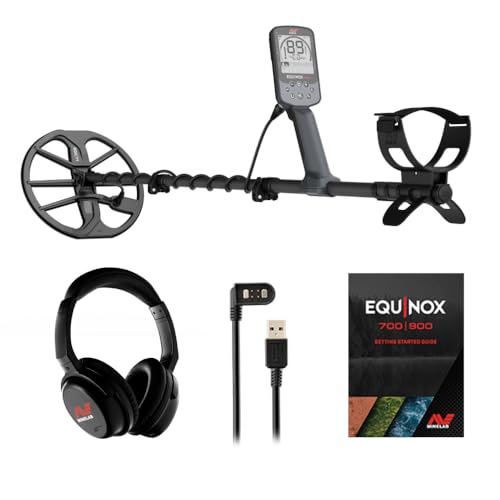
Minelab Equinox 900
Minelab describes the 900 as carrying 119 high resolution target IDs, which is the clearest published example of how much these scales differ across the range.
Price was accurate when this page was compiled and changes often.
On this page
How do the Minelab scales differ?
Grouped by how the machine presents conductivity to you, which is what actually changes between them.
Minelab presents conductivity differently at each level of its range, from the segmented discrimination display on the Vanquish to the 119 high resolution target IDs Minelab publishes for the Equinox 900 and the two dimensional target trace on the Manticore.
| Machine | How targets are shown | Practical consequence |
|---|---|---|
| Minelab Vanquish 340 | Segmented discrimination display with tones, three modes | Learn the tones, the display confirms rather than decides |
| Minelab Vanquish 540 Pro-Pack | Segmented display plus iron bias and ten volume settings | More audio information about the same underlying reading |
| Minelab X-Terra Pro | 30 discrimination segments with selectable single frequencies | Numbers shift when you change the operating frequency |
| Minelab X-Terra Elite | 30 discrimination segments with Multi-IQ | Steadier readings across mixed and salty ground |
| Minelab Equinox 700 | High resolution numeric target ID with Multi-IQ | Fine grained coin work, four single frequencies available |
| Minelab Equinox 900 | Minelab publishes 119 high resolution target IDs | The finest numeric resolution in the Equinox line |
| Minelab Manticore | Numeric ID plus a 2D target trace showing ferrous content | Two axes of information rather than one number |
| Minelab GO-FIND 44 | Simplified display aimed at casual use | A travel machine rather than a coin hunting instrument |
Presentation descriptions follow Minelab published material and manufacturer listings. Where a specific segment count or ID resolution matters to you, read it from the specification sheet for your exact model and firmware rather than from any third party page.
Why is there no conversion factor?
People ask for one constantly and you should distrust anybody who supplies it. The reason no reliable multiplier exists is that the scales are not simply the same scale stretched. They are different resolutions built on different processing, and machines that run simultaneous multi frequency combine responses differently from machines running one selected frequency. The low conductive end in particular does not move in step with the high conductive end.
There is a second reason, which is that even within a single machine the reading moves with soil, depth, corrosion and orientation by more than the difference people are trying to convert. Chasing a conversion factor is chasing precision that the underlying measurement does not have. Calibrate the machine you are holding, in the soil you hunt, and the problem disappears. The Manticore chart, the X-Terra Pro chart and the Vanquish 540 chart each give the ordering for their own machine in the same format so you can see how little of the difference is real.
What does transfer between machines?
Rather more than people expect, once you stop looking at the numbers.
Conductivity ordering, target behaviour, iron wrap and the effect of depth and corrosion carry across every detector ever made, while specific target ID numbers, mode names and segment counts do not.
| Knowledge | Transfers? | Why |
|---|---|---|
| Conductivity ordering of targets | Yes, completely | It is physics, not a design decision |
| Large flat iron wrapping into the high bands | Yes | A consequence of target size and shape on any VLF machine |
| Gold overlapping aluminium | Yes, permanently | Similar conductivity and size produce similar responses |
| Depth degrading the reading before the signal | Yes | True of every detector |
| Corroded targets reading low | Yes | Surface condition changes the response |
| Specific target ID numbers | No | Different resolutions and different processing |
| Sensitivity settings | No | Scales and ground handling differ between models |
| Mode names and segment counts | No | Model specific, read your own manual |
The transferable list is the one worth memorising. It is also why an experienced detectorist can be productive with a borrowed machine within an hour, while a beginner with the same machine and a printed number chart struggles for a season.
Moving to a new Minelab without losing a season
- Do not convert, recalibrate. Put the old numbers out of your mind rather than trying to translate them. Translation is where the confusion comes from.
- Air test your reference targets. Sweep the same coins, tab, foil and nail you used on the old machine, and write down what the new one says.
- Bury them in your own soil. Four inches and eight inches, marked, left to settle. Sweep each in the modes you will actually hunt in.
- Dig everything for two sessions. Two sessions of digging every signal on a known site teaches you the new machine faster than any amount of reading.
- Write the card and move on. Your reference readings on a card in the pouch. After that, hunt the machine rather than studying it.
Where the extra resolution is worth paying for
Finer target ID is worth real money on some sites and almost nothing on others.
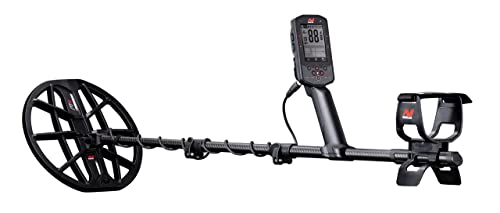
Minelab Manticore
$1,499.00A numeric ID plus a two dimensional trace carrying ferrous content, which is the clearest picture of a doubtful target Minelab offers.
Best for: iron heavy old sites where masking costs you finds
Check price on Amazon Minelab Equinox 900
$999.00Minelab publishes 119 high resolution target IDs, which is the resolution coin hunters want in heavy clad trash.
Best for: coin hunting where adjacent conductivity values matter
Check price on Amazon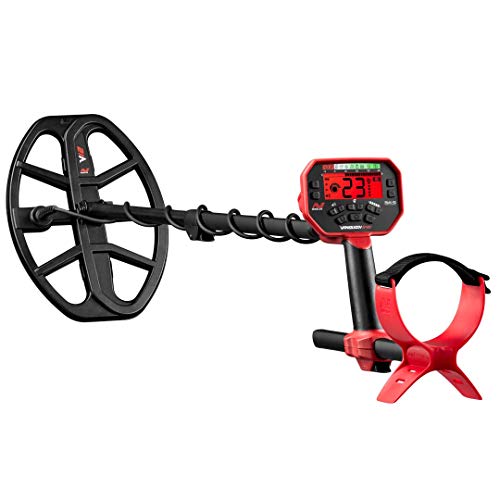
Minelab Vanquish 540 Pro-Pack
$399.00The same Multi-IQ technology with a simpler display, which on open ground costs you very little of what matters.
Best for: anyone who would rather spend the difference on permissions and petrol
Check price on AmazonHow we chose
We did not test these machines in person and we publish no find claims. Picks are researched from manufacturer specifications and owner manuals, published listing features, waterproof ratings and warranty terms, and the recurring themes in verified owner reviews. We favour the established detector brands because coils, shafts and control boxes have to stay available years after a model is discontinued, and we place every pick in the tier where its price and capability honestly belong.
Sources
- Minelab instruction manuals for the Manticore, Equinox 700 and 900, X-Terra Pro and Elite, and Vanquish series
- Minelab published product specification sheets for the current range
- Manufacturer listing specifications for the Equinox 900, Manticore, X-Terra and Vanquish models
Frequently asked questions
Is there a conversion chart between Equinox and Manticore numbers?
Not a reliable one, and anybody publishing a single multiplier is overstating what the underlying measurement supports. The scales differ in resolution and processing, and the low conductive end does not move in step with the high conductive end. Recalibrate with your own reference targets on the new machine, which takes an afternoon and is correct rather than approximate.
Why do my old forum notes not match my new detector?
Most likely because they were written for an earlier generation of machine with a different target ID scale. Minelab has changed ID resolution across generations, so numbers from older discussions belong to a different detector. Check which model and which firmware a number came from before trusting it, and prefer readings you have taken yourself in your own soil.
Does higher ID resolution mean a deeper machine?
No. Resolution is about how finely the machine reports conductivity, not about how far it reaches. Depth comes from transmit power, coil size, frequency behaviour and how well the machine handles your ground. A high resolution scale helps you decide whether to dig a target you can already hear, which is a different and often more valuable problem.
Which Minelab should I buy if I want the best target information?
The Manticore gives the most, because it adds a two dimensional trace showing ferrous content alongside the numeric ID, which is exactly what helps on iron heavy sites. The Equinox 900 gives the finest numeric scale Minelab publishes in that line. Whether either is worth the difference over a Vanquish depends entirely on how trashy your sites are.
Do coils change the target ID as well?
Yes, enough to matter. A large coil averages more ground and can blur a small target, while a small coil resolves individual targets and often reads them more cleanly in trash. If you keep two coils, record your reference target readings with each one. It takes twenty minutes and stops you second guessing the machine after every coil swap.
Researched, not professional advice. This page is compiled from published specifications, manuals and owner-review consensus, not hands-on testing. Target ID numbers, depth figures and settings vary with soil chemistry, moisture, target size, depth, orientation and firmware version, so treat every figure here as a starting point and verify it against your own machine's manual and your own ground. As an Amazon Associate we earn from qualifying purchases.