Minelab Manticore
Minelab Manticore Depth Chart: What Governs Depth And How To Measure Your Own
Quick answer
Minelab publishes no depth table for the Manticore, and neither does any other manufacturer, because depth depends on target size, target orientation, coil size, soil mineralisation and moisture. The only honest depth figure is the one you measure by burying known targets at marked depths in your own ground.
Every few weeks somebody publishes a confident table saying a given machine reaches a specific number of inches on a silver dime. Ignore it. Depth is not a property of a detector. It is a property of a detector plus a coil plus a target plus the ground between them, and changing any one of those four moves the answer by inches. The Minelab Manticore is a high power machine and it goes deep for its class, but the number it reaches in your soil is yours to find out.
What this page gives you instead is the list of things that actually set the limit, the relative effect of each, and a repeatable method for establishing your own depth ceiling so you know when a signal is at the edge of what your setup can resolve. That number is worth having, because it tells you when to slow down, when to fit a different coil and when a faint signal deserves a dig.
Top pick
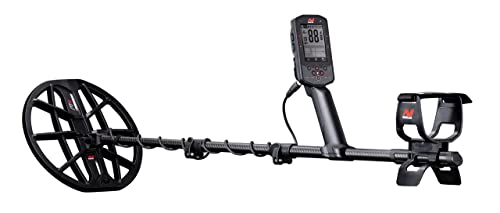
Minelab Manticore
Minelab describes Multi-IQ+ as its highest powered simultaneous multi frequency platform, which is where the depth reputation comes from.
Price was accurate when this page was compiled and changes often.
On this page
Why does nobody publish a depth specification?
Because it would be meaningless and they know it. A detector responds to the size and conductivity of a target, so a hammered silver penny and a silver dollar have completely different depth ceilings on the same machine. Soil then attenuates the signal, and mineralised or wet salty ground attenuates it hard. Two sites twenty miles apart can differ by several inches on the same coin with the same machine and the same settings.
What manufacturers do publish, and what the catalog listing for the Manticore states, is that Multi-IQ+ carries substantially more transmit power than the earlier platform. More power helps. It does not produce a fixed number of inches, and any page that gives you one without naming the target, the coil and the soil is repeating a number somebody invented.
What actually sets your depth limit?
Ranked roughly by how much each one moves the answer on a coin sized target.
Target size and soil mineralisation move achievable depth more than any setting on the machine, which is why the same detector can read a large silver coin cleanly and miss a small thin one at half the depth in the same hole.
| Variable | Effect on depth | What you can do about it |
|---|---|---|
| Target size | Very large. A big silver coin can be detectable at roughly twice the depth of a small thin one | Nothing, except to know which targets you are realistically chasing |
| Soil mineralisation | Very large. Heavily mineralised ground can cut usable depth dramatically | Balance properly, use the mode built for it, accept the loss |
| Target orientation | Large. A coin on edge presents far less to the coil than one lying flat | Sweep from a second direction before dismissing a faint signal |
| Coil size | Moderate on coins, larger on big targets | A larger coil for open ground, a smaller one for trash |
| Sensitivity and stability | Moderate. An unstable machine at maximum finds less than a stable one below it | Set by ear, not by the number on the screen |
| Ground moisture | Moderate and changeable. Damp ground often reads deeper than bone dry | Hunt after rain where the site allows it |
| Trash and iron nearby | Large in practice. Masking hides targets well inside your depth ceiling | Smaller coil, higher recovery speed, slow down |
| Sweep speed | Moderate. Swinging too fast costs deep targets | Slow, low and overlapping, every time |
This table gives directions and relative sizes rather than inch figures on purpose. An inch figure that is not tied to a specific target, coil and soil is not information.
How do you measure your own depth ceiling?
Build a test garden and be honest with it. Bury one of each target you care about at measured depths, mark the positions so you can find them again without the detector, and let the ground settle for a few weeks before you draw conclusions, because freshly disturbed soil reads differently from undisturbed soil. Then work through them with each coil and each mode you use, and record two things for each: the depth at which the target ID stops being stable, and the depth at which the audio disappears entirely.
The first of those numbers is the useful one. The point where the ID starts wandering is the point where you stop being able to judge a target, and that is your practical working depth. Everything past it is a dig on faith. Pair the result with the expected detection depth calculator to see how your measured ceiling compares with what the target size and coil combination predicts, and read the Manticore target ID chart for what the numbers are doing as they fade.
What does coil choice do to depth?
Coil size trades coverage and raw depth against the ability to separate two targets close together.
A larger coil covers more ground per sweep and reaches deeper on large targets, while a small coil sacrifices coverage to resolve individual targets in dense iron, and Minelab states directly that its larger coil has more depth capability than its smaller ones.
| Coil size | Depth on coin sized targets | Best use | Trade off |
|---|---|---|---|
| Around 6 inches | Least, but sees small targets clearly | Dense trash, old house sites, tight corners | Slow to cover ground |
| Around 10 to 11 inches | General purpose depth | Most parks, fields and beaches | Compromised in the worst iron |
| Elliptical around 10 by 5 | Similar to a mid size round on coins | Iron infested ground where you still need coverage | Narrower footprint per sweep |
| Around 15 inches | Most, particularly on larger targets | Open fields, beaches, pasture | Blurs targets that sit close together |
Minelab states in its published coil material that the 15 inch coil has more depth capability than its 6 and 11 inch coils, and that the EQX coils are submersible to 16 feet with the X-Terra Pro, Equinox 700 and 900. Check compatibility for your specific machine before buying any coil.
Gear worth pairing with a depth hunt
Depth hunting means more digging per find, which makes recovery gear worth more than it looks.

Minelab EQX 15 Coil (15 inch)
$290.00Minelab describes this as the largest coil in the EQX range with more depth capability than the 6 and 11 inch coils, and waterproof to 16 feet on current machines.
Best for: fields, pasture and beaches where coverage matters
Check price on Amazon
Minelab EQX 06 Coil (6 inch)
$225.00A 6 inch Double-D that Minelab positions for high trash areas and small target sensitivity, which is the opposite problem to open ground depth.
Best for: old house sites and iron heavy parks
Check price on Amazon
Minelab PRO-FIND 35
$99.00Waterproof to 10 feet per the listing, with ferrous tone ID and five sensitivity levels, so deep holes get shorter.
Best for: anyone digging past six inches regularly
Check price on AmazonHow we chose
We did not test these machines in person and we publish no find claims. Picks are researched from manufacturer specifications and owner manuals, published listing features, waterproof ratings and warranty terms, and the recurring themes in verified owner reviews. We favour the established detector brands because coils, shafts and control boxes have to stay available years after a model is discontinued, and we place every pick in the tier where its price and capability honestly belong.
Sources
- Minelab Manticore instruction manual, depth indicator and settings chapters
- Minelab published coil documentation for the EQX 06, EQX 11 and EQX 15
- Manufacturer listing specifications for the Manticore and the EQX coil range
Frequently asked questions
How deep will the Manticore detect a silver coin?
There is no single answer, and anyone who gives you one is guessing. A large silver coin lying flat in mild, damp, unmineralised soil with a big coil is a very different proposition from a small thin coin on edge in mineralised ground. Bury a silver coin at measured depths in your own soil and record where the target ID stops being stable. That number is your answer.
Does the depth indicator on the screen tell me the real depth?
It is an estimate based on signal strength, and it is calibrated around coin sized targets. A large object reads shallower than it is and a small one reads deeper, and mineralised ground skews it further. Use it as a rough guide for how carefully to dig, not as a measurement. Your pinpointer and the side of the hole will tell you the truth.
Will a bigger coil always go deeper?
On larger targets in open ground, generally yes. On small targets, not necessarily, because a large coil spreads its field over more ground and can be less sensitive to a small object than a smaller coil. It also merges targets that sit close together, which loses you finds in trash. Match the coil to the site rather than treating size as a straight upgrade.
Does wet ground really make a difference?
Often a noticeable one. Damp soil generally conducts better and many detectorists report better depth after rain on inland sites. Salt water is the opposite problem, because conductive salt loads the signal and the machine has to work against it. That is why the beach configuration exists and why sensitivity usually has to come down at the water line.
Why did I find a coin under an area I had already covered?
Almost always masking or coverage rather than depth. Iron beside a coin can hide it completely, a fast swing skips ground, and sweeping in one direction only presents the target at one angle. Grid the site in two directions, overlap every sweep, slow down, and fit a smaller coil where iron is dense. Most missed finds were inside the machine range the whole time.
Researched, not professional advice. This page is compiled from published specifications, manuals and owner-review consensus, not hands-on testing. Target ID numbers, depth figures and settings vary with soil chemistry, moisture, target size, depth, orientation and firmware version, so treat every figure here as a starting point and verify it against your own machine's manual and your own ground. As an Amazon Associate we earn from qualifying purchases.