Garrett ACE Apex
Garrett ACE Apex Settings by Site Type, Frequency by Frequency
Quick answer
On the Garrett ACE Apex, choose Multi-Frequency as the default for mixed inland ground, Multi-Salt for wet salt sand, and a higher single frequency such as 20 kHz when you are specifically hunting small gold or thin hammered silver. Set Iron Volume low rather than rejecting iron outright.
The ACE Apex gives you six frequency options where the rest of the ACE line gives you one, which turns settings advice from a single recipe into a decision per site. Garrett publishes the options as 5 kHz, 10 kHz, 15 kHz, 20 kHz, Multi-Frequency and Multi-Salt, along with Iron Volume, Z-Lynk wireless and a 6 by 11 inch Viper Double-D coil.
The table below is a starting point, not a preset sheet. Soil mineralisation changes within a single field and every reading you take is conditional on it, so treat each row as a place to begin and then adjust one control at a time.
Top pick

Garrett ACE Apex
Multi-Salt and Multi-Frequency in one machine means one detector covers the beach and the pasture without a compromise you have to live with all season.
Price was accurate when this page was compiled and changes often.
On this page
What should the Apex be set to on each kind of ground?
Sensitivity is again expressed relative to the chatter ceiling you establish on arrival, because that ceiling belongs to the soil.
Multi-Frequency handles most inland ground, Multi-Salt is the only sensible choice on wet salt sand, and 20 kHz is the setting that earns its keep when you are specifically after small gold.
| Site type | Multi-Flex setting | Sensitivity | Iron Volume | Coil and sweep |
|---|---|---|---|---|
| Mown town park | Multi-Frequency | Two steps below chatter | Low but audible | Viper coil, slow, heavy overlap |
| Old house site, heavy iron | Multi-Frequency or 15 kHz | Moderate | Low, never off | Slowest sweep you can manage |
| Open pasture, permission | Multi-Frequency | Ceiling for the ground | Low | Viper or the larger aftermarket coil |
| Hammered silver, medieval ground | 15 or 20 kHz | Ceiling for the ground | Low | Slow sweep, tight lanes |
| Gold jewellery, dry sand | 20 kHz | High | Low | Grid the towel line |
| Wet salt sand | Multi-Salt | As high as the mode allows | Low | Short sweeps, watch the tide |
| Freshwater bank | Multi-Frequency | High | Low | Coil may be wet, box must not be |
| Deep silver on clean ground | 5 or 10 kHz | Ceiling for the ground | Low | Larger coil, long lanes |
Starting points expressed relative to your own noise ceiling, not manufacturer settings. The Apex owner's manual is the authority on what each control does on your firmware revision.
Why is Multi-Frequency not always the right answer?
Because a simultaneous multi-frequency mode is a compromise by design. It gives good results across the whole conductivity range, which is exactly what you want when you do not know what is in the ground. When you do know, a single frequency aimed at that target class can report more confidently. Someone working a known medieval field for thin hammered silver has a specific target class in mind, and a higher single frequency serves it better than a general-purpose mode.
The same logic runs the other way. On clean ground where the prize is a deep large silver coin, a low single frequency couples better with a high conductor. The frequency chart sets out each option and what it favours.
How should Iron Volume be used rather than rejection?
Turn iron down to the quietest level you can still hear, and leave it there. Garrett describes the control as adjusting iron target volume independently while keeping desirable signals clear, and that is the correct use: iron stays present as information without dominating the session. Rejecting iron outright deletes the evidence that a good number has ferrous company, which is the commonest way to walk past a non-ferrous object lying against a nail.
Wireless audio makes this bearable over hours. Garrett describes Z-Lynk as six times faster than Bluetooth for real-time, cable-free detecting, and the reason that matters is latency: ordinary Bluetooth delay makes audio pinpointing useless. If you want that channel to work properly, use a matched Z-Lynk set rather than whatever headphones are in the house.
What does the beach actually demand?
Three things beyond the mode selection. A pouch that drains, so you are not carrying a kilogram of wet grit by lunchtime. A tide table, because the productive window on most beaches is the falling tide and the low water period after it. And a willingness to grid a small promising area properly instead of wandering a large one, which is what the coverage and sweep time tool quantifies. The Apex target ID chart covers how the readings themselves behave once you are there.
What supports an Apex in the field?
A wireless machine with a rechargeable battery needs a slightly different support kit from an AA machine.
Garrett ACE Apex
$384.99Six Multi-Flex settings including Multi-Salt, plus Iron Volume, at $384.99.
Best for: one machine for beach and inland
Check price on Amazon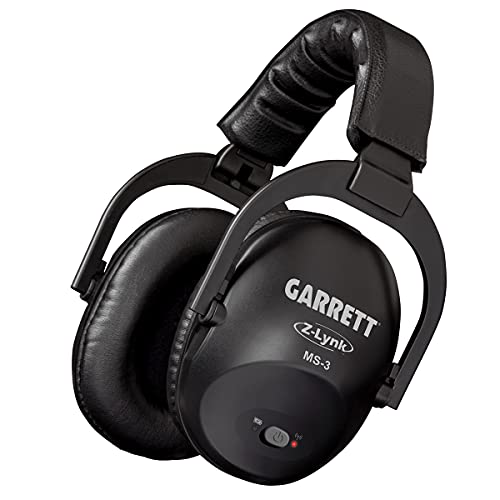
Garrett MS-3 Z-Lynk Wireless Headphones
$107.99Z-Lynk headphones with a built-in receiver, which is what the Apex is designed to talk to.
Best for: getting the low-latency audio the machine assumes
Check price on Amazon
Garrett Pro-Pointer AT
$109.99Submersible to twenty feet with a fast retune for mineralised ground and wet sand.
Best for: beach and water hunters
Check price on AmazonHow we chose
We did not test these machines in person and we publish no find claims. Picks are researched from manufacturer specifications and owner manuals, published listing features, waterproof ratings and warranty terms, and the recurring themes in verified owner reviews. We favour the established detector brands because coils, shafts and control boxes have to stay available years after a model is discontinued, and we place every pick in the tier where its price and capability honestly belong.
Sources
- Garrett ACE Apex owner's manual
- Garrett ACE Apex published listing, for Multi-Flex, Iron Volume, Z-Lynk and the Viper searchcoil
- Garrett Z-Lynk wireless technology specification
Frequently asked questions
What frequency should I leave the Apex on by default?
Multi-Frequency, for mixed inland ground where you do not know what is buried. It performs across the whole conductivity range rather than favouring one end, which is what you want when the site is unknown. Switch to a single frequency only when you have a specific target class in mind, and switch to Multi-Salt whenever you are on wet salt sand.
Can the ACE Apex handle saltwater beaches?
Garrett gives it a Multi-Salt setting specifically for that ground, which the AA-powered ACE machines do not have. That covers wet sand and the surf line from the shore. It does not make the machine submersible: the Apex follows the ACE pattern of a waterproof searchcoil with a control box that is not waterproof, so keep the box dry.
Should I ever switch Iron Volume all the way off?
Rarely, and not while you are learning a site. Iron audio at a low level tells you when a promising number has ferrous company, which is the commonest reason a good target gets walked past. On genuinely clean pasture where iron is rare, turning it off reduces fatigue. On a farmyard or an old house site it should stay on.
Do I need the Z-Lynk headphones or will any Bluetooth pair work?
Use a matched Z-Lynk set. Garrett describes Z-Lynk as six times faster than Bluetooth for real-time detecting, and that latency difference is the whole point: with ordinary Bluetooth delay the tone arrives after the coil has passed the target, which makes pinpointing by ear impossible. Cheap general-purpose headphones are a false economy on a wireless machine.
How much sensitivity should I run on the Apex?
As much as the ground carries without the machine chattering with the coil held still. That ceiling changes with soil, moisture and nearby electrical noise, so establish it at the start of every session and drop two steps. If the chatter persists with the coil raised in the air, the source is electrical rather than mineral and a frequency change is the better fix.
Researched, not professional advice. This page is compiled from published specifications, manuals and owner-review consensus, not hands-on testing. Target ID numbers, depth figures and settings vary with soil chemistry, moisture, target size, depth, orientation and firmware version, so treat every figure here as a starting point and verify it against your own machine's manual and your own ground. As an Amazon Associate we earn from qualifying purchases.