Calculator
Search Grid Planner
Quick answer
A 100 by 100 foot plot swept in 4 foot lanes needs 25 lanes and about 2,500 feet of walking, roughly half a mile, to cover once. Doubling back at 90 degrees for a second pass doubles both. Enter your own site dimensions below.
Unstructured detecting covers the middle of a field repeatedly and the edges not at all. A grid fixes that, and it also gives you something memory cannot: a record of exactly where you stopped, so a site can be worked across several visits without guessing.
Lanes to walk
Gear for working a site methodically
Top matches update when you calculate.
A general-purpose coil, something to take the weight off your arm, and a light for finishing a lane and filling holes properly at dusk.

Minelab EQX 11 Coil (11 inch)
$280.00The stock general-purpose coil, and the right replacement if the original is damaged.
Best for: general detecting
Check price on Amazon
Nokta LG28 Coil (11 inch)
$144.99The stock-size round DD, and the replacement if yours is damaged.
Best for: general detecting with The Legend
Check price on Amazon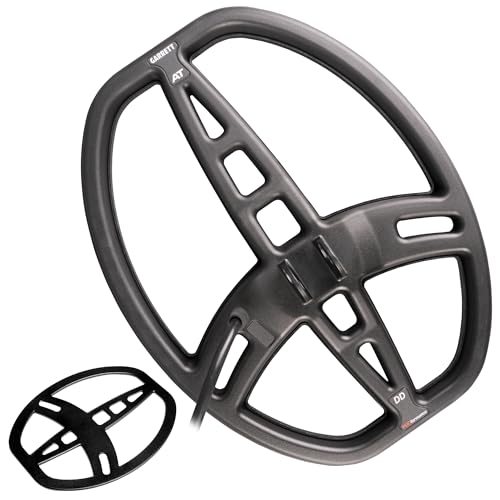
Garrett 8.5 by 11 PROformance DD Coil
$144.95The stock AT Pro and AT Gold coil, sold as a replacement.
Best for: replacing a damaged stock coil
Check price on Amazon
LimbSaver Comfort-Tech Metal Detector Sling
$20.23Takes the machine's weight off your forearm, which is the injury most detectorists actually get.
Best for: anyone detecting more than an hour at a time
Check price on Amazon
LHKNL Rechargeable LED Headlamp
$19.99Backfilling a hole properly in fading light needs both hands and a light.
Best for: evening hunts and filling holes after sunset
Check price on Amazon
CKG Finds and Digger Pouch
$24.99Separate compartments for finds, trash and the pinpointer, which is the only pouch layout that actually works.
Best for: general use
Check price on AmazonHow to lay the grid out
Pick the longer dimension to walk along, because every turn costs time and concentration. Put a marker at each end of your first lane, walk it, move both markers one lane spacing across, and repeat. On a site you will return to, leave the edge markers in place between visits if the landowner is happy for you to.
Why lane spacing is the arc, not the coil
This trips people up constantly. Your coil width determines how far you advance with each sweep along a lane. The width of the strip that lane actually clears is how wide you swing, which is the arc. Set your lanes to the coil width and you will walk four times as far as you need to; set them wider than the arc and you leave unsearched ground between every lane.
The second pass is not optional on a good site
A coil sees an elongated target differently depending on how it is lying, so a nail-shaped or ring-shaped object that gives almost nothing on a north to south pass can be obvious on an east to west one. On any site worth real time, cross-grid it. Expect the second pass to return roughly a quarter to a half of the signals the first one did, which is a much better return than starting a fresh site.
Frequently asked questions
Why grid a site instead of just wandering?
Because unstructured detecting covers the middle of a field three times and the edges never. Gridding is the single habit that separates people who clear a site from people who pick over it for years. It also lets you stop and come back: a marked lane is a record of exactly where you finished, which memory is not.
How far apart should the lanes be?
Lane spacing should equal your sweep arc width, not your coil width. The coil width sets how much you advance with each sweep along the lane; the arc is how wide a strip that lane covers. Walking lanes 4 feet apart while sweeping a 4 foot arc gives complete coverage with no gap and no wasted double pass.
Should I grid in two directions?
On a site worth real time, yes. Detecting the same ground a second time at 90 degrees to the first pass finds targets the first pass missed, because a coil responds differently to an elongated target depending on which way it is lying. Expect a second pass to return somewhere between a quarter and half as many signals as the first.
What do I use to mark the lanes?
Anything visible and removable. Garden pegs and mason line are the usual answer for a worked site, tent pegs for something quicker, and on open grass a pair of markers moved along the edge each pass is enough. Whatever you use, take every piece of it home with you.
How long will a gridded site actually take?
Take the walking time this planner gives you and multiply it by two to four, depending on trash. Walking distance is the swinging half of the day only, and on a site returning a signal every minute or two the digging is the larger half. Run the dig time budget calculator against the same site.
Researched, not professional advice. This tool produces an estimate from the figures you enter and from published manufacturer specifications. Depth, ground coverage and battery runtime all vary with soil chemistry, moisture, temperature and how a machine is configured. Any metal value shown is a melt estimate only: it is not an offer, an appraisal or a guarantee of what a buyer will pay, and collectable coins are frequently worth far more than their metal. Get the landowner's permission before detecting on ground you do not own, keep off protected land, and fill every hole.