Garrett ACE Apex
Garrett ACE Apex Target ID Chart and How Frequency Moves It
Quick answer
The Garrett ACE Apex reads targets in the usual conductivity order, iron low through to silver high, but the Apex has a complication the rest of the ACE line does not: Multi-Flex lets you change the operating frequency, and changing frequency changes how marginal low-conductive targets report on the scale.
Garrett states that the ACE Apex offers Multi-Flex technology with a choice of 5 kHz, 10 kHz, 15 kHz, 20 kHz, Multi-Frequency or Multi-Salt, along with an Iron Volume control that lets you adjust iron target volume independently while keeping desirable signals clear. That combination makes an Apex target ID chart a genuinely different document from an ACE 300 chart, because you are not reading one machine, you are reading six configurations of one machine.
The ordering does not change: conductivity still runs iron low to silver high. What changes is where the boundaries fall for small, thin and low-conductive objects, which is precisely the band that matters if you are hunting jewellery or hammered silver.
Top pick

Garrett ACE Apex
Six frequency options including Multi-Salt, Z-Lynk wireless and a 6 by 11 Double-D Viper coil, at a price well under the flagship machines it borrows ideas from.
Price was accurate when this page was compiled and changes often.
On this page
What does frequency choice do to a target ID?
Lower frequencies couple more efficiently with high conductors such as silver and copper, and higher frequencies couple better with small, thin and poorly conductive targets such as fine gold chain, small hammered silver and foil. On a machine that lets you choose, that preference shows up as a shift in how confidently a marginal target reports, and sometimes as a shift in the number itself.
The effect is largest exactly where you least want ambiguity: the bottom half of the scale. A thin gold ring that barely registers at 5 kHz may report clearly at 20 kHz. A deep silver coin that reads confidently at 5 kHz may become uncertain at 20 kHz. This is the trade the Apex hands you, and the frequency chart page sets out each option in full.
What does each band read on the Apex?
The ordering below holds in every Multi-Flex setting. The confidence column is where frequency choice shows up.
Frequency choice barely moves the top of the scale where silver and copper live, and moves the bottom of the scale most, which is where small gold and thin silver are decided.
| Target | Position on the scale | Best Multi-Flex setting | How much frequency moves it |
|---|---|---|---|
| Nails and small iron | Bottom | Any; use Iron Volume rather than rejection | Little |
| Foil and thin chain | Low | 20 kHz | Large; often the difference between a signal and silence |
| Small or thin gold | Low to lower middle | 20 kHz, or Multi-Frequency | Large |
| Nickel and mid conductors | Middle | Multi-Frequency | Moderate |
| Pull tabs and aluminium | Middle to upper middle | Any | Moderate |
| Small hammered silver | Upper middle, and low if very thin | 15 or 20 kHz | Large when thin |
| Copper cents and dimes | High | 5 or 10 kHz, or Multi-Frequency | Small |
| Quarters and large copper | High | 5 kHz | Small |
| Large silver | Top | 5 kHz | Small |
| Wet salt sand background | Reads as noise, not a target | Multi-Salt | Decisive; this is what the mode exists for |
Positions describe the conductivity ordering on the machine's own scale rather than manufacturer-published lookup values. The Apex manual gives the scale the machine displays. Soil chemistry, moisture, depth, target orientation, corrosion and firmware revision all shift what you see, and on this machine the frequency you have selected shifts it too.
How do you calibrate an Apex to your own ground?
The same buried-target method as any machine, run once per frequency you intend to use. That sounds laborious and it takes one afternoon, after which you own a piece of information nobody can sell you: what your soil does to your machine in each of its modes.
Record the number and the tone for each target at each depth in each frequency. The pattern that emerges is usually simple and worth knowing: most people discover that two of the six settings do nearly all their work, and that the others exist for specific ground they visit rarely. The settings by site type page maps those choices onto real ground.
What does Iron Volume change about reading targets?
Garrett describes Iron Volume as adjusting the volume of iron targets independently while keeping desirable signals clear. That is a more useful control than plain rejection, because it keeps ferrous targets audible at a level you choose instead of deleting them. On an iron-heavy site, turning iron down rather than off preserves the information that tells you a good number has a nail underneath it.
Used with wireless audio it becomes genuinely comfortable to work a nail bed for hours. Garrett builds Z-Lynk into the Apex and describes it as six times faster than Bluetooth for real-time, cable-free detecting, which is the whole point: ordinary Bluetooth latency makes audio pinpointing impossible.
What pairs with an Apex?
The Apex is a wireless-first machine, so matching headphones are less of an optional extra here than on the AA-powered ACEs.
Garrett ACE Apex
$384.99Six Multi-Flex options, Iron Volume and Z-Lynk built in, at $384.99.
Best for: a multi-frequency machine without a flagship price
Check price on Amazon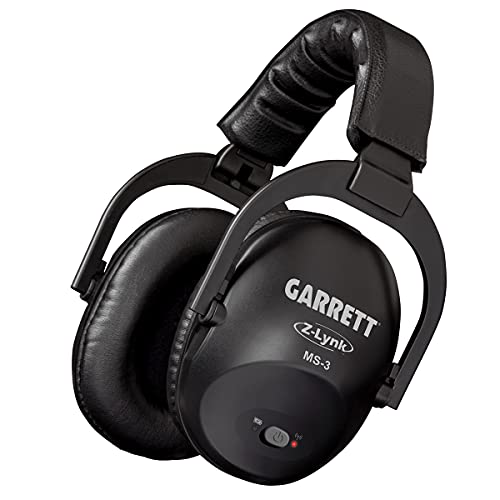
Garrett MS-3 Z-Lynk Wireless Headphones
$107.99Garrett's own Z-Lynk headphones with a built-in receiver and a volume control for lifting weak signals.
Best for: anyone running a Z-Lynk machine
Check price on Amazon
NEL Hunter 12.5 by 8.5 Coil for ACE Apex
$149.95A 12.5 by 8.5 inch Double-D cut for the Apex, for open ground where the Viper coil is the limit.
Best for: large permissions
Check price on AmazonHow we chose
We did not test these machines in person and we publish no find claims. Picks are researched from manufacturer specifications and owner manuals, published listing features, waterproof ratings and warranty terms, and the recurring themes in verified owner reviews. We favour the established detector brands because coils, shafts and control boxes have to stay available years after a model is discontinued, and we place every pick in the tier where its price and capability honestly belong.
Sources
- Garrett ACE Apex owner's manual
- Garrett ACE Apex published listing, for Multi-Flex frequencies, Iron Volume, Z-Lynk and the Viper coil
- Garrett Z-Lynk wireless technology specification
Frequently asked questions
Does the Garrett ACE Apex use a 0 to 99 target ID scale?
The Apex manual states the target ID scale the machine displays, and that is the document to check for your firmware. What Garrett does publish in the product listing is the Multi-Flex frequency set and the Iron Volume control. Rather than trusting a scale quoted second hand, read the number your own machine gives a known nickel and build outwards from there.
Which Apex frequency should I use for gold jewellery?
The higher single frequencies, 15 or 20 kHz, respond better to small thin low-conductive targets, which is what most gold jewellery is. Multi-Frequency is the sensible default when you are not sure. Be realistic: no frequency separates a small gold ring from a pull tab by number alone, so you still dig the mid range and accept the trash ratio.
What is Multi-Salt on the Apex for?
Wet salt sand. Salt water conducts, so a machine reads the ground itself as a target and you are forced to give away sensitivity. Multi-Salt is Garrett's mode for that condition and it is the single biggest functional difference between the Apex and the AA-powered ACE machines, which have no answer to conductive ground beyond turning sensitivity down.
Does changing frequency change the target ID numbers?
It can, most noticeably at the bottom of the scale where small and thin targets live. High conductors such as silver and copper are comparatively stable across settings. This is why calibrating once is not enough on an Apex: bury your test targets and run the row in each frequency you intend to hunt in, then keep the results on a card.
Is the Apex control box waterproof?
Garrett lists a waterproof searchcoil for the Apex, in the same pattern as the rest of the ACE line, where the coil is waterproof and the control box is not. If you need to submerge a machine, the Vortex line is listed as submersible to sixteen feet and the AT line to ten feet. Match the family to the water before choosing a model.
Researched, not professional advice. This page is compiled from published specifications, manuals and owner-review consensus, not hands-on testing. Target ID numbers, depth figures and settings vary with soil chemistry, moisture, target size, depth, orientation and firmware version, so treat every figure here as a starting point and verify it against your own machine's manual and your own ground. As an Amazon Associate we earn from qualifying purchases.