Detecting gear
Titanium vs Stainless Sand Scoop: When the Upgrade Pays for Itself
Quick answer
A titanium sand scoop at $198.99 does not corrode in salt water and is non-magnetic, so it will not trigger a detector. A 304 stainless scoop at $89.99 costs less than half as much and holds up fine in fresh water and dry sand. Titanium pays for itself in salt water and is an extravagance anywhere else.
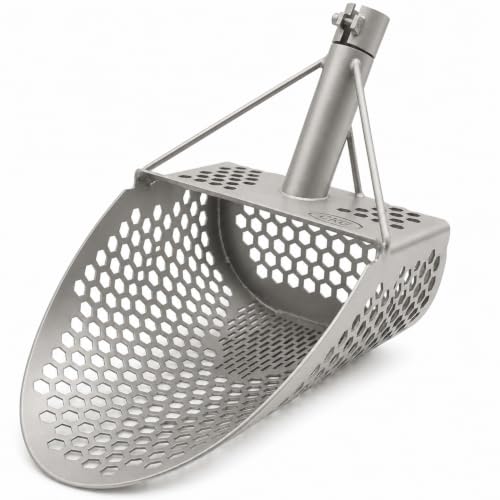
CKG Titanium Sand Scoop
$198.99Titanium construction: non-magnetic, so it will not set off a detector, and resistant to corrosion in salt water over the long term.
Best for: serious salt-water beach hunting
Check price on Amazon
CKG 304 Stainless Sand Scoop
$89.99304 stainless steel with a shark-tooth sifter design, at under half the price of the titanium scoop.
Best for: a first beach scoop
Check price on AmazonThe honest answer here depends entirely on where you dig, not on which scoop is objectively better. CKG Titanium Sand Scoop is documented in our catalog as a titanium sand scoop built for metal detecting, priced at $198.99. CKG 304 Stainless Sand Scoop is a 304 stainless steel scoop with a shark-tooth sifter design, priced at $89.99, which is less than half the titanium scoop's price.
Titanium's real advantages are physical facts rather than marketing claims: it is a non-ferrous, non-magnetic metal, so it will not trigger your own detector while you are scooping, and it does not corrode in salt water the way even good stainless eventually will with enough exposure. Whether that is worth more than double the price depends entirely on how often you are actually in salt surf. The saltwater detecting guide covers the wider kit changes that salt water demands beyond just the scoop.
Top pick
CKG 304 Stainless Sand Scoop
A 304 stainless build that holds up fine in fresh water and dry sand for less than half the price of the titanium option.
Price was accurate when this page was compiled and changes often.
On this page
What does titanium actually change about how a scoop performs?
Two physical properties, not a general sense of quality. First, titanium is non-ferrous and non-magnetic, so unlike some steel alloys it will not itself register as a target under a coil swept nearby, which matters if you scoop close to where you are still sweeping. Second, titanium resists corrosion in salt water essentially indefinitely under normal use, while even good stainless steel will eventually show pitting or staining after years of regular salt exposure, particularly around welds and hinge points.
What titanium does not change is how the scoop actually sifts sand: hole pattern, bucket depth and handle length matter more to day-to-day usability than the metal itself. CKG 304 Stainless Sand Scoop's shark-tooth sifter design is a functional feature independent of material, and a well-designed stainless scoop out-performs a poorly designed titanium one on the actual job of separating sand from a target.
Titanium and stainless, side by side
Price is the clearest, most checkable difference between these two, and it is worth seeing plainly before any argument about corrosion resistance.
The titanium scoop costs more than double the 304 stainless scoop, and the two differ chiefly in corrosion resistance and magnetic properties rather than in basic scooping design.
| Property | CKG Titanium Sand Scoop | CKG 304 Stainless Sand Scoop |
|---|---|---|
| Price | $198.99 | $89.99 |
| Material | Titanium | 304 stainless steel |
| Salt water corrosion resistance | Effectively permanent under normal use | Good, but stainless can pit or stain over years of salt exposure |
| Magnetic properties | Non-magnetic | Largely non-magnetic, but alloy purity varies by manufacturer |
| Fresh water and dry sand use | Performs the same as stainless; no added benefit | Fully adequate, no compromise |
| Typical buyer | Regular salt-surf or diving detectorist | Beach detectorist who is not exclusively in salt water |
Material and price figures are from the CKG product listings. Corrosion behaviour over time is a general material-science property of titanium and stainless steel, not a specific manufacturer test result.
Choose titanium if
You are regularly in salt surf or diving, where the corrosion resistance and non-magnetic properties genuinely pay for themselves over years of ownership rather than one season. A scoop that gets replaced every two or three years because of salt corrosion costs more over a decade than one titanium purchase, even at more than double the upfront price. Read the full CKG titanium scoop review for more on the specific build.
Choose it too if you already own CKG Carbon Fiber Sand Scoop Handle or another premium carbon handle and want the rest of the tool to match that level of investment, since a titanium scoop head on a light carbon handle is a genuinely long-lived combination for serious beach and surf detecting.
Choose 304 stainless if
Your detecting is mixed or mostly fresh water, dry sand and inland sites, where salt corrosion is simply not a meaningful factor over the scoop's lifetime. 304 stainless is a genuinely durable, corrosion-resistant grade on its own, and the shark-tooth sifter design does the actual job of separating sand from targets just as well as a titanium version would. See the best sand scoop roundup for how this compares against lighter and cheaper options.
Choose it too if this is your first scoop and you are not yet certain how much of your detecting will actually happen in salt water. Buying stainless first and upgrading to titanium later, if the salt-surf hunting becomes a real habit, costs less overall than guessing wrong the other way.
What else changes the calculation on a beach hunt?
The handle, not just the scoop head. CKG Carbon Fiber Sand Scoop Handle lightens either scoop for a full tide's worth of scooping, and RTG Pro Aluminum 47 inch Mini Water Scoop's longer aluminium handle suits wading where you are scooping at arm's length rather than bending. Neither choice depends on which material you picked for the scoop head itself.
For everything else that changes once salt water is involved, from your pinpointer to your headphones, see the beach detecting guide and the wired versus wireless headphones comparison, since wireless audio fails the same way in salt water as it does in fresh.
Sources
- CKG Titanium Sand Scoop product listing
- CKG 304 Stainless Sand Scoop product listing
Frequently asked questions
Does titanium actually stop a scoop from triggering the detector?
Titanium is non-ferrous and non-magnetic, so it does not respond to a detector's coil the way iron or steel alloys with ferrous content can. This matters mainly if you are scooping in close proximity to an active sweep, and it is a genuine, checkable physical property rather than a marketing claim specific to any one brand.
Will a stainless scoop rust in salt water eventually?
304 stainless steel resists corrosion well and is a reasonable choice for regular beach use, but it is not entirely immune to pitting or surface staining after years of sustained salt exposure, particularly at welds and joints. Titanium resists that corrosion essentially indefinitely under normal use, which is the whole basis for its higher price.
Is a titanium scoop actually lighter than stainless?
Titanium has a lower density than stainless steel, so a titanium scoop of similar dimensions is typically lighter, though the exact weight depends on wall thickness and design rather than the material alone. If weight over a long scooping session matters more to you than corrosion resistance, that is a separate reason to consider titanium beyond the salt water argument.
Should a beginner buy titanium for their first beach trip?
No, in most cases. A first beach trip does not yet tell you how often you will actually be in salt surf regularly enough to justify titanium's price, and a 304 stainless scoop performs the core job just as well in the meantime. Upgrade to titanium once salt-surf hunting becomes a confirmed, regular part of your detecting rather than buying it speculatively.
Researched, not professional advice. This page is compiled from published specifications, manuals and owner-review consensus, not hands-on testing. Target ID numbers, depth figures and settings vary with soil chemistry, moisture, target size, depth, orientation and firmware version, so treat every figure here as a starting point and verify it against your own machine's manual and your own ground. As an Amazon Associate we earn from qualifying purchases.