Best detectors
Best Metal Detectors for Jewelry: Why You Have to Dig the Trash
Quick answer
Gold jewellery reads low on the conductivity scale, in the same range as foil and pull tabs, so any setting that rejects trash rejects rings too. Minelab Equinox 700 at $749.00 is the best all-round jewellery machine. On salt beaches, multi-frequency is not optional, and you must dig the trash range.
Jewellery hunting is the one branch of this hobby where the single most important decision is not which machine you buy. It is whether you are willing to dig aluminium. Gold is a poor conductor relative to its size, so a thin gold ring produces a signal that sits low on the target ID scale, in the same territory as foil, small aluminium and pull tabs. That is not a fault in any detector. It is what gold is.
The consequence is blunt: every discrimination setting that silences the trash range also silences rings. Detectorists who find gold consistently are not running a secret programme, they are digging targets that everybody else has walked past for thirty years. A machine helps by making that range clean, stable and quick to work through, which is what multi-frequency, recovery speed and good audio actually buy you here. The target ID chart shows where gold sits relative to everything else, and the beach roundup covers the ground where most jewellery is actually lost.
Top pick

Minelab Equinox 700
Minelab publishes Multi-IQ simultaneous multi-frequency with a dedicated Beach mode and full waterproofing to 16 feet at 2.8 lb, which covers the wet salt sand where most lost jewellery ends up.
Price was accurate when this page was compiled and changes often.
On this page
- Where does gold jewellery actually read on a target ID scale?
- How do the main jewellery machines compare on what the makers publish?
- What is the cheapest machine that finds gold jewellery?
- What does four hundred to seven hundred buy a jewellery hunter?
- What does a specialist jewellery machine actually give you?
- What do you do with a ring once you have dug it?
Where does gold jewellery actually read on a target ID scale?
Low, and in company you will not enjoy. Target ID is a conductivity ordering: iron at the bottom, foil and small gold low, nickels and pull tabs in the middle, copper and silver at the top. A thin gold chain or a small gold ring lands in the low to middle part of that range, overlapping directly with aluminium foil and the tabs off drink cans. A heavy gold ring can read higher, and a large silver ring reads high enough to be mistaken for a coin. There is no target number that means gold.
The exact figures are machine specific and conditional. Soil chemistry, moisture, depth, how the ring is lying, corrosion on the surrounding trash and the firmware version all move the number, and a ring standing on edge can read completely differently from the same ring lying flat. This is why the per-machine charts such as the Equinox 900 chart give ranges rather than values, and why the only numbers worth fully trusting are the ones you generate yourself by burying known targets in your own ground.
What this means practically is that you set discrimination to reject iron and nothing else, then dig the low and middle range and accept a lot of aluminium. Owners who find gold regularly consistently report the same ratio, which is a great deal of trash for each ring. If that sounds unappealing, jewellery hunting may not be your branch of the hobby, and coin hunting is a great deal more forgiving.
How do the main jewellery machines compare on what the makers publish?
Beach capability dominates this table because most lost jewellery ends up in sand. Only published figures are shown.
The cheapest machine here with both simultaneous multi-frequency and a beach mode is the Minelab Vanquish 340 at $258.99, and full waterproofing to 16 feet starts at $349.00.
| Machine | Price | Frequency approach published | Beach or salt mode | Waterproof rating published |
|---|---|---|---|---|
| Minelab Vanquish 340 | $258.99 | Multi-IQ, five frequencies at once | Jewelry among 3 modes | Waterproof coil, not published for the box |
| Nokta Double Score | $349.00 | Simultaneous multi-frequency | Not itemised in this listing | IP68 to 16 ft |
| Minelab X-Terra Elite | $387.09 | Multi-IQ | 2 Beach modes of 6 total | Fully waterproof, 2.9 lb |
| Garrett ACE Apex | $384.99 | Multi-Flex, 4 singles plus Multi | Multi-Salt mode | Waterproof searchcoil |
| Garrett AT Pro | $459.99 | Single frequency, proportional audio | All-terrain, no dedicated salt mode published | Submersible to 10 ft |
| Nokta The Legend Pro Pack | $659.00 | Two multi profiles plus 5 single frequencies | Beach among its modes | Fully waterproof to 16 ft per the manual |
| Minelab Equinox 700 | $749.00 | Multi-IQ plus 4 singles | Beach mode of 3 | Fully waterproof to 16 ft |
| Minelab Equinox 900 | $999.00 | Multi-IQ plus 6 singles, 119 target IDs | Beach mode of 4, plus Gold | Fully waterproof to 16 ft |
| Minelab Manticore | $1,499.00 | Multi-IQ+, 50 percent more power | Beach mode for sand, surf and seawater | IP68 to 16 ft |
| Minelab Excalibur II | $1,699.00 | BBS, 1.5 to 25.5 kHz | Built specifically for salt water | Built for diving and surf |
| XP Deus II | $1,299.00 | 12 multi programs, 49 singles 4 to 45 kHz | Beach programs published | IP68 to 66 ft |
Prices come from the catalog and move. Every figure is quoted from the maker listing or manual named in the sources. No machine here has been used on a beach by us, and no find on this site is ours.
What is the cheapest machine that finds gold jewellery?
Around two hundred and fifty dollars, and the reason is salt. Dry inland ground is forgiving and almost any machine works there, but jewellery is lost where people take their rings off, which is water, sand and sweat. On wet salt sand a single frequency machine struggles to separate the ground signal from a small gold target, so the cheapest honest entry is the cheapest simultaneous multi-frequency machine.

Minelab Vanquish 340
$258.99Minelab publishes Multi-IQ employing five frequencies at once with a 10 by 7 waterproof coil and three modes, one of which is aimed at jewellery. It is the cheapest machine that will not be defeated by wet salt sand, which is where most lost rings are.
Best for: a first jewellery machine for beach and park
Check price on Amazon
Nokta Double Score
$349.00Nokta publishes simultaneous multi-frequency with IP68 waterproofing to 16 feet and a 3250 mAh rechargeable battery giving up to 12 hours. Full waterproofing matters for jewellery because the wet sand at the water line is the most productive strip on any beach.
Best for: wading the water line without worrying about the machine
Check price on Amazon
Digital Pocket Scale, 200 g by 0.01 g
$11.99Weight is the first thing that tells you whether a ring is what it claims to be, and every value calculation starts from it. This scale publishes 200 g capacity with 0.01 g readability and six weight modes including troy ounces and pennyweights, for less than the price of a coil cover.
Best for: finding out what the ring in your pouch actually is
Check price on AmazonWhat does four hundred to seven hundred buy a jewellery hunter?
A machine that stays quiet on salt and stays fast in trash, which are the two things that decide whether you can work a busy beach at all. This is also where a second coil starts to matter, because the tot lot and the towel line are dense trash and the low conductivity range is exactly the range that suffers most from masking.

Minelab X-Terra Elite
$387.09Minelab publishes Multi-IQ in a fully waterproof body with two dedicated Beach modes among six programmes, 30 discrimination segments, handgrip vibration and 2.9 lb on 3-piece shafts. Two beach programmes matter because dry sand and wet salt sand are genuinely different problems.
Best for: beach jewellery hunting on a real budget
Check price on Amazon
Garrett ACE Apex
$384.99Garrett publishes a dedicated Multi-Salt mode alongside Multi-Frequency and four single frequencies, a 6 by 11 DD Viper coil, iron volume control and 15 hours from the internal lithium battery at 2.5 lb. Multi-Salt is the specific tool for the wet strip where rings collect.
Best for: salt beaches without leaving the Garrett ecosystem
Check price on Amazon
Garrett AT Pro
$459.99Garrett publishes proportional audio with tone roll, 40 levels of iron discrimination and submersibility to 10 feet. Proportional audio is the jewellery feature here: the volume tracks signal strength, so a small deep gold target sounds different from a shallow pull tab rather than identical to it.
Best for: parks, sports fields and fresh water shorelines
Check price on Amazon
Nokta The Legend Pro Pack
$659.00Nokta publishes two simultaneous multi-frequency profiles plus 4, 10, 15, 20 and 40 kHz singles, and the Pro Pack includes both 11 inch and 6 inch DD coils. The 6 inch coil is what lets you work the low conductivity range in a trashy tot lot without every signal blending together.
Best for: trashy ground where small gold hides between aluminium
Check price on Amazon Minelab Equinox 700
$749.00Minelab publishes Multi-IQ with four single frequencies, a Beach mode, full waterproofing to 16 feet and 2.8 lb on carbon fibre shafts, with low latency wireless headphones included. It handles the salt, handles the trash and is light enough to swing for a full tide.
Best for: one machine for beach, park and water
Check price on AmazonWhat does a specialist jewellery machine actually give you?
Stability in the worst ground there is. Wet salt sand with black sand mixed through it defeats machines that are perfectly good everywhere else, and the surf zone adds motion, depth and a machine that has to be genuinely submersible rather than merely weatherproof. This tier is about ground, not about gold.
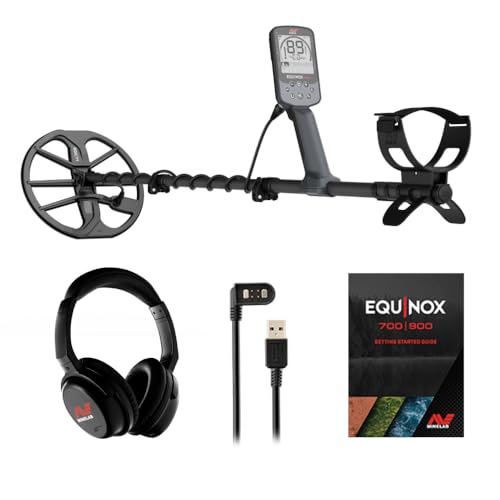
Minelab Equinox 900
$999.00Ships with the EQX 11 and EQX 6 coils, publishes six single frequencies alongside Multi-IQ, 119 high-resolution target IDs and four modes including Beach and Gold. The Gold mode is genuinely relevant here because small gold and small gold jewellery are close to the same electrical problem.
Best for: serious beach hunting with one machine for everything else too
Check price on Amazon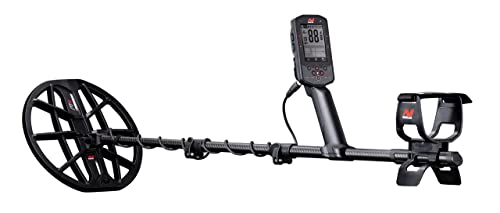
Minelab Manticore
$1,499.00Minelab publishes Multi-IQ+ as 50 percent more power than traditional models, a 2D target ID map and a Beach mode for sand, surf and seawater zones, IP68 to 16 feet. The 2D map is the argument: a small gold ring beside a pull tab is two points on a map rather than one contested number.
Best for: mineralised black sand beaches that defeat other machines
Check price on Amazon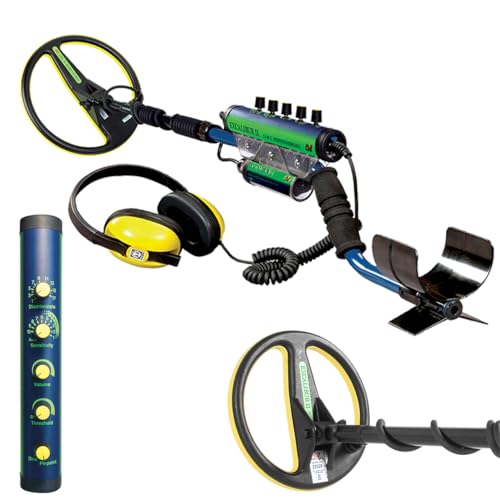
Minelab Excalibur II 1000
$1,699.00Minelab publishes BBS multiple frequency technology from 1.5 to 25.5 kHz with a NiMH pack rated up to 12 hours, built for diving and surf. Minelab does not describe a numeric target ID display for it, and the side-mount shaft for surf wading is listed as an optional accessory rather than included.
Best for: diving and working the surf zone in salt water
Check price on Amazon
XP Deus II
$1,299.00XP publishes IP68 to 66 feet, 12 simultaneous multi-frequency programs and 49 single frequencies from 4 to 45 kHz, with no cable between coil, control box and headphones. Jewellery hunting is won by hours covered, and the machine you are still willing to swing at hour five is the one that finds the ring.
Best for: long beach sessions and anyone who hates cables
Check price on AmazonWho should not buy this tier: Do not buy the Minelab Excalibur II 1000 unless you genuinely hunt salt water. It is a specialist, it is heavy on land, and Minelab does not publish a numeric target ID display for it, so it is a poor general machine. Do not buy the Minelab Manticore for a mild freshwater lake shore, because the power you are paying for is power against mineralisation that lake does not have. And do not buy any of these expecting the machine to solve the real problem, which is that gold reads in the trash range and you have to dig it. A Garrett Pro-Pointer AT, a CKG 304 Stainless Sand Scoop and the patience to work a low conductivity range will find more rings than any upgrade on this page.
What do you do with a ring once you have dug it?
Weigh it, look at it under magnification, and do not polish it until you know what it is. A Digital Pocket Scale, 200 g by 0.01 g publishing 0.01 g readability gives you the weight that every value estimate starts from, and the Illuminated 30x and 60x Jewellers Loupe at $8.99 makes the hallmark readable, which is the difference between a gold ring and a plated one. Hallmarks are small, worn and often on the inside of the band, so magnification is not optional.
Cleaning is where value gets destroyed. A Jewellery Polishing Cloth is safe on gold and silver jewellery, which is the one category of find where polishing is usually reasonable, but the same treatment on a coin removes surface and value together. The cleaning guide covers the difference properly, and the weight to value calculator turns the number on the scale into a figure once you know the purity.
How we chose
Nothing here has been swung by us and no ring on this page was found by us, because there is no in-person testing behind this site. Frequency approach, modes, waterproof ratings and coil sizes are quoted from each maker own published listing or manual, named in the sources below, and gaps are shown as gaps. The ordering follows what genuinely matters for jewellery: how cleanly the machine works the low conductivity range, how it copes with wet salt sand, and how quickly you can process a lot of trash signals without losing patience.
Sources
- Minelab Equinox 700 and 900 instruction manual
- Minelab Manticore and Excalibur II published specifications
- Minelab X-Terra Elite and Vanquish 340 product listings
- Garrett ACE Apex and AT Pro published specifications
- Nokta The Legend and Double Score product listings
- XP Deus II product specifications
Frequently asked questions
Why does gold read the same as a pull tab?
Because target ID measures conductivity relative to size, and a thin gold ring is a poor conductor for its mass. That places it low on the scale, overlapping directly with foil and aluminium tabs. No detector can separate them reliably, on any budget, because electrically they are genuinely similar. This is why jewellery hunters dig the trash range and why discrimination settings that reject tabs also reject rings.
What settings should I use to find gold rings?
Reject iron and very little else. Run a beach or jewellery programme if the machine has one, keep sensitivity as high as the ground allows without chattering, and work slowly with heavy sweep overlap. Then dig the low and middle conductivity range and accept the aluminium. The machine settings that make gold easy do not exist, and any programme that quietens the trash is also quietening rings.
Do I need a waterproof detector for jewellery hunting?
Only if you go in the water, but the water line is where the rings are. A waterproof searchcoil lets you sweep the wet strip with the control box dry, which covers most beach hunting. A fully waterproof machine such as the Minelab Equinox 700 or the Nokta Double Score, published to 16 feet, lets you work the surf and wade, and needs wired waterproof headphones to be usable once submerged.
Is silver jewellery easier to find than gold?
Yes, electrically. Silver is highly conductive, so a silver ring or chain reads high on the target ID scale in the same territory as coins, which means you can hear it clearly and it sits well away from the aluminium range. The catch is that silver is much less common in the ground than gold on most beaches, because people wear gold to the water more often than they wear silver.
Where is the best place to look for lost jewellery?
Wherever people take rings off or lose them from cold, wet hands: the towel line on a busy beach, the wet strip at the water edge, volleyball and sports areas, swimming spots on rivers and lakes, and playgrounds. Cold water shrinks fingers, which is why the water line outperforms the dry sand so consistently. All of it needs permission and local rules checked first.
Researched, not professional advice. This page is compiled from published specifications, manuals and owner-review consensus, not hands-on testing. Target ID numbers, depth figures and settings vary with soil chemistry, moisture, target size, depth, orientation and firmware version, so treat every figure here as a starting point and verify it against your own machine's manual and your own ground. As an Amazon Associate we earn from qualifying purchases.