Best for difficult ground
Best Metal Detectors for Hard Mineralised Ground
Quick answer
Mineralised ground gives a false signal of its own, separate from any buried target, and a detector has to cancel that ground signal before it can read a target underneath it. The Minelab Manticore at $1,499.00 publishes 50 percent more transmit power than Minelab's earlier multi-frequency machines specifically for this ground, and simpler machines with a real ground balance control still cope if you learn to use it.
Mineralisation is not one thing. It ranges from mildly iron-rich clay that only slightly reduces depth, through the black magnetic sand that collects on many gold-bearing rivers, to the volcanic and desert soils that produce genuine hot rocks capable of ringing out like a target on their own. A detector reads all of it as a signal, and the entire job of ground balancing is teaching the machine to subtract that signal so what is left is the target and nothing else.
Two different technologies attack this from different directions. Ground balance, manual or automatic, tunes the machine's response to match the specific mineral signature of the soil in front of you right now. Simultaneous multi-frequency takes a broader approach, comparing how the ground and a target behave across several frequencies at once so the ground's contribution can be modelled and removed continuously rather than tuned once and left. Neither one is a substitute for the other, and the best machines on this page use both.
Top pick
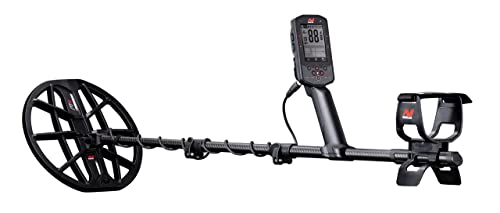
Minelab Manticore
Minelab publishes Multi-IQ+ technology with 50 percent more transmit power than its earlier multi-frequency machines, ten search modes including an All-Terrain profile built for inland ground, and IP68 waterproofing, at $1,499.00. More power is what lets the ground-cancelling math keep working as mineralisation increases.
Price was accurate when this page was compiled and changes often.
On this page
- What does mineralised ground actually do to a detector?
- Beginner: coping with mineralisation without a steep learning curve
- Intermediate: a real mineralisation readout
- Expert: maximum power and dedicated high-frequency machines
- How do the mineralised-ground machines compare on paper?
- Should you use manual or automatic ground balance?
- Does coil choice change how mineralised ground behaves?
What does mineralised ground actually do to a detector?
Iron minerals and certain volcanic or desert soils produce their own electromagnetic response, and a detector with no way to cancel that response reads it as noise or, worse, as a false target. Fisher describes exactly this problem in the listing for the Fisher Gold Bug Pro, which uses computerised ground grab technology for real-time ground balancing and displays a continuous ground condition and mineralisation readout rather than asking the operator to guess. Garrett takes a similar approach on the Garrett AT Gold, publishing a Ground Balance Window that offers both manual and automatic balancing to handle varying soil conditions.
Multi-frequency machines attack the same problem differently. Because they sample several frequencies at once, they can separate a target's response from the ground's response mathematically rather than by tuning a single frequency to match the soil in front of them. That is why the Minelab Manticore publishes more raw transmit power than earlier Minelab machines: mineralised ground eats into the signal budget, and more power is one direct way to keep working depth once ground cancellation has taken its share. The ground balancing guide covers the manual process step by step for machines that need it done by hand.
Beginner: coping with mineralisation without a steep learning curve
Neither pick here asks you to understand ground balance theory before you can use it. Both run automatic or semi-automatic balancing, which trades some of the depth an expert could extract by hand for a machine that behaves sensibly in mixed ground from the first outing.

Minelab X-Terra Elite
$387.09Minelab publishes Multi-IQ simultaneous multi-frequency on the fully waterproof X-Terra body with six preset Park, Field and Beach modes, at $387.09. There is no manual ground balance knob to learn, which suits mixed but not extreme mineralisation.
Best for: a first machine on soil that is difficult but not severe
Check price on Amazon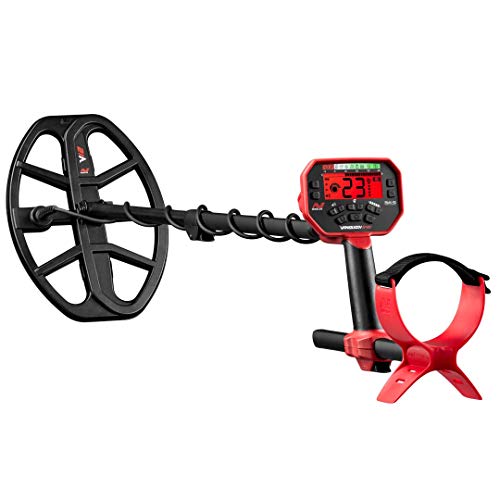
Minelab Vanquish 540 Pro-Pack
$399.00Minelab publishes automatic ground selection on the Minelab Vanquish 540 Pro-Pack so the machine tunes to soil conditions without operator input, alongside Multi-IQ across five frequencies and an iron bias control, at $399.00.
Best for: turning on and going in variable garden or park soil
Check price on AmazonIntermediate: a real mineralisation readout
Both machines here go further than automatic balancing by telling you what the ground is actually doing. The Fisher Gold Bug Pro displays a continuous mineralisation level, and the Minelab Equinox 900 lets you pick a specific single frequency when a particular patch of ground behaves badly on the default multi-frequency blend.
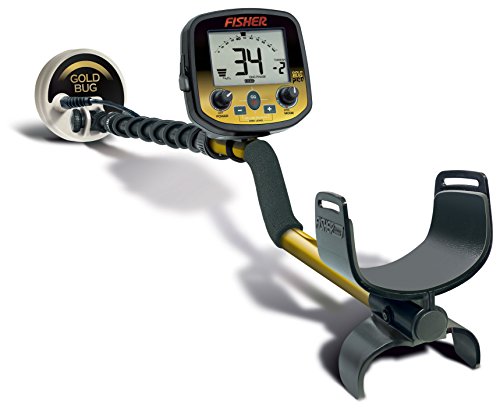
Fisher Gold Bug Pro
$339.00Fisher publishes computerised ground grab technology with a continuous ground condition and mineralisation readout, plus independent threshold and gain control, on the Fisher Gold Bug Pro at $339.00.
Best for: learning to read what your specific ground is doing
Check price on Amazon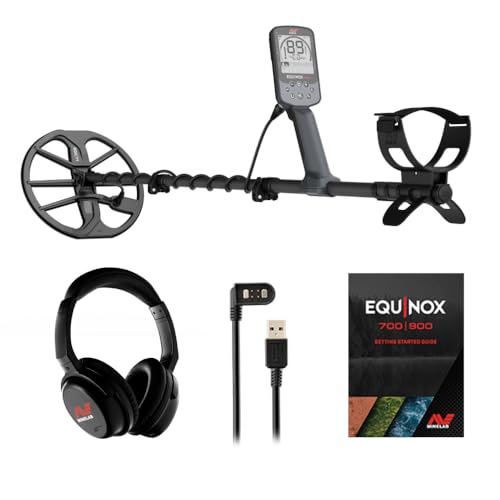
Minelab Equinox 900
$999.00Minelab publishes six single frequencies alongside Multi-IQ on the Minelab Equinox 900, so a specific frequency can be selected when the default multi-frequency blend struggles on an unusually hot patch of ground, at $999.00.
Best for: ground that changes character across one site
Check price on AmazonExpert: maximum power and dedicated high-frequency machines
The Minelab Manticore is the general-purpose answer to severe mineralisation, built around raw power rather than a workaround. The Garrett AT Gold is a specialist for a narrower job: small gold and relics in soil so mineralised that a coin machine gives up entirely.
Minelab Manticore
$1,499.00Minelab publishes Multi-IQ+ at 50 percent more power than its traditional multi-frequency machines, an All-Terrain search mode, a 2D target ID map and IP68 waterproofing, at $1,499.00.
Best for: the most difficult general-purpose ground you hunt
Check price on Amazon
Garrett AT Gold
$640.99Garrett publishes an 18 kHz high-frequency design with manual and automatic ground balance through a dedicated Ground Balance Window, iron audio and submersion to 10 feet, at $640.99.
Best for: small gold and relics in heavily mineralised soil
Check price on AmazonWho should not buy this tier: Do not buy the Minelab Manticore if your ground is only mildly difficult. It asks you to learn a two-dimensional target display before any of its extra power translates into found targets, and on ordinary iron-rich clay the Equinox 900 will match it for less money. Do not buy the Garrett AT Gold as a coin and relic all-rounder either: its 18 kHz frequency is tuned for small gold, and a lower-frequency machine like the AT Pro will separate larger coin-sized targets from iron more cleanly on the same ground.
How do the mineralised-ground machines compare on paper?
The ground balance column is the one worth reading twice. A machine with only automatic balancing is easier to use and will genuinely struggle in the most severe ground that manual balancing and a mineralisation readout are built to handle.
Every machine on this table publishes some form of ground balancing beyond a fixed factory setting, and three of the six publish a visible mineralisation readout or window rather than a hidden automatic process.
| Machine | Price | Ground balance approach | Frequency approach | Notable published detail |
|---|---|---|---|---|
| Minelab X-Terra Elite | $387.09 | Automatic, preset modes | Multi-IQ simultaneous multi-frequency | No manual ground control needed |
| Minelab Vanquish 540 Pro-Pack | $399.00 | Fully automatic | Multi-IQ, five frequencies at once | Iron bias control included |
| Fisher Gold Bug Pro | $339.00 | Computerised ground grab, live readout | 19 kHz single frequency | Continuous mineralisation display |
| Minelab Equinox 900 | $999.00 | Automatic, with 4 modes | Multi-IQ plus 6 single frequencies | Switch to a single frequency on hot ground |
| Garrett AT Gold | $640.99 | Manual and automatic Ground Balance Window | 18 kHz single frequency | Built for small gold in mineralised soil |
| Minelab Manticore | $1,499.00 | Automatic, All-Terrain mode | Multi-IQ+ | 50 percent more transmit power than earlier Minelab multi-frequency machines |
Figures are quoted from the manufacturer listing or manual for that product. Ground balance behaviour described here is the manufacturer's own characterisation, not a measurement made on this site.
Should you use manual or automatic ground balance?
Automatic balancing is the right default for most people, because it reacts to changing ground continuously without asking the operator to notice the change first. It is genuinely harder to beat on a site where mineralisation shifts gradually across a field. Manual ground balance earns its keep in the opposite situation: ground that changes sharply from one patch to the next, where an experienced operator can track a hot spot deliberately rather than waiting for an automatic system to catch up. The Fisher Gold Bug Pro and Garrett AT Gold both give you that manual option alongside an automatic one, which is why they show up here rather than on a beginner page.
Whichever approach you use, ground balance is soil-specific and site-specific, and a setting that works on one field will not necessarily carry over to the next. The generated starting points at Manticore on ploughed farmland and AT Gold on a goldfield give a place to begin, and the test garden guide is the method for checking any setting against your own ground rather than trusting a printed number.
Does coil choice change how mineralised ground behaves?
Yes, though it addresses a different part of the problem than ground balance does. A smaller coil samples a smaller volume of mineralised ground per sweep, which can make an already difficult patch more predictable simply because there is less of it under the coil at any one moment. It does not cancel the ground signal the way multi-frequency or a proper ground balance does, and treating a smaller coil as a substitute for actually balancing the machine is a common mistake on genuinely hot ground.
How we chose
We did not test any of these machines in mineralised ground ourselves and no depth or find claim on this page is a result we obtained. Every specification is taken from the manufacturer listing or manual for that product, named where it appears. Picks were chosen on published ground balance capability, on whether the maker states a specific mineralisation readout or control, and on price.
Sources
- Minelab Manticore, X-Terra Elite, Vanquish 540 and Equinox 900 product listings and manuals
- Fisher Gold Bug Pro product listing
- Garrett AT Gold and AT Pro product listings
Frequently asked questions
How do I know if my ground counts as heavily mineralised?
Erratic signals, a detector that will not settle even at low sensitivity, and audible chatter with no target present are the usual signs. Black sand along a watercourse and reddish, iron-rich soils are common sources. If ground balancing does not quiet the machine down and the same behaviour repeats across a whole site, the ground is a genuine factor rather than a settings mistake.
Does multi-frequency replace the need for ground balance?
No. Simultaneous multi-frequency helps separate a target's response from the ground's response mathematically, but every machine on this page, including the Minelab Manticore, still ground balances as a distinct step. The two technologies work together rather than one replacing the other.
Is a gold-prospecting machine also good on mineralised farmland?
Sometimes, but not always as a general-purpose choice. The Garrett AT Gold runs an 18 kHz frequency tuned for small gold, which also copes well with mineralisation, but its high frequency separates coin-sized targets from iron less cleanly than a lower-frequency coin machine like the AT Pro does on the same ground.
Will more sensitivity help in mineralised ground?
Usually the opposite. Running sensitivity too high on mineralised ground amplifies the ground noise along with any target, which is why most of these machines pair ground balancing with a recommendation to reduce sensitivity slightly rather than maximise it in difficult soil. The manual for your specific machine will give a starting range.
Can I fix bad ground with a different coil instead of a different machine?
A smaller coil samples less ground volume and can behave more predictably in patchy mineralisation, but it does not change how well the electronics cancel a mineral response. Coil choice and ground balance capability solve related but different problems, and the small coil page covers the coil side on its own.
Researched, not professional advice. This page is compiled from published specifications, manuals and owner-review consensus, not hands-on testing. Target ID numbers, depth figures and settings vary with soil chemistry, moisture, target size, depth, orientation and firmware version, so treat every figure here as a starting point and verify it against your own machine's manual and your own ground. As an Amazon Associate we earn from qualifying purchases.