Best by where you hunt
Best Metal Detectors for Farmland: Coverage, Iron and Ploughsoil
Quick answer
Farmland is a coverage problem, not a depth problem: the targets are spread across acres rather than concentrated in a park layer. The Minelab Equinox 700 at $749.00 with a large coil is the best all-round choice, and the Bounty Hunter Land Ranger Pro at $173.00 carries an 11 inch DD coil for very little money.
Farmland reverses almost every decision a park hunter makes. In a park the targets are dense and the problem is separating them. In a field the targets are scattered across acres, the ground has been turned over repeatedly, and the problem is covering enough of it to find anything at all. That points at a large coil, a fast walking pace, a systematic search pattern and a machine that stays quiet over mineralised ploughsoil.
It also points at the single hardest part of field detecting, which is not equipment. It is getting permission, keeping it, and behaving in a way that means the next detectorist is welcome too. That means gates, crops, livestock and a written agreement about finds before you swing anything. The permission guide covers how to ask properly, and the relic roundup covers the machines for the older, iron-heavy sites that field permissions often contain.
Top pick

Minelab Equinox 700
Minelab publishes Multi-IQ plus four single frequencies with a Field mode aimed at coins and artifacts, full waterproofing to 16 feet and 2.8 lb, and it takes the EQX 15 for the coverage a field needs.
Price was accurate when this page was compiled and changes often.
On this page
- What does farmland demand that a park does not?
- What large coils are available, and what do they weigh?
- What is the cheapest way to cover a field properly?
- What does a proper field machine look like?
- What does a flagship give you in a ploughed field?
- How do you actually search a field rather than wander it?
What does farmland demand that a park does not?
Coverage first. A field is measured in acres and the finds are scattered, so the coil that costs you separation in a park is the coil that earns its keep here. Minelab publishes the Minelab EQX 15 Coil (15 inch) as 15 by 12 inches, describing it as made for covering a lot of ground and giving more depth capability than the 6 and 11 inch coils, at 1.46 lb with its skidplate. Nokta publishes the Nokta LG35 Coil (13.5 by 12.5 inch) at 13.5 by 12.5 inches for The Legend, and NEL publishes the NEL Hunter 12.5 by 8.5 Coil for AT Pro at 12.5 by 8.5 inches and 17.2 oz with cover for the AT Pro. The coil coverage calculator turns those dimensions into how much ground you actually sweep in an hour.
Ground balance second. Ploughsoil is turned, mixed and often mineralised, and a machine that cannot balance to it will chatter or lose depth. Teknetics publishes Ground Grab computerised ground balancing on the Teknetics G2+ and Bounty Hunter publishes the same system on the Bounty Hunter Land Ranger Pro and Bounty Hunter Time Ranger Pro. Fisher publishes trigger-actuated FastGrab ground balance on the Fisher F75 plus a magnetic mineralisation bar graph and readout, which tells you how hard the soil is working against you rather than leaving you guessing. The ground balance guide covers doing it properly.
Farm iron third. Fields carry horseshoes, harrow teeth, tractor parts, fencing staples and wire, and all of it is large, deep and loud. Iron audio matters here for a different reason than in a park: you are not trying to hear a coin beside a nail, you are trying to avoid digging a two foot hole for a plough share. Teknetics publishes FeTone adjustable iron audio on the Teknetics G2+, which reduces iron volume while leaving non-ferrous targets at full volume.
What large coils are available, and what do they weigh?
A field machine is a machine plus a large coil. The table pairs each with the large coil its maker or the aftermarket supplies, using published dimensions.
The cheapest 11 inch DD coil in this class comes fitted to the Bounty Hunter Land Ranger Pro at $173.00, while a 15 inch coil for an Equinox costs $290.00 on top of the machine.
| Machine | Price | Large coil | Coil price | Ground balance published |
|---|---|---|---|---|
| Bounty Hunter Land Ranger Pro | $173.00 | 11 inch DD fitted as standard | Included | Ground Grab computerised balancing |
| Bounty Hunter Time Ranger Pro | $219.00 | 11 inch waterproof DD fitted | Included | Ground Grab with manual override |
| Teknetics G2+ | $299.00 | 11 inch DD open elliptical fitted | Included | Ground Grab computerised balancing |
| Minelab X-Terra Pro | $282.14 | Minelab EQX 15 fits | $290.00 | Automatic and manual, PRO-SWITCH engine |
| Garrett AT Pro | $459.99 | NEL Hunter 12.5 by 8.5, 17.2 oz | $142.00 | Ground balance with iron discrimination |
| Nokta The Legend Pro Pack | $659.00 | Nokta LG35 13.5 by 12.5 | $169.99 | Automatic and manual per the manual |
| Fisher F75 | $419.00 | Double-D waterproof coil fitted | Included | Trigger-actuated FastGrab with mineralisation readout |
| Minelab Equinox 700 | $749.00 | Minelab EQX 15, 1.46 lb with skidplate | $290.00 | Automatic, Multi-IQ |
| Minelab Equinox 900 | $999.00 | Coiltek 15 inch NOX or EQX 15 | $338.00 | Automatic, Multi-IQ |
| Minelab Manticore | $1,499.00 | Equinox-pattern coils per Minelab | From $290.00 | High-resolution ground balance system |
| XP Deus II | $1,299.00 | XP wireless coils, sizes per XP | Not in this catalog | Automatic and manual per XP |
Prices come from the catalog and move. Coil dimensions and weights are quoted from the maker listings named in the sources. Confirm fitment against the compatibility chart for your exact model before ordering, because coil families do not cross brands.
What is the cheapest way to cover a field properly?
Buy the coil rather than the electronics. Bounty Hunter puts an 11 inch waterproof DD coil on the Bounty Hunter Land Ranger Pro at $173.00, which is an unusual amount of coil for the money and exactly the right shape for open ground. Covering acres slowly with a small coil is how people conclude a field is empty when it is not, so the coil is the specification to spend on first.
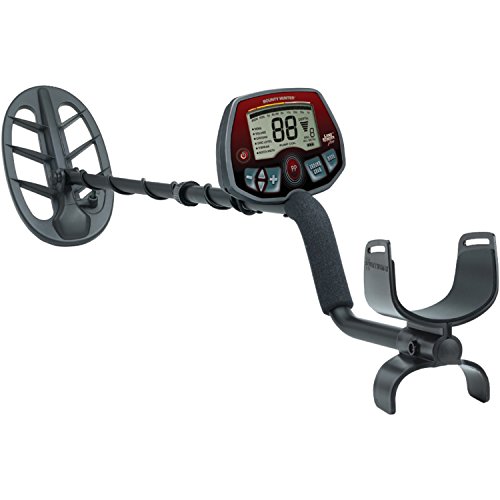
Bounty Hunter Land Ranger Pro
$173.00Bounty Hunter publishes an 11 inch DD waterproof searchcoil, 99 points of target ID resolution with 4-tone audio, 7 operating modes, Ground Grab computerised ground balancing and 2.5 lb with a padded armrest. An 11 inch DD at $173.00 is the cheapest real field coverage available.
Best for: covering acres on the smallest possible budget
Check price on Amazon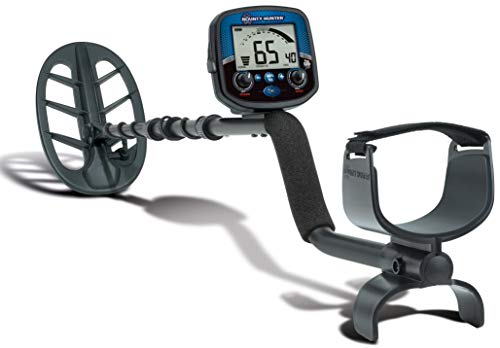
Bounty Hunter Time Ranger Pro
$219.00Bounty Hunter publishes the same 11 inch waterproof DD coil with enhanced V-Break, adjustable iron audio, a backlit display for dusk and dawn, Ground Grab with a manual override and an adjustable notch window. Adjustable iron audio is what keeps you from digging every harrow tooth in the field.
Best for: field hunting into the evening with a usable target ID screen
Check price on Amazon
Fisher F22
$229.00Fisher publishes approximately 2 pounds with a 9 inch weatherproof coil, a 0 to 99 numeric target ID and 4-tone audio, and weatherproofing for the harshest conditions. A field session is measured in miles walked rather than holes dug, and this is the lightest published machine anywhere.
Best for: long walks over open ground in poor weather
Check price on AmazonWhat does a proper field machine look like?
Fast recovery, adjustable iron audio and a ground balance you can trust on turned soil. This is the band where field detecting stops being frustrating, because the machine stops shouting about ploughsoil iron and starts telling you which signals are worth the walk back across the furrows to dig.

Teknetics G2+
$299.00Teknetics publishes an 11 inch DD open elliptical coil, FeTone adjustable iron audio that lowers iron volume while keeping non-ferrous at full volume, V-Break custom tone breakpoints, Ground Grab balancing and just over 2 pounds. An open coil frame sheds mud and stubble rather than collecting it.
Best for: iron-heavy fields where you need to ignore most of what you hear
Check price on Amazon
Garrett AT Pro
$459.99Garrett publishes submersibility to 10 feet, proportional audio with tone roll and 40 levels of high-resolution iron discrimination with MS-2 headphones included. Submersible matters in a field because wet furrows, standing water and driving rain are ordinary conditions rather than exceptions.
Best for: wet fields and ground that floods in the winter months
Check price on Amazon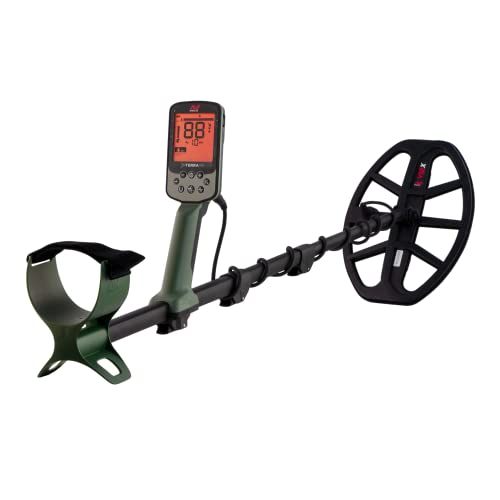
Minelab X-Terra Pro
$282.14Minelab publishes 2 Field modes alongside Park and Beach, 30 discrimination segments, IP68 waterproofing to 16 feet, a control pod flashlight and handgrip vibration at 2.9 lb. It accepts the EQX 15, so the coverage upgrade is available without changing machine.
Best for: a waterproof field machine that grows with a bigger coil
Check price on Amazon
Nokta The Legend Pro Pack
$659.00The Pro Pack includes 11 inch and 6 inch DD coils and Nokta publishes two simultaneous multi-frequency profiles plus 4, 10, 15, 20 and 40 kHz singles. The Nokta LG35 Coil (13.5 by 12.5 inch) at 13.5 by 12.5 inches is then available at $169.99, which is a large coil at a notably lower price than the Minelab equivalents.
Best for: somebody who wants a large coil option without a large coil price
Check price on Amazon Minelab Equinox 700
$749.00Minelab publishes Multi-IQ plus four single frequencies, a Field mode aimed specifically at fine coins and artifacts, full waterproofing to 16 feet, 2.8 lb on carbon fibre shafts and wireless headphones included. Fitted with the EQX 15 it becomes a genuine ground-covering machine.
Best for: one machine for fields that also handles everything else
Check price on AmazonWhat does a flagship give you in a ploughed field?
Depth in soil that is fighting you, and the ability to keep a usable target number at that depth. Ploughsoil on heavy mineralised clay is one of the few places where published flagship power translates into something you can actually dig, because a target at the bottom of the plough layer is exactly the target a mid-range machine reports as a whisper you talk yourself out of.
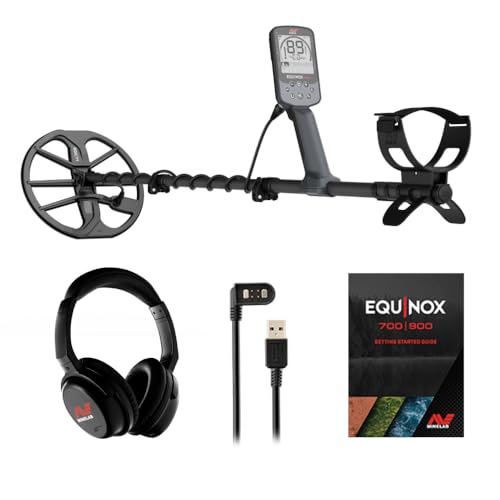
Minelab Equinox 900
$999.00Minelab publishes six single frequencies alongside Multi-IQ, 119 high-resolution target IDs, four modes including Field, full waterproofing to 16 feet and 2.8 lb, and it takes the Coiltek 15 inch NOX Search Coil or the Minelab EQX 15 Coil (15 inch) for coverage. High target ID resolution matters at depth, where numbers get vague.
Best for: serious field hunting where the good targets are deep in the plough layer
Check price on Amazon
Fisher F75
$419.00Fisher publishes a 0 to 99 numeric target ID, double-filter discrimination modes for trashy areas, trigger-actuated FastGrab ground balance, a magnetic mineralisation bar graph and readout, non-volatile memory and typically 40 hours from 4 AA batteries. The mineralisation readout tells you how hard the soil is working against you instead of leaving you guessing.
Best for: old fields where iron outnumbers everything else
Check price on Amazon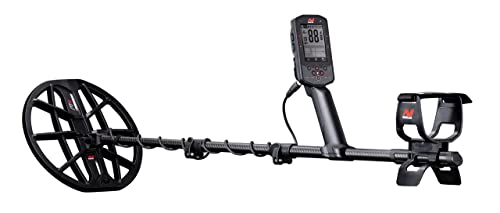
Minelab Manticore
$1,499.00Minelab publishes Multi-IQ+ as 50 percent more power than traditional models, a high-resolution ground balance system, 10 search modes including All-Terrain for inland detecting and IP68 to 16 feet. Mineralised ploughsoil is the specific condition this machine is built to push through.
Best for: red clay, black sand and other genuinely difficult ground
Check price on Amazon
XP Deus II
$1,299.00XP publishes a fully wireless system from coil to headphones, 12 simultaneous multi-frequency programs, 49 single frequencies from 4 to 45 kHz, IP68 to 66 feet and a 5 year warranty. Field detecting is measured in acres covered, and no cable means nothing snagging on stubble and wire.
Best for: covering the most ground in a day
Check price on AmazonWho should not buy this tier: Do not buy a flagship if your permission is a handful of small paddocks, because the coverage problem a big machine and a big coil solve does not exist there and the money is better spent on a second permission. Skip the Minelab Manticore on mild damp loam: the power is aimed at mineralisation you do not have. Skip the XP Deus II if you share gear with a hunting partner, because the wireless system makes borrowing a coil or headphones impossible. And do not fit the largest coil available and then hunt an old farmyard with it, because farmyards are park-style iron ground where a small coil finds more.
How do you actually search a field rather than wander it?
- Walk the boundaries first. Gateways, hedge lines, field corners and the ground around old trees concentrate activity, because that is where people and animals were funnelled for centuries. Walk those before committing a day to the open middle, and note where the ground rises, because dry high ground is where people camped, worked and lost things.
- Grid it, do not ramble. Lay out parallel lines and overlap each sweep by about half a coil width. The search grid planner on this site turns a field size and a coil width into how many passes the job actually takes, which is the difference between working a field and wandering it.
- Ground balance on clean soil. Balance the machine on a patch with no target under it, and rebalance when you move to a different part of the field. Ploughsoil is not uniform, and a machine balanced at the gate can be chattering badly two hundred yards away on a different subsoil.
- Mark what you skip. Large deep iron signals are usually farm machinery and cost twenty minutes each. Note them rather than digging them, and come back to the ambiguous ones at the end of the day if the field has been quiet. A LHKNL Rechargeable LED Headlamp matters here, because the last hour of light is often the productive one.
- Fill everything and close the gates. A hole in pasture is a broken leg for livestock and a hole in a crop is money off somebody income. Fill each one, tread it down, take your trash home in a CKG Finds and Digger Pouch, and leave gates exactly as you found them. That is what gets you invited back next season.
How we chose
We have not walked a field with any of these machines and there is no in-person comparison behind this page. Coil sizes and weights, ground balance systems, iron controls and battery figures are quoted from each maker own published listing or manual, named in the sources below, and where a figure is not published the table says so. The ordering follows what a field actually demands: how much ground the supplied coil covers per sweep, how the machine handles mineralised ploughsoil, how it copes with farm iron, and how long it runs before you walk back to the car.
Sources
- Minelab EQX 15 and Coiltek 15 inch NOX coil specifications
- Minelab Equinox 700 and 900 instruction manual
- Bounty Hunter Land Ranger Pro and Time Ranger Pro product listings
- Teknetics G2+ published specifications
- Fisher F75 published specifications
- NEL Hunter and Nokta LG35 coil product listings
Frequently asked questions
What size coil is best for farmland?
Large, because the problem is covering acres rather than separating adjacent targets. Minelab publishes the Minelab EQX 15 Coil (15 inch) as 15 by 12 inches and describes it as made for covering a lot of ground with more depth capability than the smaller coils. Nokta publishes the Nokta LG35 Coil (13.5 by 12.5 inch) at 13.5 by 12.5 inches. Both trade separation for coverage, which in an open field is the correct trade.
Do I need a waterproof detector for field detecting?
Not submersible, but weatherproof at minimum. Fields are worked in rain, mud and standing water, and detecting is often best on wet ground after harvest. Fisher publishes weatherproof construction on the Fisher F22, and machines such as the Minelab X-Terra Pro at IP68 to 16 feet or the Garrett AT Pro at 10 feet remove the question entirely for not much more money.
How do I stop digging tractor parts all day?
Use adjustable iron audio rather than full iron rejection. Teknetics publishes FeTone on the Teknetics G2+, which lowers the volume of iron while keeping non-ferrous targets at full volume, so farm scrap becomes background noise rather than a series of interruptions. Large deep iron also tends to give a broad, doubled signal that sounds different once you have dug a few.
When is the best time to detect a field?
After harvest and after the ground has been worked, when stubble is short and the soil has been turned, and preferably after rain because damp soil conducts better than dust. Always ask the farmer rather than assuming: standing crops, newly drilled ground and grazing livestock all make a field off limits, and getting that wrong costs you the permission permanently.
How deep are targets in ploughed ground?
Ploughing mixes the top layer, so targets get moved up and down rather than settling steadily. That means finds can appear anywhere within the plough layer, and a target that was too deep last season may be reachable this one. Depth figures are always ranges tied to target size, coil and soil, so measure your own ground with a test garden rather than trusting a published number.
Researched, not professional advice. This page is compiled from published specifications, manuals and owner-review consensus, not hands-on testing. Target ID numbers, depth figures and settings vary with soil chemistry, moisture, target size, depth, orientation and firmware version, so treat every figure here as a starting point and verify it against your own machine's manual and your own ground. As an Amazon Associate we earn from qualifying purchases.