Best supporting kit
Best Storage for Metal Detecting Finds
Quick answer
Cleaning a coin that might be collectable can destroy its value permanently, so storage has to come before any decision about cleaning, not after. The Cardboard Coin Flips, 300 in 6 sizes at $9.50 is the cheapest way to stop a fresh find rubbing against other coins, and abrasives or acid dips should never touch anything you have not already identified.
The single most damaging mistake a new detectorist makes with a good find has nothing to do with the digging. It happens afterward, at the kitchen sink, when an unfamiliar dirty coin gets scrubbed, polished or dropped in an acid-based dip to see what is underneath the grime. Numismatic value is often carried in a coin's surface, its toning and its original detail, and all three are gone the moment an abrasive or a harsh chemical touches them. There is no undo. A coin that might have been worth a genuine premium becomes worth only its metal content, permanently, in about thirty seconds.
That is why this page leads with storage rather than cleaning. Get a find into something that will not rub, scratch or corrode it while you figure out what it actually is, and only then decide whether cleaning is appropriate at all. The cleaning guide covers when a light clean is genuinely safe; this page is about the step that has to happen before that decision gets made.
Top pick

Cardboard Coin Flips, 300 in 6 sizes
Boen publishes 300 individual cardboard flips across 6 sizes, each sized to a specific denomination from penny through large dollar, at $9.50. Getting a coin into its own flip the same day it is dug is the single cheapest thing that protects it from being rubbed against other coins in a pocket or a tin.
Price was accurate when this page was compiled and changes often.
On this page
- Why does storage come before cleaning, not after?
- Beginner: stop the damage the same day you dig it
- Intermediate: sorting bulk clad and everyday finds
- Expert: documenting a find before deciding its fate
- How do the storage and documentation options compare on paper?
- How do you tell what you have before you store it?
- What about relics, buttons and non-coin finds?
Why does storage come before cleaning, not after?
Because the damage from cleaning is irreversible and the damage from bad storage usually is not, at least at first. This catalog's own listing for the Conserv Safe Coin Solvent states the rule directly: a conservation-grade solvent removes surface dirt without the abrasion that destroys a coin's value, and an abrasive or an acid dip should never touch anything that might be collectable. That is the one safe exception this page makes for cleaning at all, and even that exception is for surface grime rather than for restoring a corroded or toned surface to look new.
A coin left loose in a pocket, a tin or a mixed pile of the day's finds keeps rubbing against other metal every time it moves, and that rubbing wears detail and toning the same way circulation did for decades before you found it, just faster. Getting a find into individual, non-abrasive storage the same day stops that ongoing wear regardless of what you eventually decide about cleaning it.
Beginner: stop the damage the same day you dig it
This is the one purchase that should happen before a second detecting trip, not after a season of finds have already been rubbing against each other in a pocket.
Cardboard Coin Flips, 300 in 6 sizes
$9.50Boen publishes 300 flips across 6 sizes matched to specific denominations, made from OPP film that will not tear or abrade a coin's surface, at $9.50. Each flip also has room to note the find's date and location.
Best for: individual notable finds, the same day you dig them
Check price on AmazonIntermediate: sorting bulk clad and everyday finds
Not every find is a candidate for individual storage. Modern clad coinage found in a park does not carry the same risk of collectable value, and sorting it by denomination in bulk is faster and just as protective.
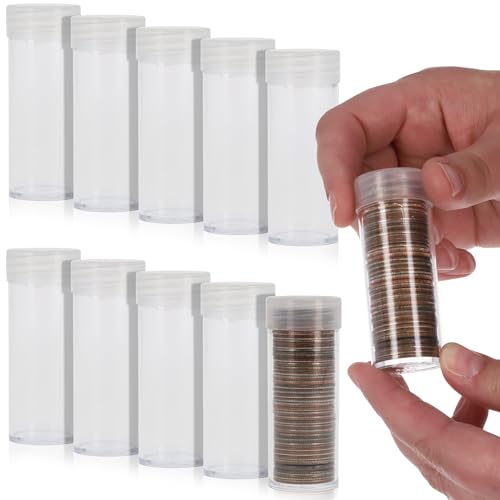
BCW Quarter Coin Tubes, 10 pack
$13.22BCW publishes archival-quality polystyrene tubes with an airtight screw-on cap, each holding 40 standard quarters, at $13.22. It keeps a season of modern clad organised without individually flipping coins that do not need it.
Best for: sorting bulk clad by denomination
Check price on AmazonExpert: documenting a find before deciding its fate
Once a find looks genuinely old or unusual, the question shifts from simple storage to documentation: what exactly is it, what does it weigh, and is it worth submitting for grading rather than keeping loose. Both picks here answer that question before a single cleaning decision gets made.
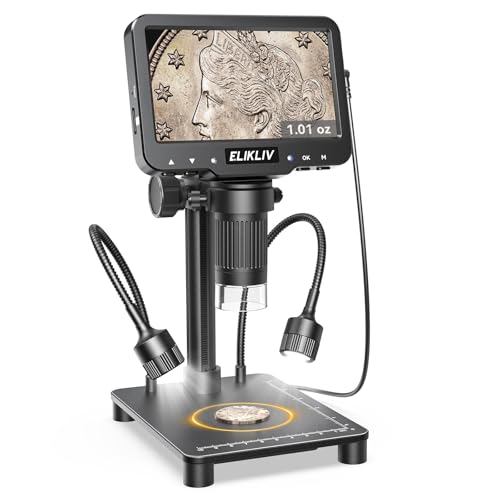
Coin Microscope with Weighing Scale
$49.99Elikliv publishes a built-in precision scale reading to 0.1 g alongside a 12 megapixel camera and 1080p video on the Coin Microscope with Weighing Scale, at $49.99, letting you photograph and weigh a find in the same session you identify it.
Best for: a find you suspect might be worth submitting for grading
Check price on Amazon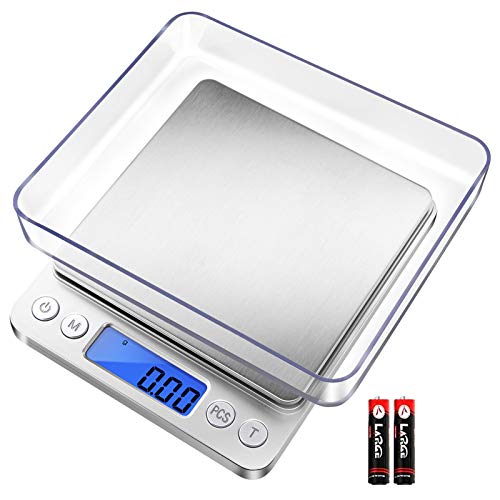
Fuzion Digital Gram Scale, 500 g by 0.01 g
$15.95Fuzion publishes a 500 g capacity reading to 0.01 g with six units of measurement including troy ounces and pennyweights, at $15.95, enough capacity to weigh a whole handful of coins rather than one at a time.
Best for: confirming a coin's weight matches its published silver content
Check price on AmazonWho should not buy this tier: Do not buy documentation-grade gear if you only ever dig modern clad in a local park. The Cardboard Coin Flips, 300 in 6 sizes at $9.50 covers that case completely, and a microscope or a precision scale only earns its price once you are regularly finding coins old or unusual enough that condition and authenticity genuinely matter to their value.
How do the storage and documentation options compare on paper?
The purpose column is the one that decides which of these you actually need. Most detectorists only ever require the first two rows.
Two products here are pure storage, and the remaining three help you decide what a find actually is before any cleaning or storage decision is made.
| Item | Purpose | Capacity or detail | Price |
|---|---|---|---|
| Cardboard Coin Flips, 300 in 6 sizes | Individual storage | 300 flips, 6 denominations | $9.50 |
| BCW Quarter Coin Tubes | Bulk clad storage | 10 tubes, 40 quarters each | $13.22 |
| Illuminated 30x and 60x Jewellers Loupe | Reading mint marks and dates | 30x and 60x magnification | $8.99 |
| Coin Microscope with Weighing Scale | Documenting condition | 0.1 g scale, 12 MP camera | $49.99 |
| Fuzion Digital Gram Scale | Verifying weight | 500 g capacity, 0.01 g readability | $15.95 |
| Conserv Safe Coin Solvent | The one safe cleaning exception | Conservation-grade rinse only | $8.99 |
Figures are quoted from the manufacturer listing for that product. The Conserv Safe Coin Solvent is included as the one product on this page intended for cleaning, and only for surface grime rather than restoration.
How do you tell what you have before you store it?
Magnification and weight are the two checks that matter most. A jewellers loupe makes a mint mark or a worn date readable where the naked eye sees only a faint bump, and reading that date is often the difference between a common coin and a genuinely early one. Weight matters because silver content and counterfeit detection both hinge on whether a coin matches its published specification, and the silver coin melt value calculator and the coin find value calculator both start from a weight you have actually measured rather than an assumption.
None of this replaces proper identification once a coin looks genuinely unusual. The finds identification guide covers that process in more depth, and it assumes exactly the storage-first approach this page argues for: identify and document before you touch a find with anything that could change its surface.
What about relics, buttons and non-coin finds?
The same storage-first logic applies even though this catalog's dedicated storage products are coin-shaped. A relic or a button benefits from the same principle as a coin: keep it from rubbing against other metal, keep it dry, and write down where and when it came out of the ground before the memory fades. A small compartmented box, even a repurposed one, does that job for an irregular shape that a coin flip was never designed to hold.
Iron relics deserve a specific warning of their own. An iron object that has spent a long time underground is often more fragile than it looks, and rapid drying after being wet can cause flaking that a slower, more careful drying process avoids. If an iron find looks archaeologically significant rather than merely old, the safest choice is often to leave it wrapped in damp cloth and seek advice before doing anything else to it at all, rather than guessing at a treatment.
Photographing every notable find before it goes into storage costs nothing and builds a record that outlasts the object's condition either way. A dated photograph next to a note of the site and depth, kept alongside the physical storage, is often more useful to a future appraisal than the object's current surface, especially for a piece that is eventually cleaned or conserved by someone else.
How we chose
We did not test any of this storage or documentation equipment in person and no find on this page is presented as ours. Every capacity, material and feature is quoted from the manufacturer listing for that product. Picks were chosen on what actually prevents damage to a find, from the first minutes after digging through to deciding what a coin is worth.
Sources
- Boen Cardboard Coin Flips product listing
- BCW Quarter Coin Tubes product listing
- Elikliv Coin Microscope with Weighing Scale product listing
- Conserv Safe Coin Solvent product listing
Frequently asked questions
Should I clean a coin before storing it?
No, not until you know what it is. Cleaning can permanently remove the toning and surface detail that carries a collectable coin's value, and that damage cannot be reversed. Store it first in something like the Cardboard Coin Flips, 300 in 6 sizes, identify it, and only then decide whether any cleaning at all is appropriate.
What is the difference between a coin flip and a coin tube?
A flip holds one coin individually and is meant for a find you consider worth protecting on its own, such as an older or unusual coin. A tube like the BCW Quarter Coin Tubes, 10 pack holds many coins of the same denomination together and is meant for sorting bulk modern clad, where individual protection is not usually necessary.
How do I know if a coin might be valuable before I clean it?
Check the date, mint mark and overall wear under magnification with a jewellers loupe, and weigh it against the published specification for that denomination and era. An unusually early date, a scarce mint mark, or a weight that suggests a silver composition are all reasons to store the coin untouched and research it further before doing anything else to it.
Is Conserv Safe Coin Solvent safe for all finds?
It is published as a conservation-grade rinse that lifts surface dirt without abrasion, which is safer than an abrasive or an acid dip, but it is still not appropriate for every find. Jewellery, heavily corroded relics and anything you suspect is genuinely rare are better left to a specialist than treated with any product, including this one.
How should I store jewellery and relics that are not coins?
The same principle applies even without a dedicated product: keep items separated so they cannot rub against each other, avoid anything abrasive, and document a piece with photographs and a note of where it was found before considering any cleaning. A small padded box with individual compartments does the same job for jewellery that a coin flip does for a coin.
Researched, not professional advice. This page is compiled from published specifications, manuals and owner-review consensus, not hands-on testing. Target ID numbers, depth figures and settings vary with soil chemistry, moisture, target size, depth, orientation and firmware version, so treat every figure here as a starting point and verify it against your own machine's manual and your own ground. As an Amazon Associate we earn from qualifying purchases.