Best for handling finds
Best Coin Storage and Cleaning Supplies: Do Not Clean It
Quick answer
Do not clean it. Cleaning removes original surface and destroys a collectable coin's value permanently and irreversibly, and no later treatment restores it. Put the coin in a cardboard flip at $9.50, get it identified, and decide afterwards.
This page leads with the only advice on it that really matters, because it is the advice that gets ignored and the mistake that cannot be undone. Do not clean a coin you have just dug until somebody who knows what it is has told you it is safe. Not with a wire brush, not with a rotary tool, not with vinegar, not with lemon juice, not with an ultrasonic bath, not with a scouring pad, and not by rubbing it on your jeans to see the date.
The reason is specific rather than superstitious. A coin that has been in the ground for a century carries an original surface, and the toning, the patina and the fine detail of the strike all live in the top few microns of it. Abrasives remove that surface. Acid dips dissolve it. Both leave a coin that is bright, obviously wrong to anybody who handles coins, and worth a fraction of what it was worth covered in dirt. The damage is graded as cleaned and it is permanent, which is why the supplies on this page are overwhelmingly storage, magnification and weighing rather than chemicals.
Top pick

Cardboard Coin Flips, 300 in 6 sizes
Boen publishes 300 flips in six sizes covering penny through large dollar, with an OPP film that holds the coin without pressing on it, at $9.50. Storage before cleaning is the single decision that preserves value, and this is what storage costs.
Price was accurate when this page was compiled and changes often.
On this page
- Why does cleaning a coin destroy its value?
- Beginner: somewhere to put it, and something to read it with
- Intermediate: weighing, sorting and the one safe solvent
- Expert: identifying properly, and the one find you can polish
- What should you actually do with a coin you have just dug?
- How do the storage and identification supplies compare?
- Are there any finds you can safely clean?
Why does cleaning a coin destroy its value?
Because what a collector is buying is the original surface, and cleaning removes it. On a struck coin the design sits in a layer of metal that has been compressed and flowed by the die, and the fine detail of that strike, along with a century of toning, is what separates a coin worth a great deal from an identical coin worth melt value. An abrasive takes that layer off. An acid dip eats it. Neither adds anything back.
The result is visible to anybody who handles coins regularly, even when the person who did it thought they were being gentle. Hairline scratches all running in one direction, an unnaturally bright surface, soft edges on the lettering, a dull grey cast where the lustre used to be. Graded coins carry the word cleaned as a permanent notation, and it typically removes a large share of the value regardless of how good the underlying coin is. There is no recovery from it and no treatment that reverses it.
The practical rule is therefore simple. Rinse loose soil off with plain water and pat it dry, do nothing else, and get the coin identified before you make any other decision. If it turns out to be a worn common coin then nothing is at stake and you can do as you like. If it turns out to be something scarce, you will be extremely glad you did nothing. The cleaning finds guide goes through the material-by-material detail, including the very different rules for copper, silver and gold.
Beginner: somewhere to put it, and something to read it with
The correct first purchase is storage, not cleaning materials. A coin that goes into a flip the day it is dug stops rubbing against everything else in the tin, which is itself a form of cleaning and does the same damage more slowly. Boen publishes six sizes in one box, which covers essentially anything you will dig.
The second purchase is magnification, because a date and a mint mark are what decide whether a coin is interesting, and neither is readable by eye on a dug coin. A loupe at under ten dollars answers more questions than anything else on this page.
Cardboard Coin Flips, 300 in 6 sizes
$9.50Boen publishes 300 cardboard 2 by 2 flips in six sizes from 20.5 mm to 40 mm, covering penny through large dollar, with an OPP film that accommodates coin thickness without tearing, and a writable surface for size, age and notes, at $9.50.
Best for: storing coin finds properly from day one
Check price on Amazon
Illuminated 30x and 60x Jewellers Loupe
$8.99JARLINK publishes a dual lens loupe with a 30x 22 mm primary and a 60x 12 mm secondary, LED illumination that switches side according to the lens in use, an aluminium and plastic body and a fabric storage bag, at $8.99.
Best for: reading dates, mint marks and hallmarks
Check price on AmazonIntermediate: weighing, sorting and the one safe solvent
Weight is the first objective fact you can establish about a find, and it is what every value calculation starts from. A scale reading to 0.01 g tells you whether a silver coin is the weight its specification says, which is a basic authenticity check, and it is what the melt value calculators need as an input.
The solvent here needs its warning attached rather than its praise. Conserv publishes its product as a rinse that lifts surface dirt, greases and varnishes while leaving surface toning completely intact. That distinction, removing contaminants without touching the toning, is what separates conservation from cleaning. It is still not something to use on anything potentially scarce without advice first.

Digital Pocket Scale, 200 g by 0.01 g
$11.99Published at 200 g capacity and 0.01 g readability, with a stainless platform, a tare function, six weight modes including troy ounces and pennyweight, and a backlit LCD, at $11.99. Weight is where every value calculation starts.
Best for: weighing individual coins, gold and jewellery
Check price on Amazon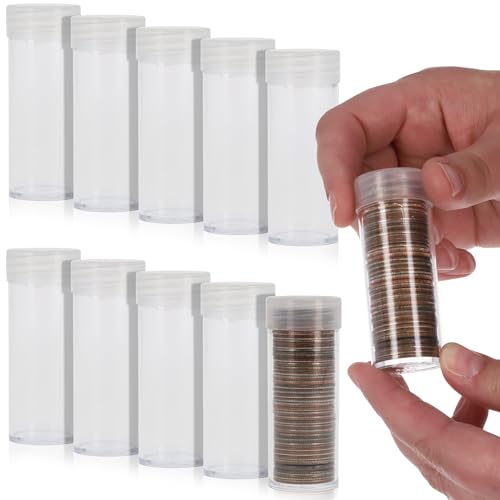
BCW Quarter Coin Tubes, 10 pack
$13.22BCW publishes archival quality inert polystyrene tubes with screw-on caps and an airtight seal, each holding 40 US quarters, in a 10 pack at $13.22. Individual flips are a waste of time on modern clad, and tubes keep the sorting done.
Best for: sorting modern clad by denomination
Check price on Amazon
Conserv Safe Coin Solvent
$8.99Conserv publishes this as a rinse that lifts surface dirt, gums, grease, varnish and inks while leaving surface toning completely intact, at $8.99. Removing a contaminant is conservation. Removing surface is cleaning, and no abrasive or acid dip belongs anywhere near a coin.
Best for: surface contaminants on coins you have already had identified
Check price on AmazonExpert: identifying properly, and the one find you can polish
Once you are recovering enough to have a backlog, the loupe becomes the bottleneck. A screen-based microscope lets you work through a day's finds sitting down, photograph them for records or for a listing, and compare varieties side by side rather than from memory.
The polishing cloth is on this page as the deliberate exception and it needs its boundary stated clearly. Gold and silver jewellery is the one category of find where polishing is normally safe, because the value is in the metal and the maker's mark rather than in a struck surface. It is not for coins. Nothing on this page is for coins.
Coin Microscope with Weighing Scale
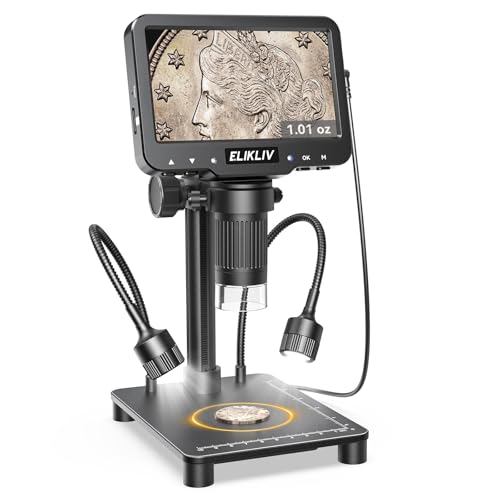
$49.99Published with a 4.3 inch IPS screen at a 178 degree viewing angle, a 12 MP camera with 1080p video to a micro SD card, 8 lens LEDs plus 2 side lights to kill glare on proof surfaces, and a built-in 0.1 g scale to 300 g, at $49.99.
Best for: identifying and photographing a season of finds
Check price on Amazon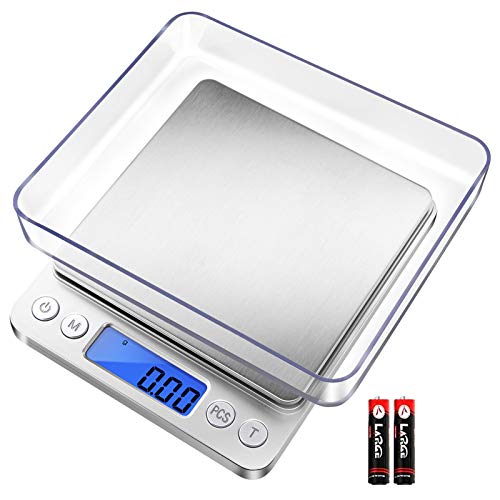
Fuzion Digital Gram Scale, 500 g by 0.01 g
$15.95Fuzion publishes 500 g capacity at 0.01 g readability with a stated permissible error of plus or minus 0.02 g, six units including troy ounces and pennyweight, a tare function and a piece counting mode, at $15.95. The extra capacity suits weighing a lot at once.
Best for: coin lots and heavier finds
Check price on Amazon
Jewellery Polishing Cloth
$13.95Published as a two-step treated and untreated cloth for gold, silver and platinum, 11 by 14 inches opened, with non-toxic ingredients. Use it on jewellery finds, where value sits in the metal and the hallmark. At $13.95 it is cheap, and it is still wrong for any coin.
Best for: gold and silver jewellery finds, and nothing else
Check price on AmazonWho should not buy this tier: Do not buy the Jewellery Polishing Cloth if what you dig is mostly coins, because the temptation to use it is exactly the mistake this page exists to prevent, and a polished coin is a ruined coin. Do not buy the Coin Microscope with Weighing Scale at $49.99 until the Illuminated 30x and 60x Jewellers Loupe at $8.99 has become genuinely inadequate, which for most people is never. And do not buy any solvent at all if your instinct is to reach for it on the day of the dig, since the correct action on day one is a rinse in plain water, a flip, and an identification.
What should you actually do with a coin you have just dug?
- Handle it by the edges. Pick the coin up by its rim between finger and thumb rather than touching the faces. Skin oils and salts mark a surface over time, which is why dealers handle coins this way and why gloves are common at the identification stage rather than in the field.
- Rinse loose soil in plain water only. Run it under cold water to take off loose dirt and pat it dry with a soft cloth. Do not rub, do not scrub, do not use soap and do not use a brush of any kind. Anything that moves across the surface under pressure is an abrasive.
- Put it straight into a flip. Get the coin into a cardboard 2 by 2 or a tube the same day, away from other finds. Coins rubbing against each other and against scrap in a pouch or a tin is slow abrasion, and it produces exactly the damage you are trying to avoid.
- Identify before deciding anything. Read the date and mint mark under magnification, weigh it, and find out what it is. A worn common coin and a scarce variety look identical under soil, and the decision about whether any treatment is acceptable depends entirely on which one you have.
- Ask before treating anything you cannot replace. If the coin turns out to be scarce, take it to a dealer or a club before doing anything else to it. Conservation by somebody who does it professionally is a real service. Cleaning it yourself first removes that option permanently.
How do the storage and identification supplies compare?
Almost everything on this table is storage or magnification, which is the point. Only one item is a treatment and it is a rinse rather than a cleaner.
The whole correct kit for handling coin finds costs less than a coil cover, and none of it is an abrasive or an acid dip.
| Item | Price | What it is for | Key published detail |
|---|---|---|---|
| Illuminated Jewellers Loupe | $8.99 | Reading dates and mint marks | 30x 22 mm and 60x 12 mm lenses, LED lit |
| Conserv Safe Coin Solvent | $8.99 | Surface contaminants only | Lifts dirt and grease, leaves toning intact |
| Cardboard Coin Flips | $9.50 | Storing individual coins | 300 flips, 6 sizes, 20.5 mm to 40 mm |
| Digital Pocket Scale | $11.99 | Weighing single finds | 200 g capacity, 0.01 g readability, 6 units |
| BCW Quarter Coin Tubes | $13.22 | Bulk modern clad | Archival polystyrene, 40 quarters per tube |
| Jewellery Polishing Cloth | $13.95 | Jewellery finds, never coins | Two-step treated and untreated cloth |
| Fuzion Digital Gram Scale | $15.95 | Coin lots and heavier finds | 500 g capacity, 0.01 g, error +/- 0.02 g |
| Coin Microscope with Scale | $49.99 | Identifying and photographing | 4.3 inch screen, 12 MP camera, 0.1 g scale to 300 g |
Specifications are as published in each manufacturer listing. Nothing on this page is a valuation, a grading opinion or numismatic advice, and the decision about whether any treatment is appropriate for a specific coin should come from somebody who has handled it.
Are there any finds you can safely clean?
Yes, and the boundary is reasonably clear. Modern clad coinage with no collector premium can be washed however you like, because its value is its face value and nothing about the surface matters. Lead, iron and most bulk relics are a different conservation problem entirely and are usually best left to someone who knows the material. Gold and silver jewellery is the one category where polishing is normally safe, since the value sits in the metal weight and the hallmark rather than in a struck surface, which is why the Jewellery Polishing Cloth appears on this page at all.
Gold itself does not corrode, so a gold coin or ring usually comes out of the ground looking much as it went in and needs nothing beyond a rinse. Silver tones and that toning is frequently desirable rather than dirt. Copper and bronze are the most fragile of all, because the patina on a copper coin is chemically part of the coin and stripping it leaves a raw pink surface that immediately begins to corrode again, which is both ugly and unstable.
Weight is the check worth doing before anything else, on jewellery in particular. A scale reading to 0.01 g tells you whether a ring weighs what its claimed metal and size imply, and the silver melt value calculator and the coin find value calculator turn weights and fineness into numbers. Carrying finds so they do not rub in the first place is the other half of it, and the pouches page covers the pouches with a separate finds pocket.
How we chose
We did not test any of these products in person, we have graded nothing, and nothing here is a valuation or numismatic advice. Materials, capacities and sizes come from each manufacturer listing and are stated as such. Picks were chosen to support the correct order of operations, which is stabilise, store, identify, and only then consider whether any treatment is appropriate at all.
Sources
- Boen cardboard coin flips product listing
- BCW quarter coin tubes product listing
- Conserv Safe Coin Solvent product listing
- JARLINK illuminated jewellers loupe product listing
- Elikliv coin microscope with weighing scale product listing
- Fuzion and generic digital pocket scale product listings
Frequently asked questions
Why should I not clean a coin I just dug up?
Because cleaning removes the original surface, and that surface is where the value is. Abrasives leave hairline scratches and acid dips dissolve the toning, both producing a coin that is obviously wrong to anybody who handles coins. The damage is permanent, graded coins carry a cleaned notation for it, and no later treatment reverses it. Rinse in plain water, store it, then identify it.
What can I safely do to a dug coin on the day?
Rinse loose soil off under cold plain water, pat it dry with a soft cloth without rubbing, and put it in a cardboard flip away from your other finds. That is the whole list. No soap, no brush, no vinegar, no lemon juice, no ultrasonic bath and no rubbing it on your sleeve to read the date, which is the most common way good coins get damaged.
Is a coin solvent the same as a coin cleaner?
Not if it is a genuine conservation product. Conserv publishes its solvent as lifting surface dirt, gums, grease and varnish while leaving surface toning completely intact, which is removing a contaminant rather than removing metal. That is a real distinction. It is still not something to use on a coin you have not had identified, because the judgement about whether it is appropriate depends on what the coin is.
How should I store coins long term?
Individually, away from each other, in inert materials. Cardboard 2 by 2 flips suit anything you want to keep and label, and archival polystyrene tubes like the BCW Quarter Coin Tubes, 10 pack suit bulk modern clad where individual flips are not worth the time. Keep them somewhere with stable temperature and low humidity, since damp is what drives further corrosion on copper.
Do I need a scale for coin finds?
It is the most useful single instrument after magnification. Weight is an objective check against the published specification for a coin, it is the first thing that flags a fake, and it is the input every melt value calculation needs. A scale reading to 0.01 g like the Digital Pocket Scale, 200 g by 0.01 g at $11.99 covers coins, jewellery and small gold.
Researched, not professional advice. This page is compiled from published specifications, manuals and owner-review consensus, not hands-on testing. Target ID numbers, depth figures and settings vary with soil chemistry, moisture, target size, depth, orientation and firmware version, so treat every figure here as a starting point and verify it against your own machine's manual and your own ground. As an Amazon Associate we earn from qualifying purchases.