Best for handling finds
Best Gold Panning Kits: Classify First, Then Pan
Quick answer
Classify the material before you pan it, or you are washing gravel. The ASR Outdoor Gold Pan Beginners Kit, 5 piece at $16.95 is the cheapest honest start, the SE 11-Piece Gold Panning Kit at $59.45 adds sieves, and a snuffer bottle is how fine gold leaves the pan.
Panning and detecting overlap more than either camp admits. A detector finds nuggets big enough to give a signal, and a pan recovers everything smaller than that from the same gravel, which on most ground is the great majority of the gold present by count if not by weight. People who do both find more than people who do one, and a starter pan kit costs less than a coil cover.
The technique has one non-obvious step that decides whether you find anything, and it is not the panning motion. It is classifying: screening the material through a mesh before it goes in the pan, so that you are working with particles of roughly similar size. SE publishes it plainly on the SE Stackable Classifier, 1/8 inch mesh, describing classifying as saving time and improving gold recovery in sluices and pans. Skip it and the large gravel keeps the gold suspended and it washes over the lip while you are concentrating on the wrong thing.
Top pick

SE 11-Piece Gold Panning Kit
SE publishes three pans at 8, 10 and 14 inches with dual riffles, two sifting sieves in different mesh sizes, magnified tweezers, a snuffer bottle, a magnetic black sand separator pen, a sand scoop and glass vials, at $59.45.
Price was accurate when this page was compiled and changes often.
On this page
- What is actually in a gold panning kit?
- Beginner: the cheapest kit that is not a toy
- Intermediate: start classifying, and the recovery gets serious
- Expert: working a site properly, and pairing it with a detector
- How do the panning kits compare?
- How do you actually pan a sample down?
- What is worth knowing about the gold itself?
What is actually in a gold panning kit?
Four categories of thing, and a kit is worth buying in proportion to how many of them it covers. A pan or several, usually plastic with moulded riffles on one side to catch heavy material as you wash the light material off. A classifier, which is a sieve that sits over a bucket and screens out anything above a chosen size. Recovery tools for getting fine gold out of the pan, meaning a snuffer bottle and non-magnetic tweezers. And somewhere to put the result, meaning glass vials with sealing lids.
Pan size is a genuine choice rather than a bigger-is-better question. SE publishes 8, 10 and 14 inch pans in the SE 11-Piece Gold Panning Kit, and ASR publishes 10, 12 or 14 inch in the ASR Outdoor Gold Pan Beginners Kit, 5 piece, both with dual riffle designs. A large pan holds more material per wash and is much harder to work for a long session, because a pan full of wet gravel is heavy and the motion is a wrist movement repeated hundreds of times. Most people end up using a mid-size pan for the work and a small one for the final cleanup.
The tool people most often lack is the snuffer bottle. Fine gold cannot be picked up with fingers and will not come out on tweezers, and the Garrett Gold Guzzler Snuffer Bottle at $9.99 is a squeeze bottle that sucks it off the water surface. Non-magnetic tweezers matter for the same category of reason: magnetic ones pick up the black sand, which is magnetite, and not the gold.
Beginner: the cheapest kit that is not a toy
A first panning kit needs a pan with riffles, something to hold the result, and a way to get fine flake off the water. Beyond that, the skill is free and the equipment is almost irrelevant. Spending more before you can pan a fixed amount of material down cleanly is buying equipment to solve a technique problem.
Add the snuffer bottle even if the kit does not include one. It is under ten dollars and without it the fine gold you have just spent twenty minutes concentrating goes back into the creek when you tip the pan.

ASR Outdoor Gold Pan Beginners Kit, 5 piece
$16.95ASR Outdoor publishes a five piece kit with a dual riffle pan in 10, 12 or 14 inch, a large glass collection vial with a screw lid, a 4.5 inch magnifying tweezer with a loupe built into the body, and a 3 oz snuffer bottle, at $16.95.
Best for: trying panning for the first time
Check price on Amazon
Garrett Gold Guzzler Snuffer Bottle
$9.99A snuffer bottle at $9.99. Fine gold cannot be picked up with fingers and tweezers will not hold it, so without one the flour gold you have spent twenty minutes concentrating goes back in the water when you tip the pan out.
Best for: recovering fine gold and flour gold
Check price on AmazonIntermediate: start classifying, and the recovery gets serious
This is the tier where results change, and it is because of the sieve rather than the pan. Screening material to a consistent size before panning means the heavy particles can actually settle instead of being held up by gravel, and it is the single biggest technique improvement available for under thirty dollars.
SE publishes the SE Stackable Classifier, 1/8 inch mesh with 1/8 inch stainless mesh on a 13.25 inch pan that sits over a bucket and stacks with its other classifiers. The 11 piece kit is the alternative route, giving you the sieves, the pans and the recovery tools in one purchase.
SE 11-Piece Gold Panning Kit
$59.45SE publishes 3 dual riffle pans at 8, 10 and 14 inches, 2 sifting sieves in different mesh sizes, magnified tweezers, a plastic bottle, a 5 lb magnetic black sand separator pen, a sand scoop and glass vials, at $59.45. It covers everything except the shovel.
Best for: a complete panning setup in one purchase
Check price on Amazon
SE Stackable Classifier, 1/8 inch mesh
$24.99SE publishes a 13.25 inch classifier with rust-resistant stainless steel mesh at 1/8 inch, light enough to reduce hand fatigue, that stacks with its other classifiers, at $24.99. SE states plainly that classifying saves time and improves gold recovery.
Best for: general panning on most creek gravel
Check price on Amazon
Gold Collection Glass Vials, 12 pack
$9.99Twelve small glass vials, six at 3/4 dram and six at 1 dram, with screw-on resealable watertight lids, at $9.99. A pocket is not somewhere to put gold flake, and a watertight vial means you can carry it home still wet without losing any.
Best for: storing flake and small nuggets
Check price on AmazonExpert: working a site properly, and pairing it with a detector
Serious recovery means classifying to several sizes rather than one, because different mesh fractions pan differently and sorting them in one pass rather than three is most of the efficiency. SE publishes a stacking set with stainless mesh at 0.500, 0.250, 0.125, 0.083 and 0.050 inches, designed to work over a standard five gallon bucket.
The other half of this tier is the detector. A high-frequency machine finds the nuggets that are too large to be worth panning for and the pan takes everything below that threshold, and the two together cover the whole size range. Minelab publishes 45 kHz and fully automatic operation on the Minelab Gold Monster 1000, and Fisher publishes 19 kHz with a real-time mineralisation readout on the Fisher Gold Bug Pro. The gold machines roundup compares them properly.

SE Stackable Classifier Set (1/2, 1/4, 1/8 inch)
$99.99SE publishes a stackable set with rust-resistant stainless mesh at 0.500, 0.250, 0.125, 0.083 and 0.050 inches, sized to sit over a standard five gallon bucket, at $99.99. Sorting material in one pass rather than three is where the time goes.
Best for: working a site properly rather than sampling it
Check price on Amazon
ASR Outdoor Tweezer and Vial Set, 5 piece
$12.99ASR publishes a magnifying tweezer at 4x with a 1 inch glass lens, plus four glass collection vials with screw tops, at $12.99. Non-magnetic matters, because magnetic tweezers pick up the magnetite black sand instead of the gold sitting in it.
Best for: picking flakes out of a cleaned pan
Check price on Amazon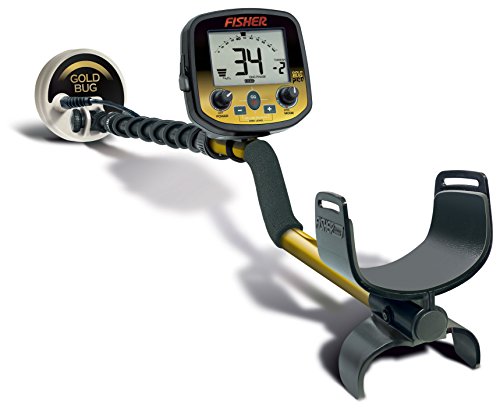
Fisher Gold Bug Pro
$339.00Fisher publishes a 19 kHz operating frequency for sensitivity to small nuggets in mineralised soil, computerised ground grab with a continuous mineralisation readout, V-Break tone discrimination, and 2.5 lb of weight, at $339.00.
Best for: finding the nuggets that are too big to bother panning for
Check price on AmazonWho should not buy this tier: Do not buy the SE Stackable Classifier Set (1/2, 1/4, 1/8 inch) at $99.99 before you have panned a season with one mesh size. Five classifiers is a workflow for somebody processing buckets from a known productive site, and for somebody sampling a creek on a weekend it is four sieves to carry and clean for no gain. Do not buy a gold detector at all for ground with no history of gold: a high-frequency machine like the Fisher Gold Bug Pro is a poor coin machine, and if there is no gold in the county no frequency will help. And do not buy a 14 inch pan as your only pan, because a full one is genuinely heavy to work for an afternoon.
How do the panning kits compare?
The column to read is whether the kit lets you classify. A kit with pans and no sieve is a kit that will have you washing gravel.
Only the 11 piece kit in this catalog includes both pans and sieves, so every other route means buying a classifier separately before the panning itself will work properly.
| Kit or tool | Price | Includes a classifier | What is published in the box |
|---|---|---|---|
| Garrett Gold Guzzler | $9.99 | No | Snuffer bottle only |
| Gold Collection Glass Vials | $9.99 | No | 12 vials, 3/4 and 1 dram, watertight lids |
| ASR Tweezer and Vial Set | $12.99 | No | 4x magnifying tweezer, 4 glass vials |
| ASR Gold Pan Beginners Kit | $16.95 | Yes, one classifier | Dual riffle pan, vial, magnifying tweezer, 3 oz snuffer |
| SE Stackable Classifier | $24.99 | Yes, 1/8 inch mesh | 13.25 inch stainless classifier, stacks with others |
| SE 11-Piece Panning Kit | $59.45 | Yes, two sieve sizes | 3 pans at 8, 10 and 14 inch, 2 sieves, tweezers, separator pen, scoop, vials |
| SE Stackable Classifier Set | $99.99 | Yes, five mesh sizes | Mesh at 0.500, 0.250, 0.125, 0.083 and 0.050 inch |
Contents and mesh sizes are as published in each manufacturer listing. Pan sizes vary by the option selected on some kits. Nothing here is a measured recovery result and no yield is implied by any of it.
How do you actually pan a sample down?
- Classify the material first. Screen the gravel through a classifier over a bucket before any of it reaches the pan. Anything larger than the mesh gets checked by eye for nuggets and discarded. SE publishes classifying as the step that saves time and improves recovery, and skipping it is the most common beginner mistake.
- Submerge and break up the material. Fill the pan about two thirds, lower it under water and work the material with your fingers until any clay has broken up. Clay holds gold in suspension and will carry it over the lip if it is not broken down first.
- Shake to stratify, then wash off the top. Shake the pan side to side under water so the heavy material settles to the bottom against the riffles, then tilt and let the top layer of light gravel wash away. Repeat. The shaking is what does the separating, not the washing.
- Work down to black sand. Keep alternating until only a small amount of dark heavy concentrate remains. That black sand is magnetite and it is a good sign rather than a nuisance, because gold settles with it. A magnetic separator pen pulls the magnetite away and leaves the rest.
- Recover with a snuffer bottle. Swirl a little water across the remaining concentrate so the gold trails behind, then lift it off the surface with a snuffer bottle rather than fingers or tweezers. Transfer it to a sealed vial while it is still wet.
What is worth knowing about the gold itself?
Most placer gold is small. The picture most people have of panning involves nuggets, and the reality on almost all ground is flake and flour gold measured in fractions of a gram. That is why the snuffer bottle and the fine mesh matter so much more than the pan does, and it is why a set of vials with watertight lids is a sensible purchase rather than a fussy one.
Value follows weight and purity, and neither is obvious by eye. Natural gold is alloyed, commonly with silver, so a purity assumption is exactly that. The nugget value calculator converts a weight in grams, grains or pennyweight to a melt value at whatever purity and spot price you enter, which is the honest way to do it. A scale that reads to 0.01 g is the other half of that, and the finds handling page covers the scales.
One caution that is specific to this hobby: a nugget with character is frequently worth considerably more to a collector than its melt value, and the way to destroy that premium is to clean it aggressively or to melt it. If you recover anything with an unusual shape or crystalline structure, put it in a vial and get an opinion before doing anything else to it. The same principle applies to coins, at greater length, on the cleaning finds guide.
How we chose
We did not test any of this in person, we have panned no ground for this page, and no recovery described here is ours. Pan sizes, mesh sizes and kit contents come from each manufacturer listing and are stated as such. Picks were chosen on whether the kit includes a way to classify material, a way to recover fine gold from the pan, and somewhere to put it afterwards, which are the three things beginners most often lack.
Sources
- SE 11-Piece Gold Panning Kit product listing
- SE Stackable Classifier and Classifier Set product listings
- ASR Outdoor Gold Pan Beginners Kit, vials and tweezer set product listings
- Garrett Gold Guzzler Snuffer Bottle product listing
- Fisher Gold Bug Pro and Minelab Gold Monster 1000 product listings
Frequently asked questions
Why does classifying matter so much before panning?
Because large gravel keeps small heavy particles in suspension, so the gold never reaches the riffles and washes over the lip with everything else. Screening to a consistent size first means the heavy material can settle properly. SE publishes classifying as saving time and improving gold recovery in both pans and sluices, and it is the cheapest improvement available to a beginner.
What size gold pan should I start with?
Somewhere in the 10 to 12 inch range for general work. A 14 inch pan holds more material per wash but a full one is heavy and the panning motion is repeated for hours, so it tires you out faster than it saves time. Kits like the SE 11-Piece Gold Panning Kit supply 8, 10 and 14 inch pans so you can use the small one for final cleanup.
What is the black sand in the bottom of the pan?
Mostly magnetite, an iron oxide, and it is a good sign rather than a problem. It is heavy, so it concentrates in the same place gold does, which means finding it tells you your panning technique is working. A magnetic separator pen, included in the SE 11-Piece Gold Panning Kit, lifts the magnetite out and leaves whatever non-magnetic heavy material was sitting with it.
Can I use a metal detector instead of panning?
They cover different size ranges rather than competing. A detector finds nuggets large enough to give a signal, which on most ground is a small minority of the gold present. A pan recovers everything below that. High-frequency machines like the Fisher Gold Bug Pro at 19 kHz and the Minelab Gold Monster 1000 at 45 kHz exist because small gold needs frequency, and people who do both find more.
Do I need a licence to pan for gold?
It depends entirely on where you are, and the rules are stricter than for detecting. Claims cover much of the productive water in many regions, some public land allows hand panning only, and some waterways are closed during spawning seasons. Check with the relevant land agency for that specific watercourse before you start, and get written permission on private land. This page is researched rather than legal advice.
Researched, not professional advice. This page is compiled from published specifications, manuals and owner-review consensus, not hands-on testing. Target ID numbers, depth figures and settings vary with soil chemistry, moisture, target size, depth, orientation and firmware version, so treat every figure here as a starting point and verify it against your own machine's manual and your own ground. As an Amazon Associate we earn from qualifying purchases.