Choosing and setting up
Metal Detecting Discrimination Explained: What You Lose When You Reject
Quick answer
Discrimination silences targets whose conductivity reading falls in a range you choose. It does not identify objects, it sorts them by an electrical property, and rejecting a range also silences good targets that read into it and good targets sitting next to rejected iron. Most experienced detectorists reject very little.
Discrimination is the most misunderstood control on a detector, and the misunderstanding is expensive. It does not tell the machine what an object is. It tells the machine to go quiet when the conductivity reading falls inside a range you have nominated, and conductivity is a property that a corroded iron washer, a nickel and a small gold ring can share more often than anybody would like.
The useful way to think about it is as a filter with a cost. Every band you switch off buys you a quieter hunt and sells you some proportion of the good targets in that band, plus some of the good targets lying next to rejected iron. This page is about pricing that trade honestly. It assumes you already know what a target ID number is; if not, the target ID chart is the place to start, and reading a signal covers the audio side.
Top pick
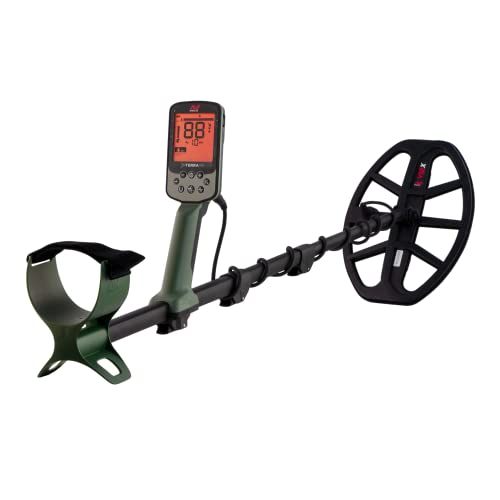
Minelab X-Terra Pro
A mid-price multi-frequency machine with straightforward discrimination and notch controls, which is what you want while you are still learning to trust the numbers rather than hide behind them.
Price was accurate when this page was compiled and changes often.
On this page
What is discrimination actually doing?
The coil induces eddy currents in a buried metal object and measures the phase and strength of the response. That response orders metals by conductivity and by how ferrous they are, which is why the scale is consistent in its shape even though the numbers differ between machines. Iron sits at the bottom, foil and small gold low, nickel and pull tabs in the middle, and copper and silver at the top, with a large silver coin reading near the top of the scale. That ordering is physics and it does not change.
Discrimination sets a threshold or a set of windows on that ordering and mutes anything inside them. Notch discrimination mutes a window in the middle while leaving the ranges either side live, which is the control people reach for when pull tabs are ruining a site. Neither control makes the machine cleverer. It makes the machine quieter, and quiet is not the same thing as accurate.
What sits where, and what does rejecting it cost?
These ranges are for the 0 to 99 scale most modern machines use, and they are approximate orderings rather than a lookup table. Your own machine, your soil chemistry, the depth and orientation of the target, corrosion and even a firmware version will all shift the number. Bury known targets in your own ground and write down what your machine says: that list is worth more than any published chart, including this one.
Rejecting the pull tab band around the middle of the scale is the single most expensive decision in discrimination, because small gold rings and nickels read into the same range.
| Band | Typical range | What lives there | What you lose by rejecting it |
|---|---|---|---|
| Ferrous | Below about 20 | Nails, iron scrap, bottle caps, some crown caps | Wrought iron relics, large ferrous artefacts, and unmasking information |
| Low nonferrous | Roughly 5 to 25 depending on scale | Foil, thin gold, small jewellery, lead shot | Small gold rings and earrings, which read very low |
| Nickel band | Roughly high teens to mid 20s | US nickels, some gold rings, small lead | The band most gold rings occupy, which is why experienced hunters keep it open |
| Pull tab band | Roughly mid 20s to low 40s | Aluminium tabs, can slaw, mid weight gold | More gold rings than any other single decision on the machine |
| Zinc and low copper | Roughly 40s to 60s | Zinc cents, some tokens, thin copper | Later small cents and a lot of tokens and buttons |
| High copper and silver | Roughly 60s to high 80s | Copper coins, dimes, quarters, most silver | Almost nothing worth losing, which is why nobody rejects here |
| Very high conductors | Roughly high 80s to 99 | Large silver, copper plate, some flat iron falsing high | Rarely rejected, though large rusted iron can false into this band |
Ranges are approximate and machine specific. A large flat piece of iron can read high rather than low, which is the classic trap in relying on a number alone, and corroded targets drift as they decay. Check every band against your own machine in your own soil.
Why does rejecting iron cost you good targets?
Because rejection is not silence around a single object. When the coil passes over a rejected target the machine blanks for that portion of the sweep, and if a good target lies inside that blanked window it disappears with the iron. On an old site where nails outnumber coins by fifty to one, heavy iron rejection can hide most of what you came for. This is masking, and it is the reason experienced detectorists on historic ground run almost no discrimination at all and simply accept a noisy hunt.
The two real answers to masking are a smaller coil and a faster recovery speed, not more rejection. A 6 inch class coil such as the Minelab EQX 06 Coil (6 inch) or the Nokta LG15 Coil (6 inch) sees a smaller patch of ground at a time, so a good target and a nail beside it arrive as two separate events rather than one blurred one. The coil size chart quantifies what that costs in depth, and the coil size selector on this site will tell you whether your site justifies it.
What should you actually run?
The working consensus among people who find good targets is: reject as little as you can stand, and use tone information rather than silence to make the decision. Set iron to a distinct low growl rather than muting it, keep the whole nonferrous range open, and learn what a broken, one-directional signal sounds like compared to a repeatable one from two directions. That is a skill, and it is worth more than any setting.
Where a site is genuinely unworkable, notch the narrowest window you can rather than sweeping everything below a threshold, and open it again on the next site instead of leaving it set. On a modern park where the aim is jewellery, run wide open and dig the tab band, because that is where the rings are. On a stubble field where the aim is deep silver, a tighter setting is defensible because the trash is different. Site-specific settings pages such as the Equinox 700 settings by site type are a reasonable starting point for your own machine.
How do you prove any of this on your own ground?
Bury known targets at known depths and write down what your machine says about each one, then repeat the exercise with your discrimination pattern switched on and see which of them vanish. That is the only way to know what your settings are costing you, and it takes an afternoon. The test garden guide sets out how to lay one out on ground you own or have written permission to dig.
Add a nail beside a coin at the same depth and listen to what happens as you change recovery speed and coil size. That single test explains masking better than any explanation, including this one, and it is the reason most experienced detectorists end up carrying a second coil rather than a second machine. If the numbers on your screen still look unstable after all of this, the problem is usually ground balance rather than discrimination, and the ground balance guide is the fix.
Sources
- Minelab, Garrett, Nokta and Fisher instruction manuals, discrimination and notch sections
- Manufacturer published target ID scales for the machines named
- Published coil specifications from Minelab and Nokta
Frequently asked questions
Should I discriminate out iron?
On historic ground, no. Set iron to a distinct low tone instead, because rejecting it blanks the machine over every nail and takes any good target lying beside one with it. On a modern park where iron is sparse and you want a quieter hunt, light iron rejection costs little. The general rule is to reject as little as you can tolerate.
Why do gold rings read in the pull tab range?
Because conductivity depends on the metal, the mass and the shape rather than on the value. A small gold ring and an aluminium pull tab can produce very similar responses, which is why the tab band is where most ring finds come from. If you are hunting jewellery, that band has to stay open and you will dig a great deal of aluminium to get there.
What is the difference between discrimination and notch?
Discrimination normally rejects everything below a threshold, so raising it silences progressively more of the lower scale. Notch rejects a defined window while leaving the ranges on both sides live, which is how people mute pull tabs without also muting foil and small gold. Notch is the more surgical control and it is the one to reach for first.
Do target ID numbers mean the same thing on every detector?
No. Most modern machines use a 0 to 99 scale and the conductive ordering is consistent, but the numbers are not interchangeable between brands or even between models in a range. Treat any published chart as a shape to expect rather than a lookup table, and build your own list by burying known targets in your own soil.
Does discrimination reduce depth?
Discrimination itself does not usually cost raw depth, but the processing that supports it can make a machine less responsive in some modes, and all metal or no discrimination modes are often slightly deeper and more stable. The bigger practical cost is masking rather than depth, because rejection blanks the machine around every ignored target.
Researched, not professional advice. This page is compiled from published specifications, manuals and owner-review consensus, not hands-on testing. Target ID numbers, depth figures and settings vary with soil chemistry, moisture, target size, depth, orientation and firmware version, so treat every figure here as a starting point and verify it against your own machine's manual and your own ground. As an Amazon Associate we earn from qualifying purchases.