Best for water
Best Metal Detectors for Saltwater Beaches: Why Multi-Frequency Is Not Optional
Quick answer
Wet salt sand is conductive, so a single-frequency VLF machine reads it as one broad signal and either chatters or loses depth. Simultaneous multi-frequency machines cancel that mineral response instead of enduring it. The Garrett Vortex VX7 at $499.99 runs a named Multi-Salt mode, and the Minelab Excalibur II 1000 remains the specialist reference for surf and diving.
Ask any experienced beach hunter what separates a good saltwater machine from a bad one and the answer is never depth printed on a box. It is what happens the moment the coil crosses the wet strip between dry sand and the waterline. Salt water conducts electricity, and a single-frequency detector cannot tell a sheet of conductive salt from a conductive target sitting inside it. The machine either chatters constantly or the operator turns sensitivity down until the ground goes quiet, and either way the depth the manufacturer printed never shows up in the wet sand.
Simultaneous multi-frequency solves that problem by design rather than by workaround. Several frequencies transmit at once, the machine compares how the ground and the target respond at each one, and it cancels the part of the response that behaves like mineralised ground rather than metal. That is the entire argument for paying more at this end of the hobby, and it is the reason this page and the freshwater roundup reach such different conclusions about which machines belong on the list.
Top pick

Garrett Vortex VX7
Garrett publishes a dedicated Multi-Salt mode alongside MD-MF simultaneous multi-frequency, built-in Z-Lynk wireless, five search modes and adjustable detection speed for separating targets in wet sand, at $499.99. Multi-Salt is named for exactly this ground.
Price was accurate when this page was compiled and changes often.
On this page
- Why does wet salt sand defeat a single-frequency detector?
- Beginner: the cheapest machines that solve salt properly
- Intermediate: where a named salt mode starts to matter
- Expert: the salt-water specialists
- How do the saltwater-capable machines compare on paper?
- Does the machine need to be submersible, or just the coil?
Why does wet salt sand defeat a single-frequency detector?
Garrett rates the Garrett AT Pro to 10 feet of submersion, and that rating describes what the housing survives, not what the electronics can separate. It is still a single-frequency machine, and on the exact strip where a dropped ring usually sits it will chatter or force sensitivity down until only the shallowest targets survive. No setting fixes that, because the limitation is the frequency approach itself rather than the operator's skill.
A waterproof coil and a waterproof detector are also two different products, and the distinction matters more at the beach than anywhere else on this site. Garrett states plainly that the Garrett ACE 200 searchcoil can be submerged while its control box cannot. Every machine on this page is published as fully waterproof rather than coil-only, which is the minimum requirement before the frequency question is even worth asking. The Minelab waterproof ratings reference collects the published figures brand by brand.
Beginner: the cheapest machines that solve salt properly
Nobody should spend flagship money to find out whether beach hunting suits them. Both picks here are the least expensive machines in this catalog that carry a genuine multi-frequency engine rather than a single frequency wrapped in a sealed case, and both are published as fully waterproof rather than merely coil-waterproof.

Minelab X-Terra Elite
$387.09Minelab publishes Multi-IQ simultaneous multi-frequency on a fully waterproof X-Terra body, with two dedicated Beach modes among its six presets and 30 discrimination segments, at $387.09. It is the least expensive machine in this catalog that answers the salt question properly rather than partially.
Best for: a first machine bought specifically for wet sand
Check price on Amazon
Nokta Double Score
$349.00Nokta publishes simultaneous multi-frequency, IP68 submersion to 16 feet and a rechargeable 3250 mAh pack rated to 12 hours on the Nokta Double Score, at $349.00. There is no separate salt mode to learn, because the whole machine runs multi-frequency throughout.
Best for: someone who wants one setting and a full day of charge
Check price on AmazonIntermediate: where a named salt mode starts to matter
This is where a dedicated salt mode stops being a marketing line. The Garrett Vortex VX7 names its salt handling directly, and the Minelab Equinox 700 solves the same problem inside a broader Multi-IQ engine that also works inland once the season moves off the sand.
Garrett Vortex VX7
$499.99Garrett publishes Multi-Salt mode alongside MD-MF simultaneous multi-frequency, five search modes including Beach, built-in Z-Lynk wireless and adjustable detection speed for separating targets in wet sand, at $499.99.
Best for: dedicated saltwater beach sessions
Check price on Amazon
Minelab Equinox 700
$749.00Minelab publishes Multi-IQ across 4 single frequencies plus simultaneous operation, a Beach mode among its three presets, full submersion to 16 feet and a 2.8 lb carbon fibre build, at $749.00.
Best for: one machine for the beach and the rest of the season
Check price on Amazon
Garrett ACE Apex
$384.99Garrett lists Multi-Salt as one of the selectable frequency options on the Garrett ACE Apex, alongside 5, 10, 15 and 20 kHz singles, Z-Lynk wireless and a 6 by 11 Viper coil, at $384.99.
Best for: Garrett owners who want salt capability without the Vortex price
Check price on AmazonExpert: the salt-water specialists
Two machines earn a place here for opposite reasons. The Minelab Excalibur II 1000 gives up a modern screen entirely for a broadband frequency spread built specifically for salt and surf. The Minelab Manticore keeps a full 2D target display and adds a Beach mode inside a ten-mode machine Minelab sells as its most powerful.
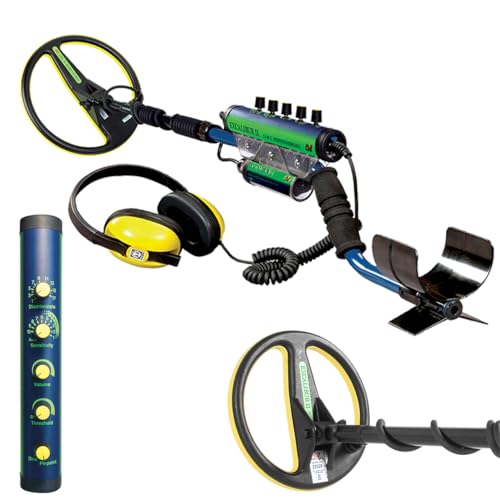
Minelab Excalibur II 1000
$1,699.00Minelab publishes BBS multiple frequency technology spanning 1.5 to 25.5 kHz, RCB signal amplification inside the coil for faint deep targets in salt, a 12 hour NiMH pack and an optional side-mount shaft for surf wading, at $1,699.00.
Best for: surf and diving by people who want nothing else from a machine
Check price on Amazon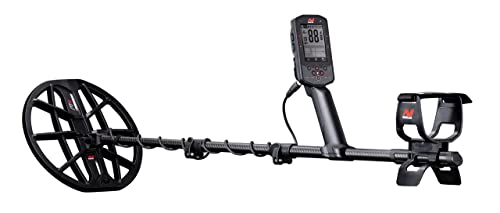
Minelab Manticore
$1,499.00Minelab publishes Multi-IQ+ at 50 percent more transmit power than its earlier multi-frequency machines, a dedicated Beach search mode among ten total modes, a 2D target ID map and IP68 submersion to 16 feet, at $1,499.00.
Best for: an experienced hunter who still wants a full display at the beach
Check price on AmazonWho should not buy this tier: Do not buy the Minelab Excalibur II 1000 as a first or only machine. It has no modern visual target ID and no menu to speak of, and it will sit unused for any season not spent at the beach. The Minelab Manticore asks you to learn a two-dimensional target display before it repays the money, and on a straightforward beach session the Minelab Equinox 700 at $749.00 will keep up for a fraction of the price. Buy either only once you already know salt hunting is where your seasons actually go.
How do the saltwater-capable machines compare on paper?
Read the frequency approach column first. Every machine here is published as simultaneous multi-frequency, Multi-Salt capable, or a dedicated broadband salt design, because that is the only column that matters once the coil is in wet sand.
All eight machines here are published as simultaneous multi-frequency or a dedicated salt-specific design, and only two are rated past 16 feet of submersion.
| Machine | Price | Frequency approach | Beach or salt mode named | Submersion as published |
|---|---|---|---|---|
| Minelab X-Terra Elite | $387.09 | Multi-IQ simultaneous multi-frequency | 2 Beach presets | Fully waterproof body |
| Nokta Double Score | $349.00 | Simultaneous multi-frequency | Runs multi-frequency throughout | IP68 to 16 ft |
| Garrett Vortex VX7 | $499.99 | MD-MF plus Multi-Salt | Multi-Salt named directly | 16 ft |
| Minelab Equinox 700 | $749.00 | Multi-IQ, 4 singles | Beach mode | 16 ft (5 m) |
| Garrett ACE Apex | $384.99 | 4 singles plus Multi and Multi-Salt | Multi-Salt frequency option | Waterproof searchcoil |
| Garrett Vortex VX9 | $599.99 | 5 singles, high-res ground balance | Adapts 5 to 25 kHz for salt to mineralised soil | 16 ft (5 m) |
| Minelab Manticore | $1,499.00 | Multi-IQ+ | Beach mode, 10 modes total | IP68 to 16 ft |
| Minelab Excalibur II | $1,699.00 | BBS, 1.5 to 25.5 kHz | Built for salt and surf specifically | Not stated in this listing |
Every figure is quoted from the manufacturer listing or manual for that product. Minelab does not state a submersion depth in the Excalibur II listing used here. None of these figures were measured on this site.
Does the machine need to be submersible, or just the coil?
Most saltwater beach hunting happens standing in the wet sand and the shallow wash, not underwater, so a fully waterproof body matters more for peace of mind against a wave than for actual diving. If the plan is only ever the tideline, any machine on this page covers it. If the plan includes wading past knee depth or working the surf line at low tide, submersion rating starts to matter in its own right, and the underwater roundup goes through that question along with the wired headphones a submerged machine actually needs, because wireless audio stops working the instant the control box goes under.
Coil size also changes what a salt session finds. A big coil covers more of the tideline per pass, and a small coil separates a ring from the bottlecaps and pull tabs that collect in the same wet strip. The large coil page and the small coil page cover both ends of that trade for the machines here that accept aftermarket coils. Check any coil against the manual for your specific model before assuming one fits, because Minelab, Garrett and Nokta coils are not interchangeable across brands.
How we chose
We did not test any of these machines in person and no find on this site is presented as ours. Every specification below is taken from the manufacturer listing or manual for that product, named where it appears, and where a maker does not publish a figure the page says so rather than estimating one. Picks were chosen on published frequency approach, on whether a saltwater or beach mode is named directly, and on price.
Sources
- Minelab X-Terra Elite, Equinox 700, Manticore and Excalibur II product listings and manuals
- Garrett Vortex VX7, VX9 and ACE Apex product listings
- Nokta Double Score product listing
Frequently asked questions
Can a single-frequency detector ever work on a saltwater beach?
Above the tideline, in dry sand, yes, because dry sand is not conductive and behaves like ordinary soil. Once you cross into wet sand or the wash, a single-frequency VLF machine reads the salt as a broad signal and either chatters or forces sensitivity so low that only the shallowest targets survive. That line is exactly where the Minelab X-Terra Elite and machines like it were built to work instead.
Is Multi-Salt the same thing as simultaneous multi-frequency?
Related but not identical. Simultaneous multi-frequency transmits several frequencies at once and compares the results, which is the mechanism that cancels a conductive ground signal. Multi-Salt, as Garrett names it on the Garrett ACE Apex and the Garrett Vortex VX7, is a specific frequency profile tuned for that same job. Both approaches target the same problem and neither is available on a single-frequency machine.
Do I need a fully submersible machine just to hunt the tideline?
No. Most tideline hunting never puts the control box under water, so a machine rated as waterproof rather than fully submersible is usually enough. Submersion depth matters once wading or working the surf line becomes routine, and at that point the wired headphone question in the underwater roundup becomes the more urgent one to answer.
Why does the Excalibur II have no digital target ID?
Minelab built it before that display technology was standard on saltwater machines, and it has stayed in the range because its broadband BBS frequency spread and audio response are still trusted by serious surf and diving hunters over anything with a screen. It is a specialist tool bought for that one job, and the Manticore is the current alternative for someone who wants a screen as well.
Will any of these machines find gold jewellery in the surf?
Yes, every multi-frequency machine here will detect gold jewellery in salt sand and surf, because gold conducts and the target ID ordering places it in a readable band once ground noise is cancelled. None of them can tell you a specific ring is there before you dig, so treat every mid-scale signal in the wash as worth recovering rather than skipping.
Researched, not professional advice. This page is compiled from published specifications, manuals and owner-review consensus, not hands-on testing. Target ID numbers, depth figures and settings vary with soil chemistry, moisture, target size, depth, orientation and firmware version, so treat every figure here as a starting point and verify it against your own machine's manual and your own ground. As an Amazon Associate we earn from qualifying purchases.