Calculator
Coil Size Selector
Quick answer
For a trashy park with dense iron, a 5 to 7 inch coil finds more than a large one. For open fields and beaches with coin-sized or larger targets, 12 to 15 inches is right. The stock 9 to 11 inch coil is the correct compromise for mixed ground. Answer the four questions below.
The second coil is the upgrade that changes what a machine can do, and most people buy the wrong one because bigger sounds better. What a coil really trades is ground coverage against the ability to tell two nearby targets apart, and which side of that trade you want is decided entirely by the site in front of you.
Coil size to look for
Coils by size and machine
Top matches update when you calculate.
Coils are machine-specific. Check the compatibility chart for your own detector before ordering anything here.

Minelab EQX 06 Coil (6 inch)
$225.00A 6 inch Double-D for separating targets in dense iron and trash, where a big coil sees one blurred signal.
Best for: trashy parks, old house sites and tight spots
Check price on Amazon
Minelab EQX 15 Coil (15 inch)
$290.00More ground per sweep and a little more depth on larger targets, at the cost of separation in trash.
Best for: open fields and beaches
Check price on Amazon
Coiltek 10 by 5 NOX Search Coil
$308.00An elliptical that keeps a long sweep footprint while staying narrow enough to work between iron.
Best for: iron-infested sites where you still want coverage
Check price on Amazon
Nokta LG15 Coil (6 inch)
$127.99The small DD for The Legend, for the same trash-separation job the EQX 06 does on an Equinox.
Best for: Legend owners hunting trashy ground
Check price on Amazon
Nokta LG35 Coil (13.5 by 12.5 inch)
$169.99The big coil for The Legend, for open fields and beaches.
Best for: covering ground fast
Check price on Amazon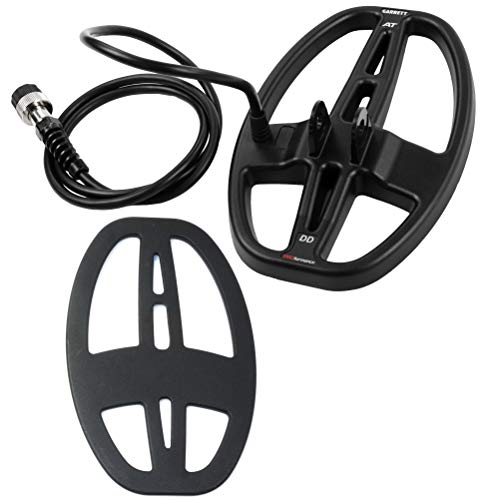
Garrett 5 by 8 DD PROformance Coil
$164.95The sniper coil for the AT series, for working between iron nails on old sites.
Best for: AT series owners on iron-heavy sites
Check price on AmazonThe trade you are actually making
A coil detects everything within its field at once and reports the sum. A large coil therefore covers more ground per sweep and gets a bit more depth on larger targets, but when a coin and a bottle cap are both under it, it gives you one muddled signal instead of two clear ones. A small coil sees a narrower patch, so it resolves those two targets separately, at the cost of walking further to cover the same field.
Why the small coil is usually the right second purchase
Most detectorists hunt sites with more trash than they would like, and most sites that have been detected before have been detected with a stock-sized coil. A small coil lets you work ground that has already been covered and pull targets out from between the iron that made everyone else give up. That is a much more reliable way to find things than two extra inches of depth on ground nobody has cleared anyway.
Elliptical coils, and when the compromise is right
If you only ever buy one extra coil and your sites are mixed, an elliptical in the 10 by 5 or 9 by 6 range is the sensible choice. It is narrow enough across to get between iron and long enough along to keep a usable sweep width, so it does not feel like a punishment on open ground the way a 5 inch round coil does.
Check compatibility before you order
Coils are specific to a machine or a machine series and are not interchangeable across brands. Some machines also identify their coil electronically, which affects how aftermarket options behave. The per-machine compatibility charts in the reference section list what fits what.
Frequently asked questions
What size coil should a beginner use?
The one that came with the machine, which is usually 9 to 11 inches, for at least a full season. Stock coils are chosen as a sensible compromise and you cannot judge what a different coil would give you until you know what the standard one sounds like on your own ground. The second coil to buy is almost always a small one.
Is a bigger coil always better?
No, and believing it is costs people finds. A big coil covers more ground and adds depth on larger targets, but it hears a wider patch of soil at once, so in a trashy park it merges a coin and a bottle cap into one confused signal. On iron-infested ground a small coil finds more, not less.
When is a small coil the right answer?
Old house sites, ploughed fields full of nails, picnic areas, anywhere with dense iron, and tight spots between tree roots and fence lines. A 5 to 6 inch coil resolves targets that a big coil reports as a single blur, which is why experienced relic hunters often run small coils almost exclusively.
What does an elliptical coil do differently?
An elliptical is narrow across and long along, so it keeps a usable sweep footprint while still being able to work between iron targets. It is the compromise coil: not quite the separation of a small round coil, not quite the coverage of a large one, and a sensible single upgrade if you only buy one extra.
Will any coil fit my detector?
No. Coils are machine-specific and often series-specific, and fitting the wrong one at best does not work and at worst damages the connector. Check the compatibility chart for your machine before ordering, and be careful with aftermarket coils on machines that identify a coil electronically.
Researched, not professional advice. This tool produces an estimate from the figures you enter and from published manufacturer specifications. Depth, ground coverage and battery runtime all vary with soil chemistry, moisture, temperature and how a machine is configured. Any metal value shown is a melt estimate only: it is not an offer, an appraisal or a guarantee of what a buyer will pay, and collectable coins are frequently worth far more than their metal. Get the landowner's permission before detecting on ground you do not own, keep off protected land, and fill every hole.